Saturday, June 11, 2016 | Language: Russian | Currency: Russian Ruble
Edie and I started our first tour in the Historical Center of the city, which consists of 18,000 historical buildings mostly dating back to the 18th and 19th centuries. Development in this defined area ceased in 1918 when the capital was moved to Moscow. Today, no new development is allowed but numerous cranes and scaffolding compete with the skyline as most buildings are continually undergoing reconstruction.
This core of the city was designated as a World Heritage Site in 1991; recognized for its architectural heritage, fusing Baroque, Neoclassical and traditional Russian-Byzantine influences.
Our first stop was St. Isaac Cathedral, the principal cathedral of St. Petersburg when it was constructed from 1818 to 1858. The dome is gilded with 100 kilograms of gold and rises 333′ high and dominates the skyline. 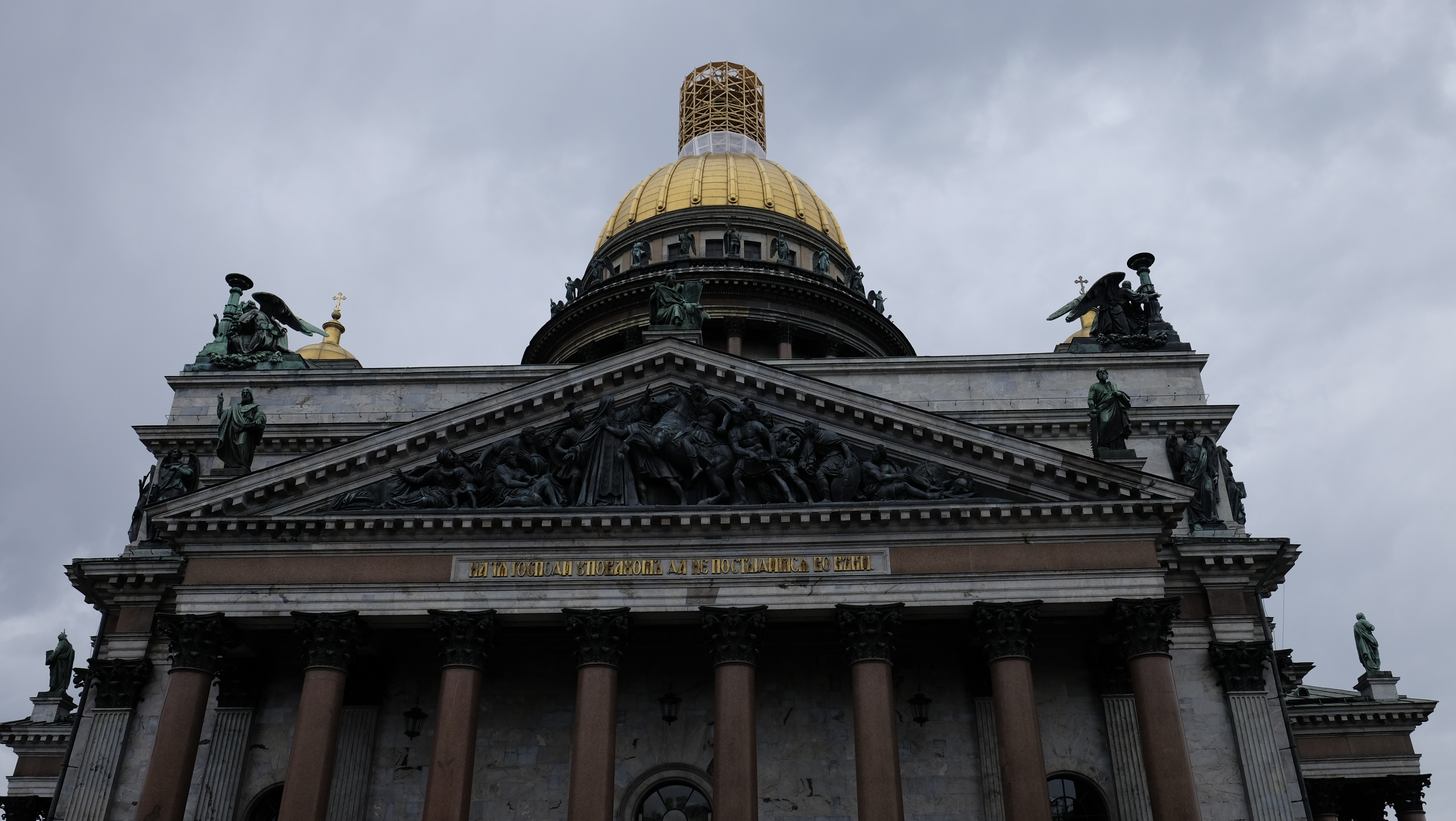 Under the Soviet government, the building was abandoned, then used for anti-religion propaganda. During WWII, the golden dome was painted gray to avoid attracting attention from enemy aircraft. Today the cathedral is open as a museum although services are still held on major religious holidays.
The structure is almost entirely built from granite and marble and weighs 300 tons, making it the heaviest building in the world. The interior is richly decorated with gilded sculptures, bronze bas-reliefs, intricate mosaics and paintings created by the leading Russian artists of the time. ?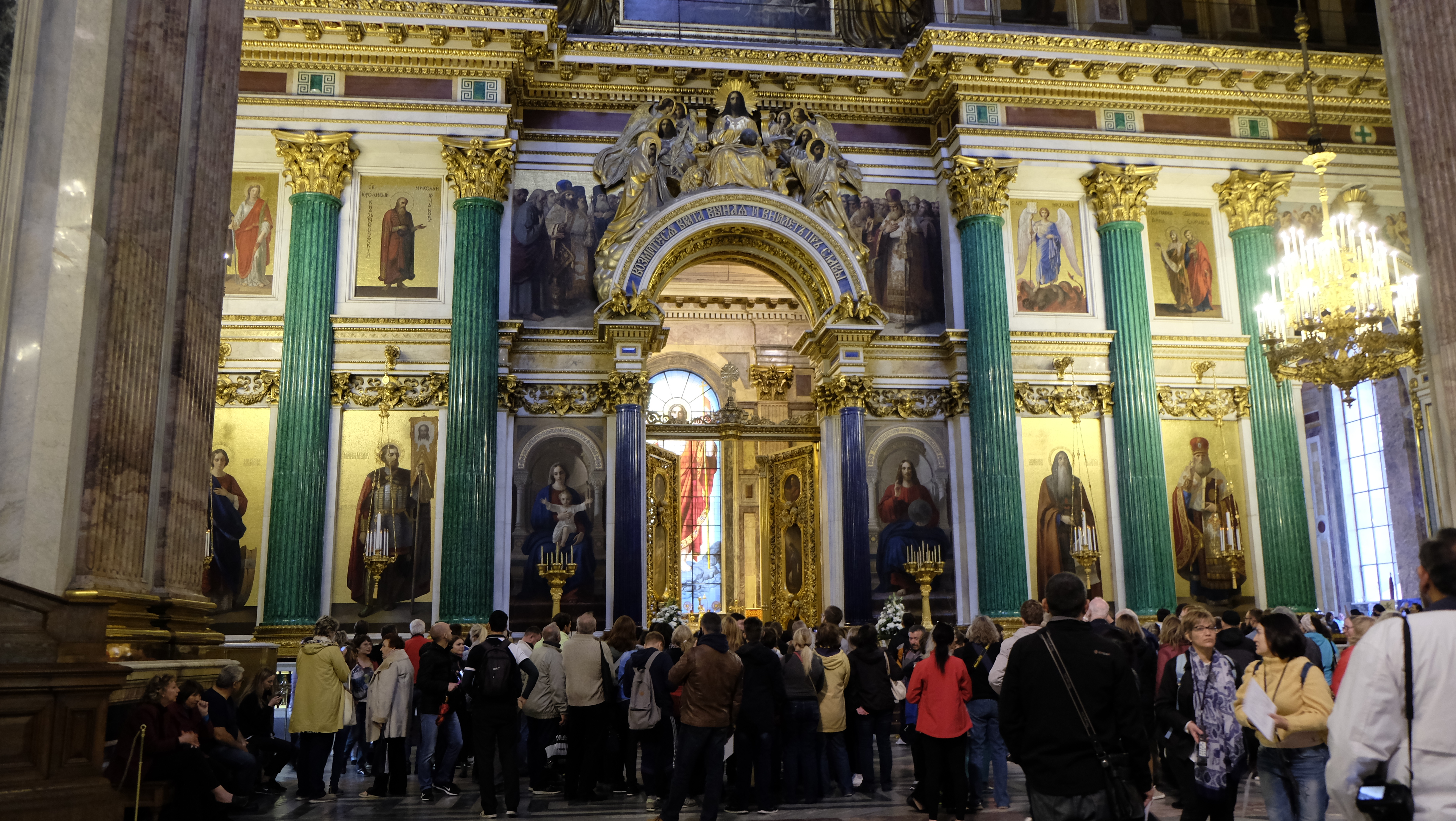
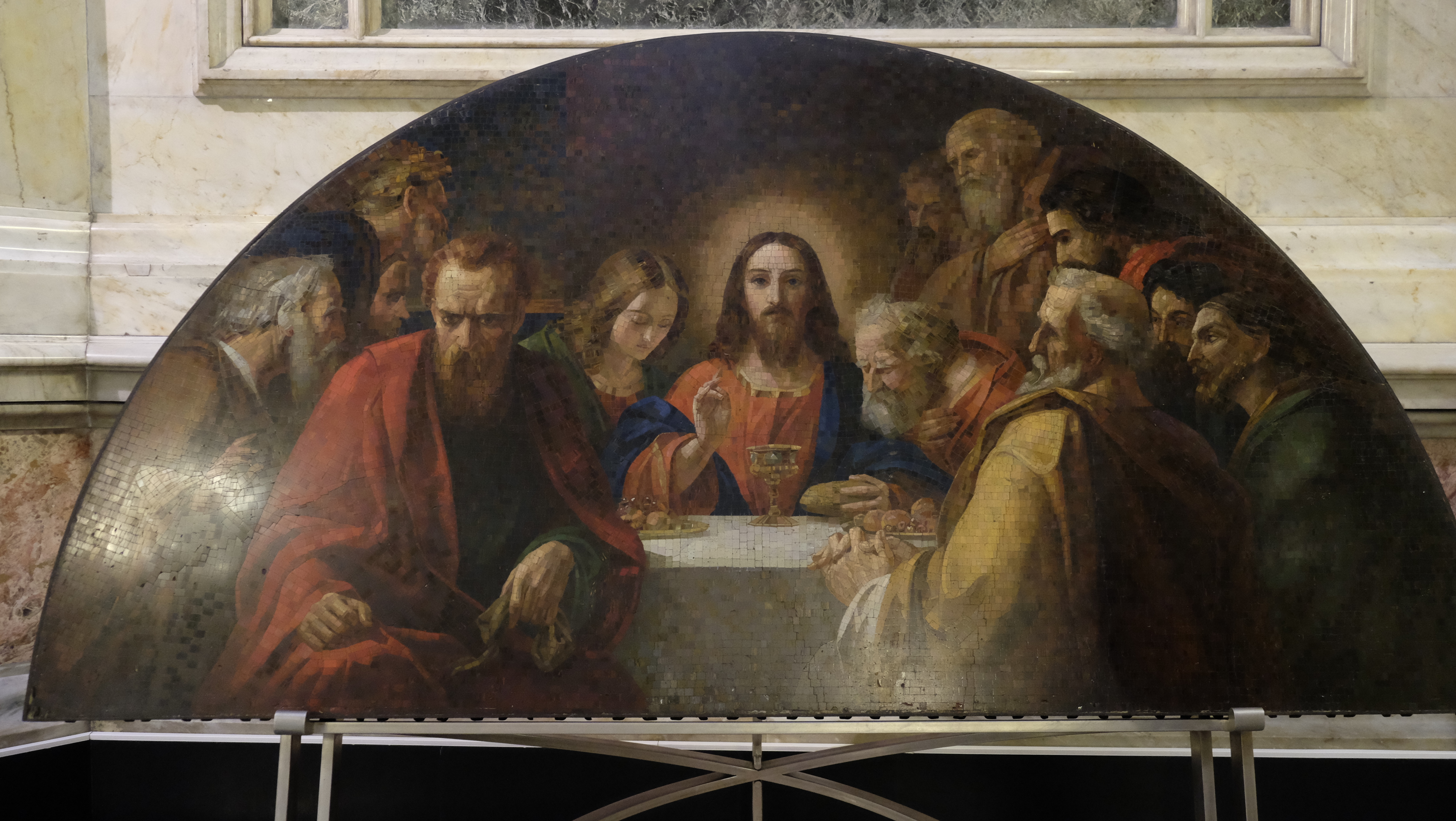
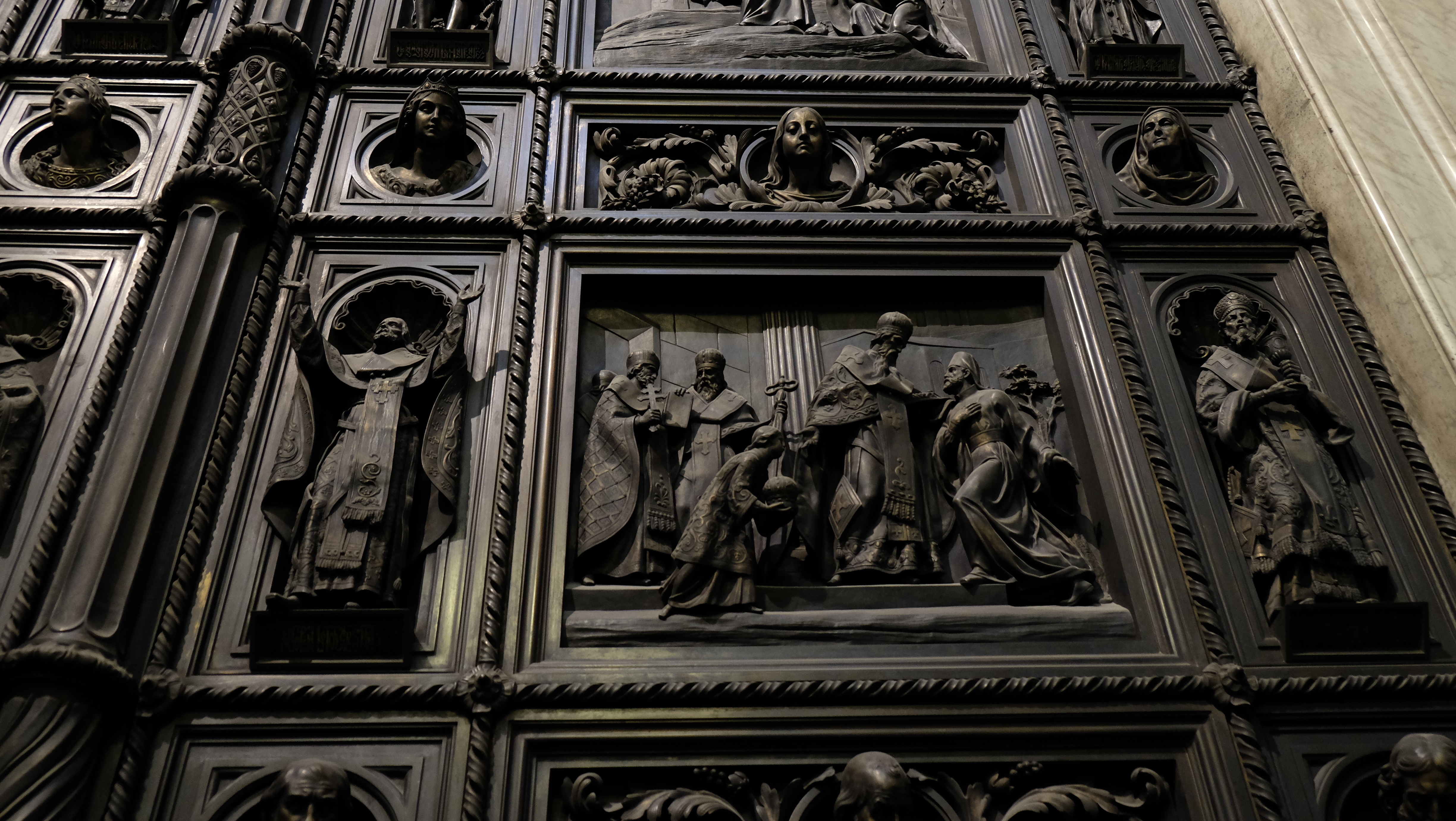
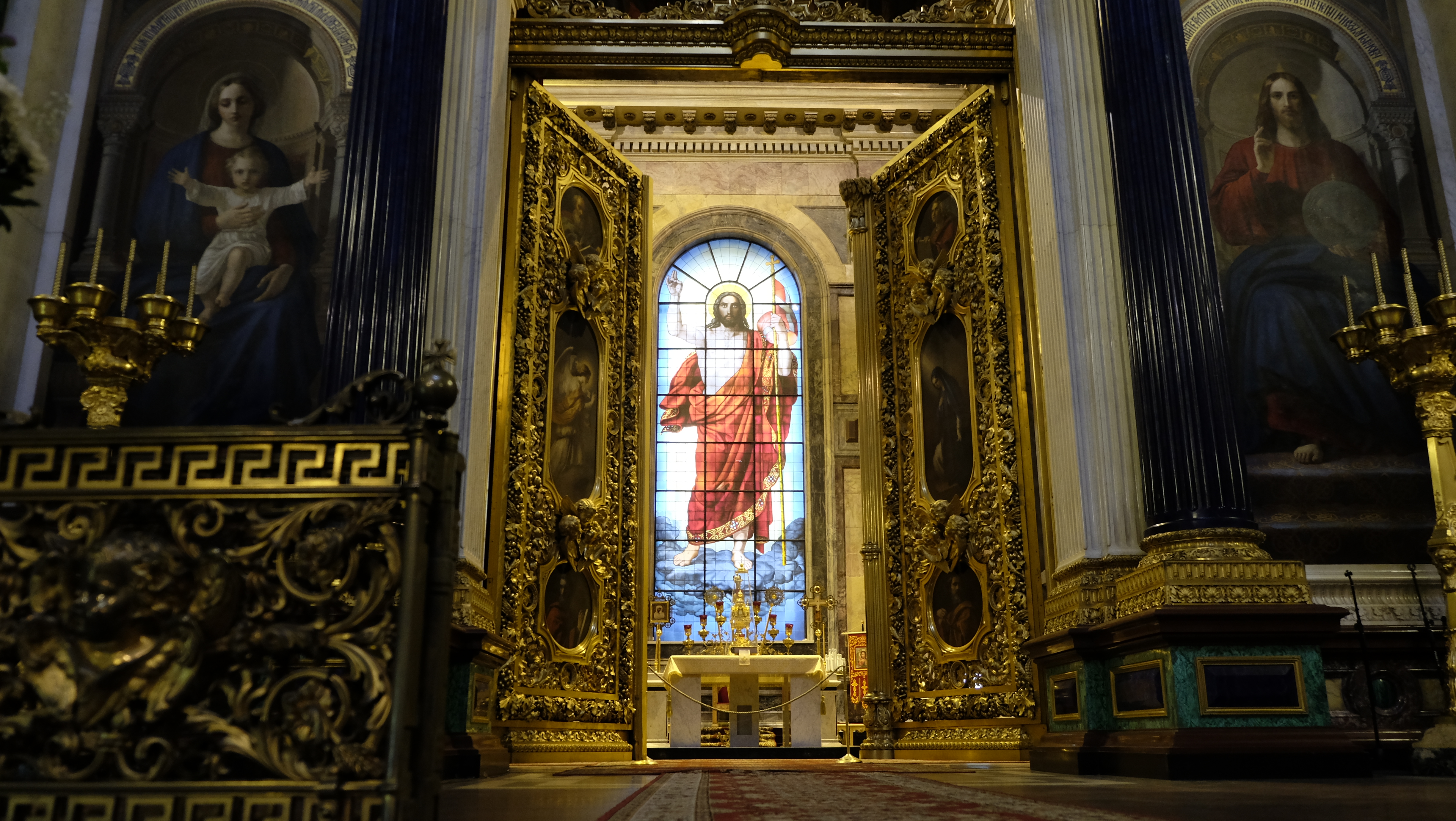
The church has standing room for 14,000 worshippers. People, including the elderly, stand during two-to-three-hour services in an Orthodox church. This is because the strict Orthodox believe you need to work hard to be strong.
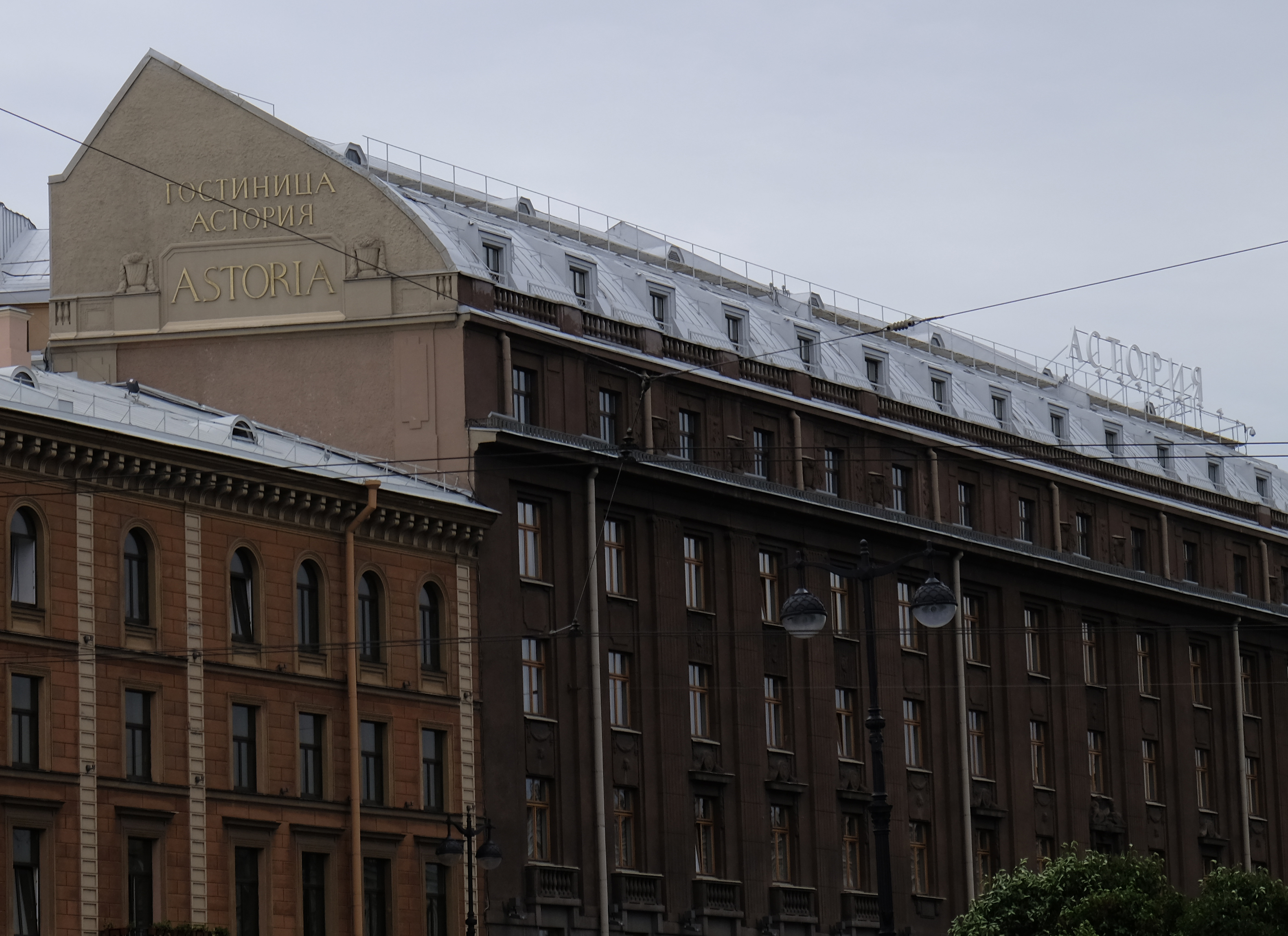
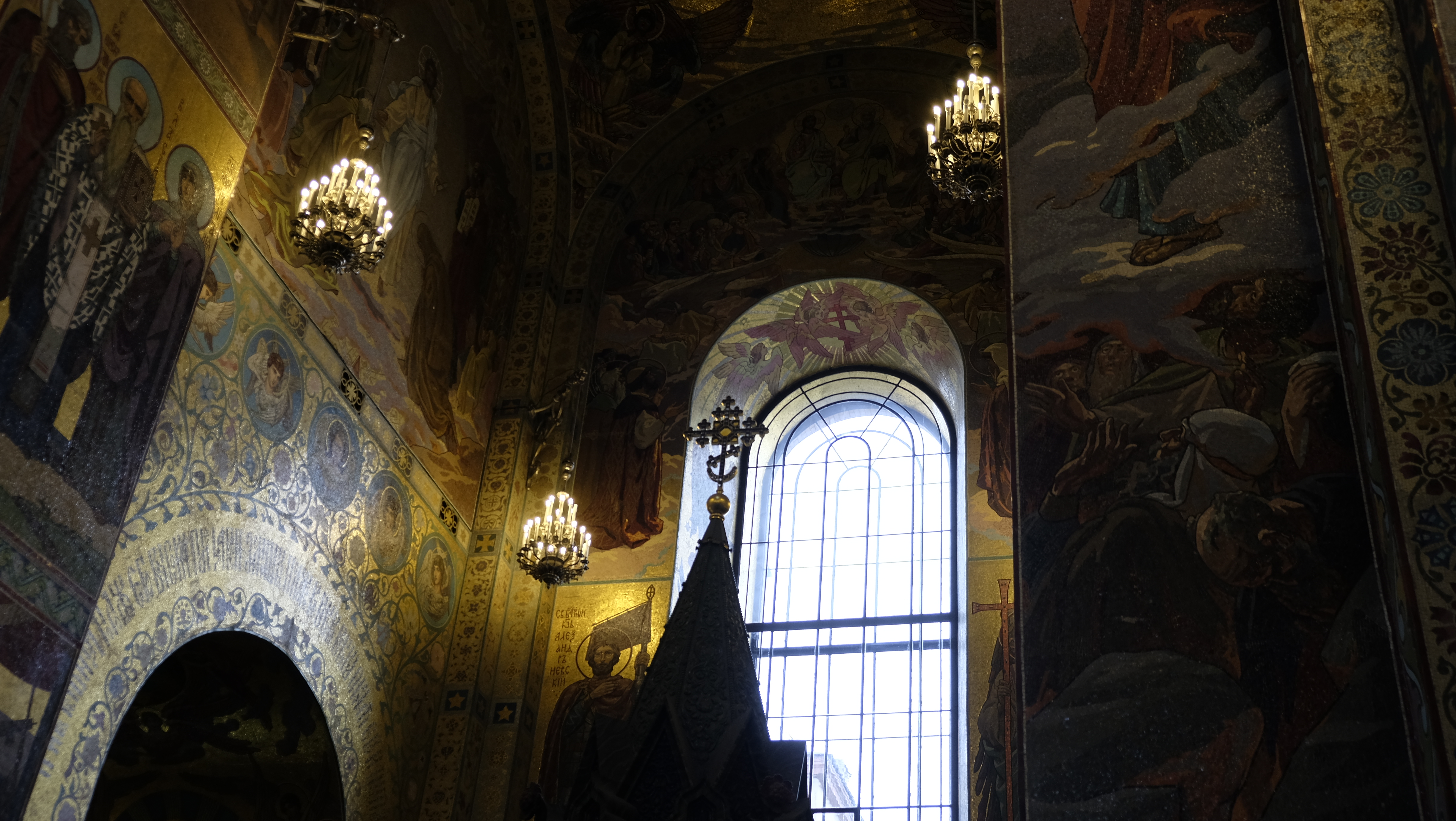
Our next stop was the Church of Our Savior on the Spilled Blood. This traditional Russian-style church was built on the spot where Emperor Alexander II was assassinated in 1881. The church was built between 1883 and 1907 and was officially called the Resurrection of Christ Church (aka The Church of Our Savior on Spilled Blood).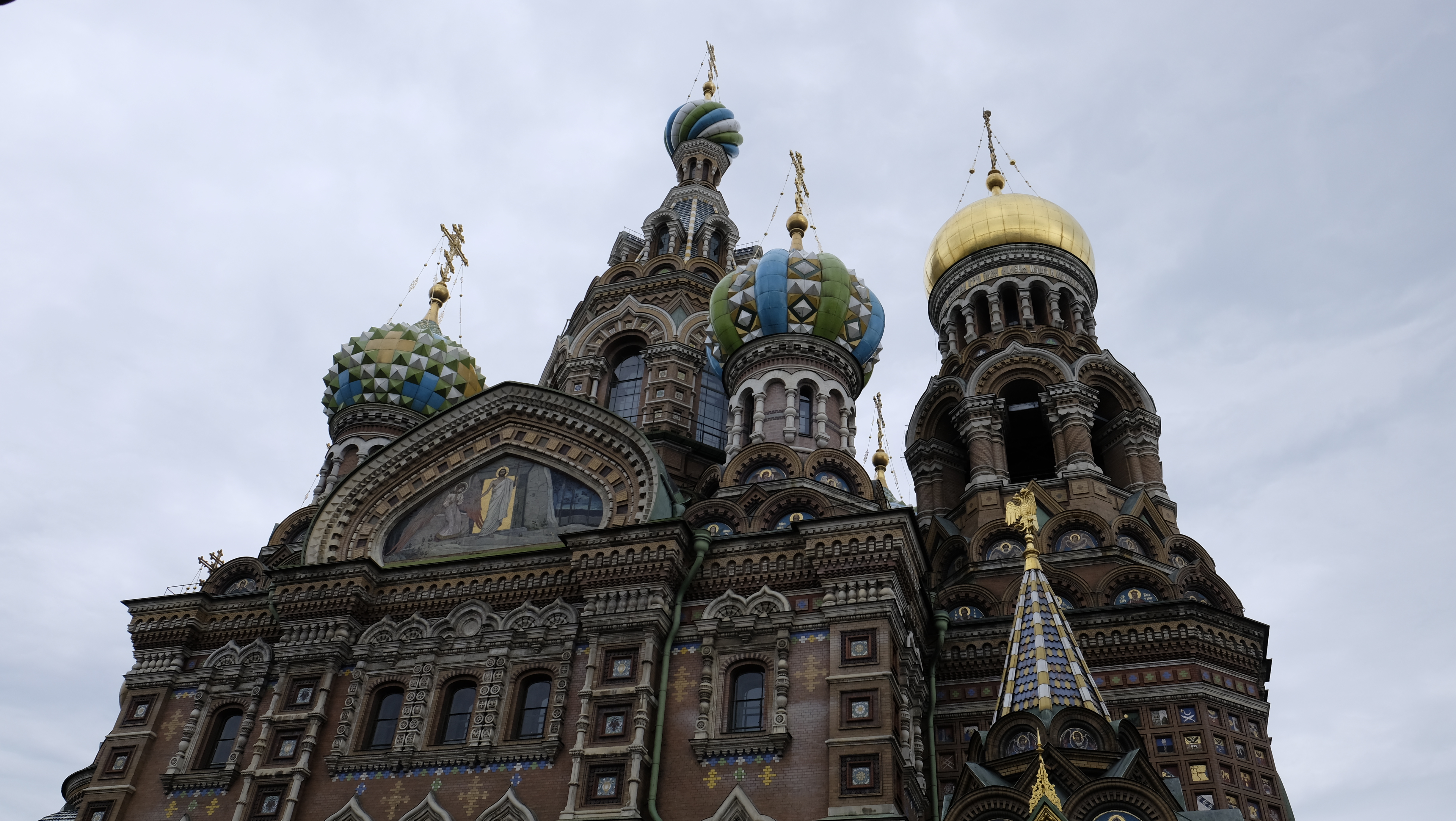 In 1932, after the Revolution, the church was looted and closed; essentially turned into a garbage dump. After WWII, the church was almost completely destroyed and used as a warehouse. Four jasper columns with mosaic mountings and a part of the balustrade were all that remained. In 1970 the church was made a branch of the St. Isaac’s Cathedral which then funded its complete restoration costing 4.6 million rubles.
Both the interior and exterior is decorated with incredibly detailed mosaics, designed and created by the most prominent Russian artists of the day. Interestingly, despite the church’s very obviously Russian aspect, its principle architect was not even Russian by birth. 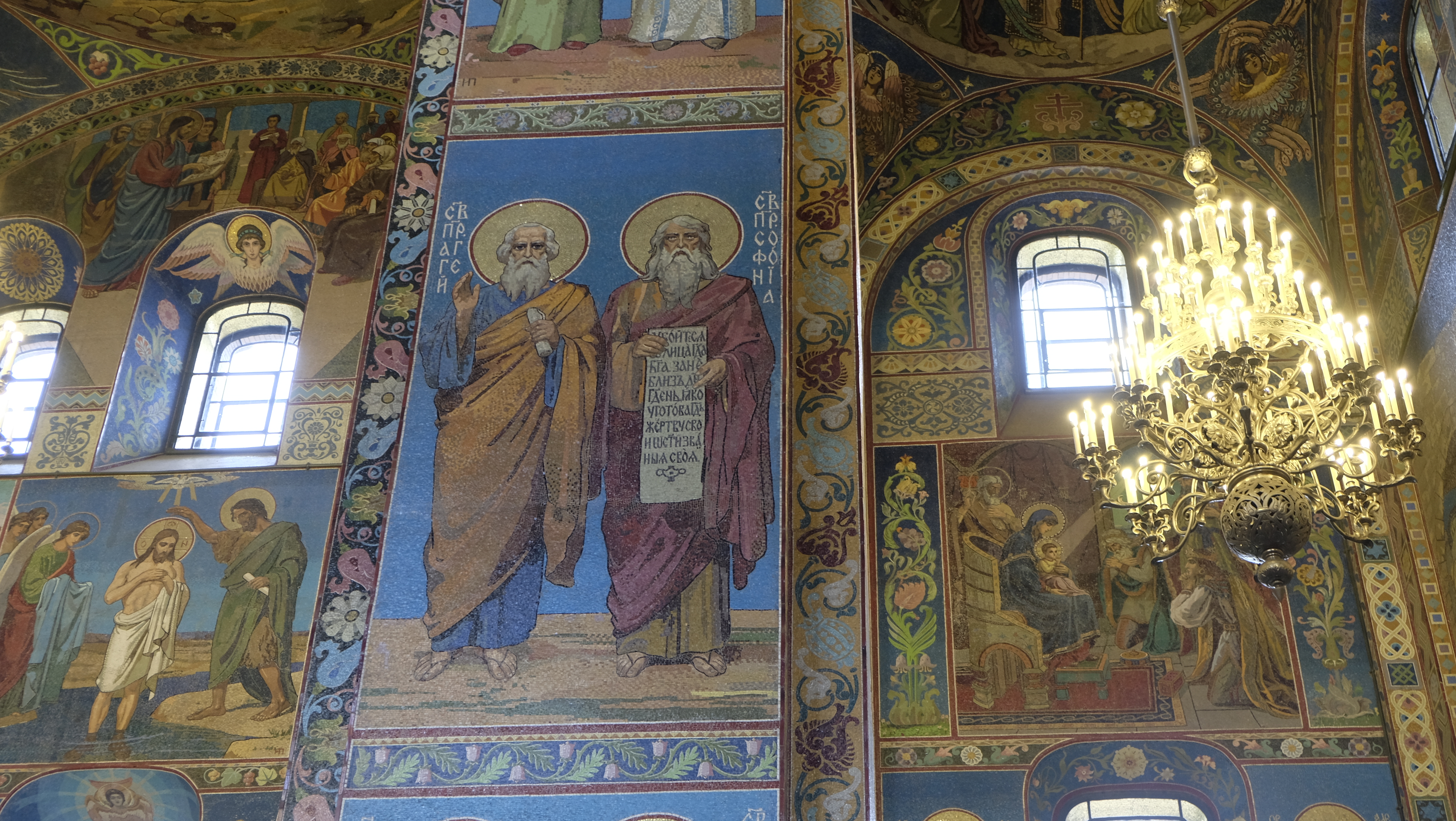
 We continued on foot to the pier to board a canal boat for a voyage along the city’s rivers and canals, enjoying the unexpected sights on the way.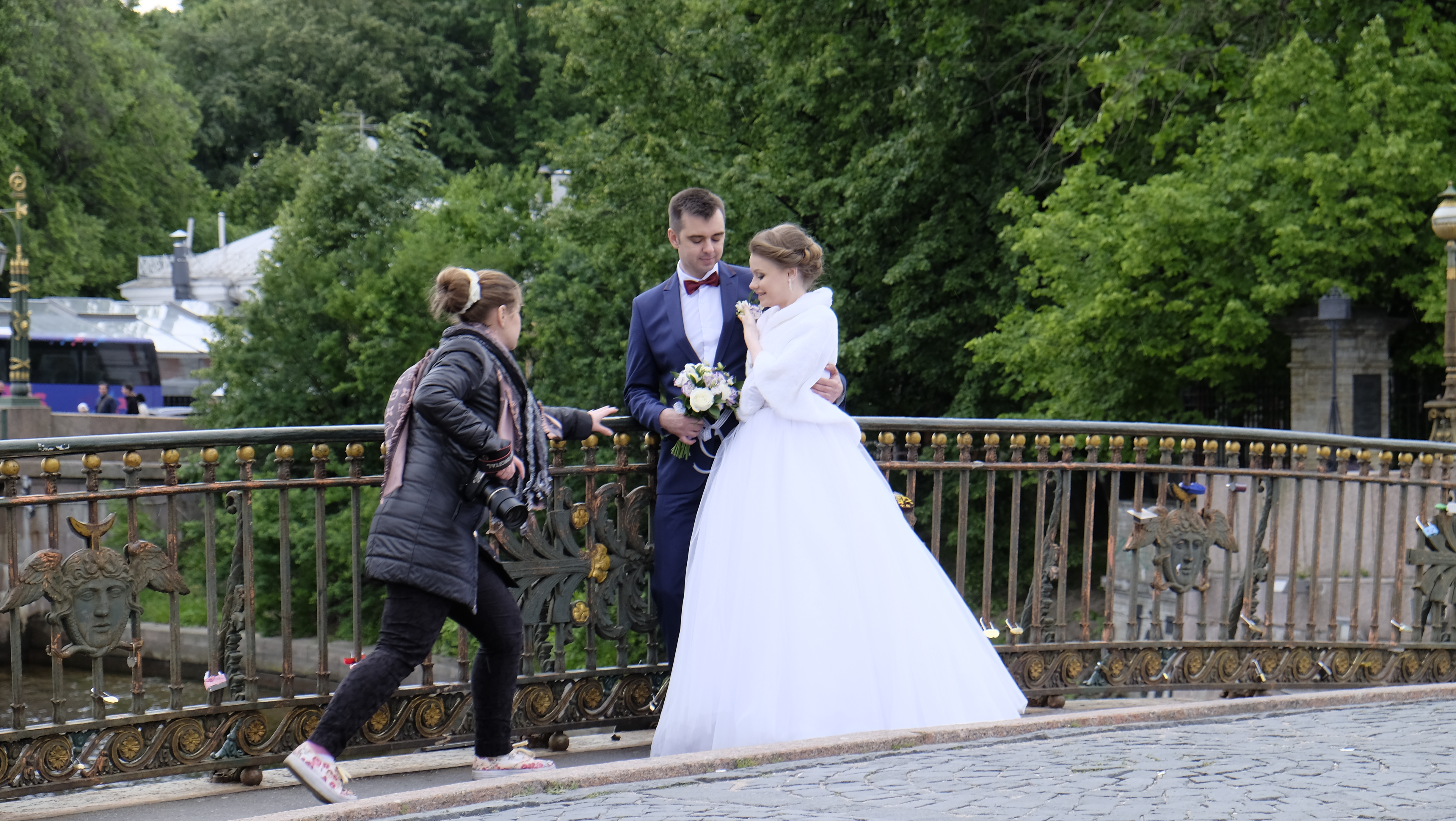
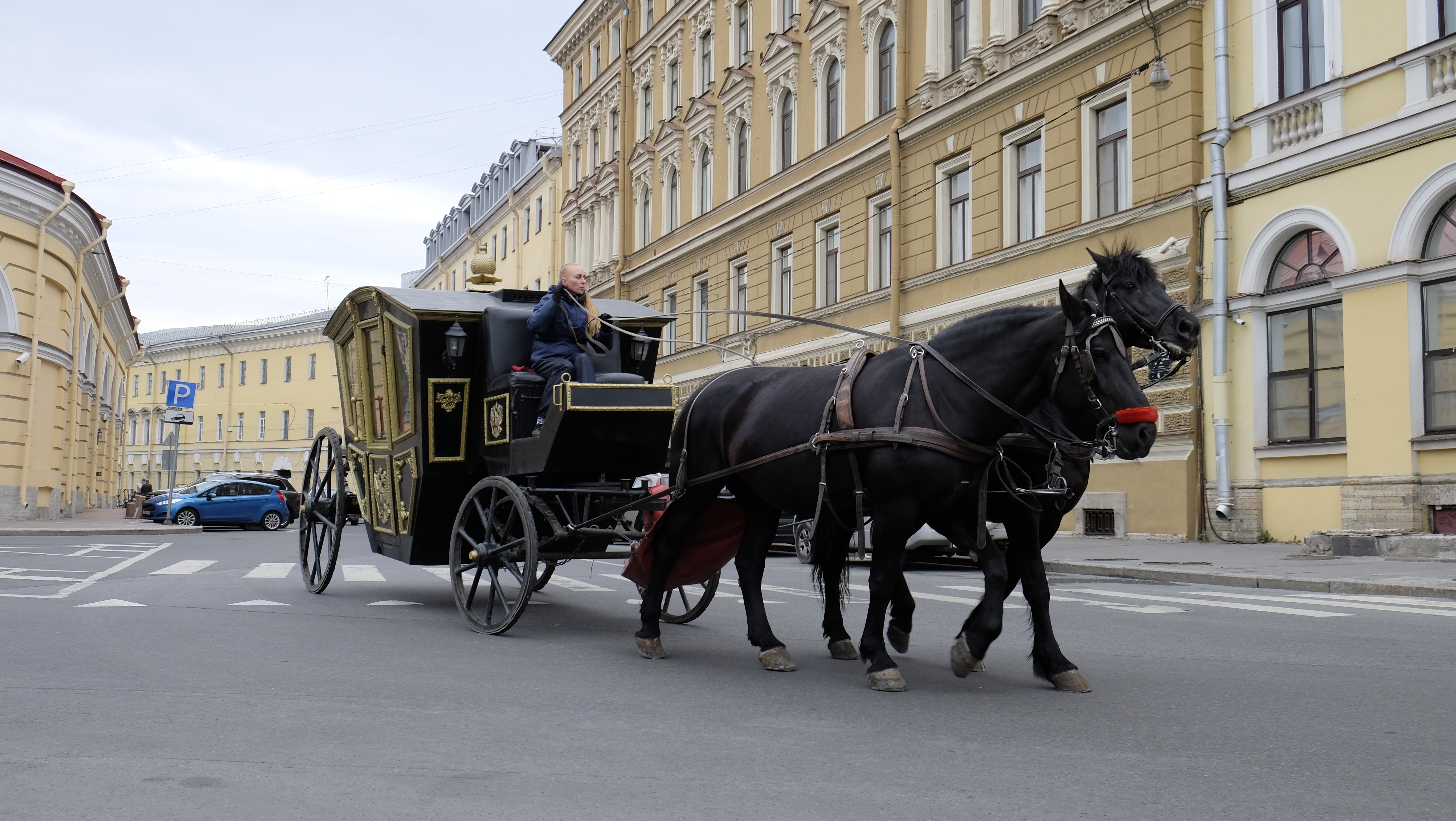 Who knew St. Pete has three times more bridges than Venice?
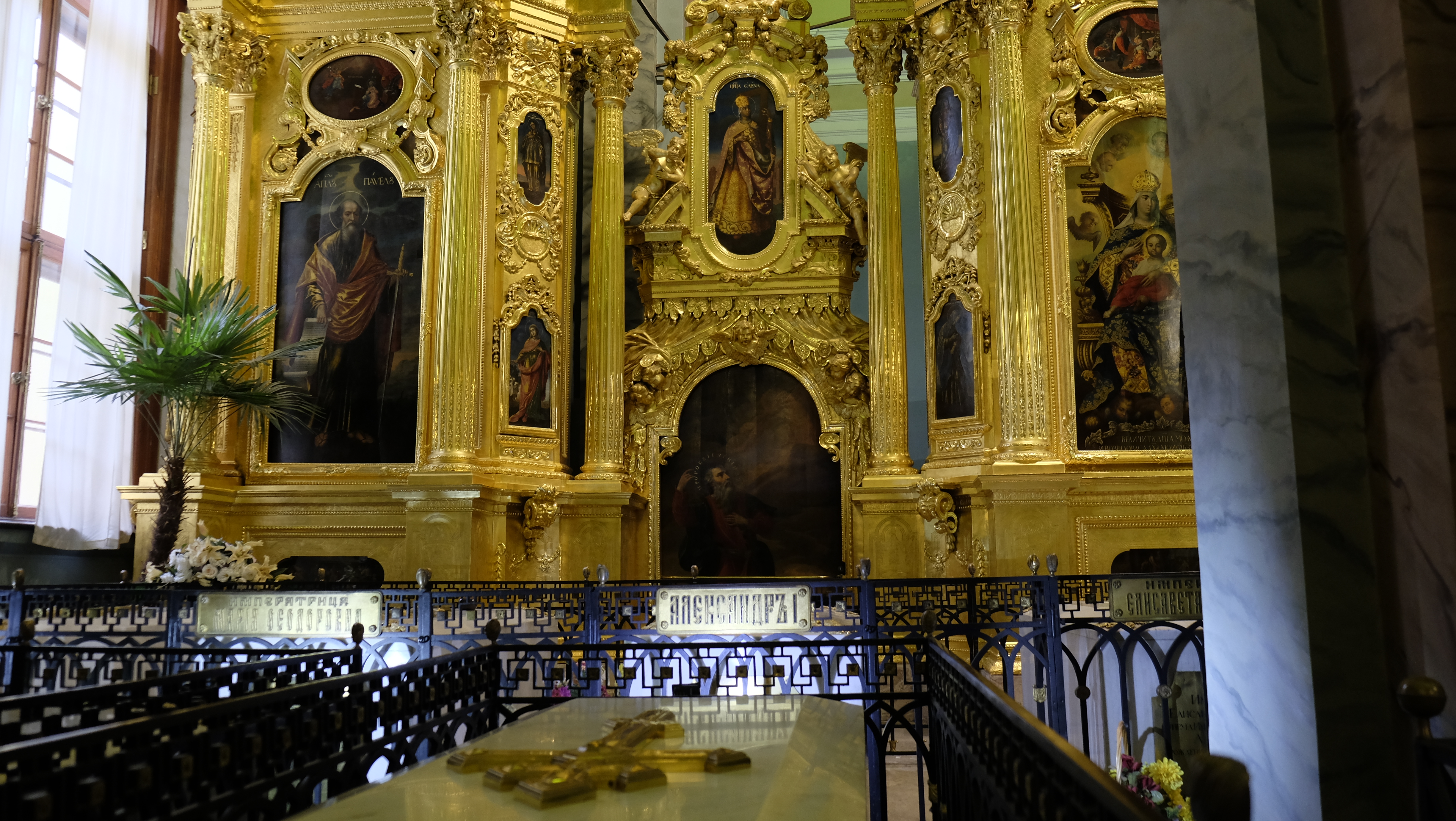
 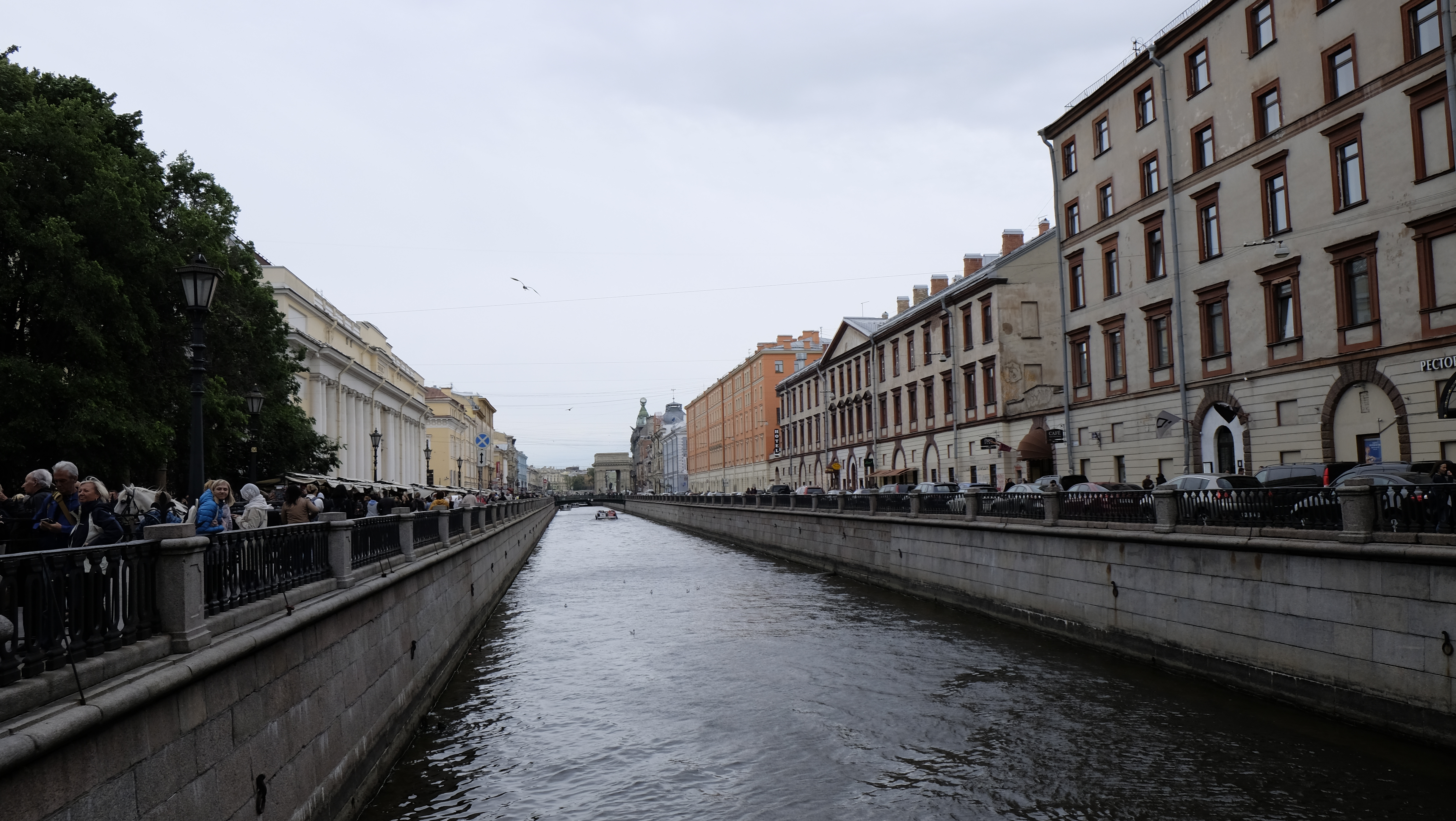 We eventually arrived at Peter and Paul Cathedral, the final resting place of the Romanov tsars, and our last stop of our first excursion of today.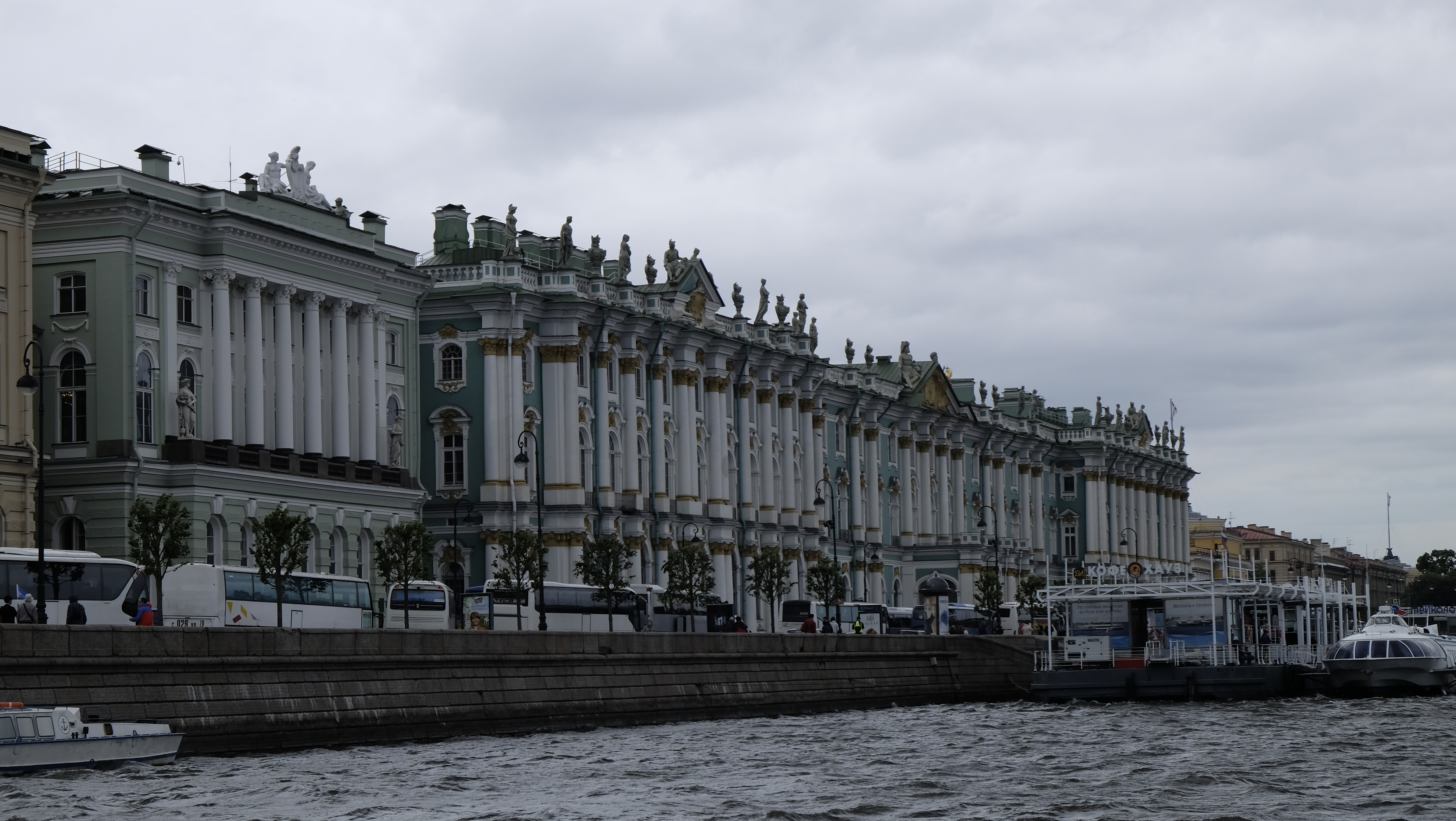
Leave a Reply