Tuesday morning, December 27, 2016 | Language: English | Currency: Australian Dollar | Population = 4,246,375
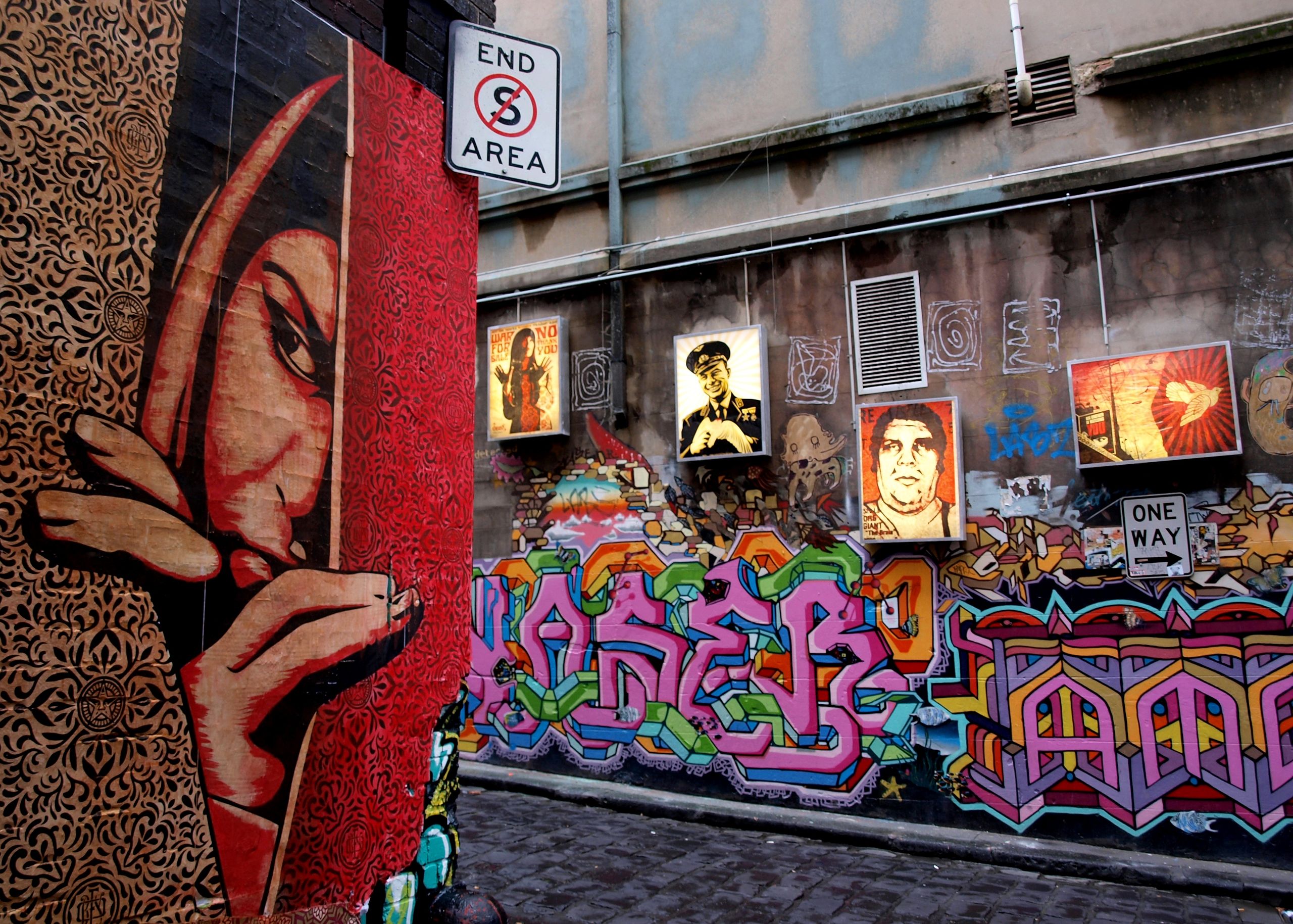
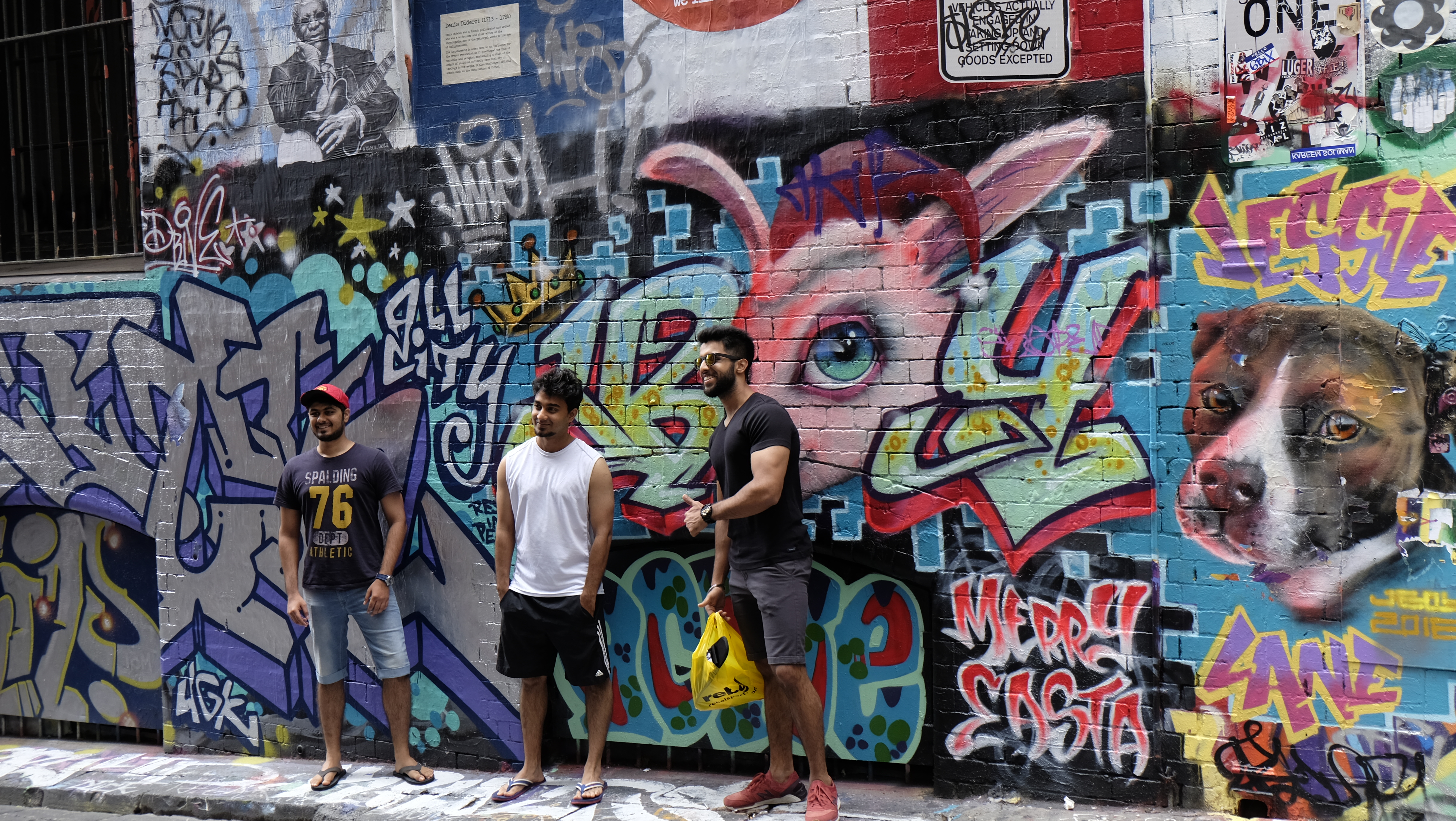
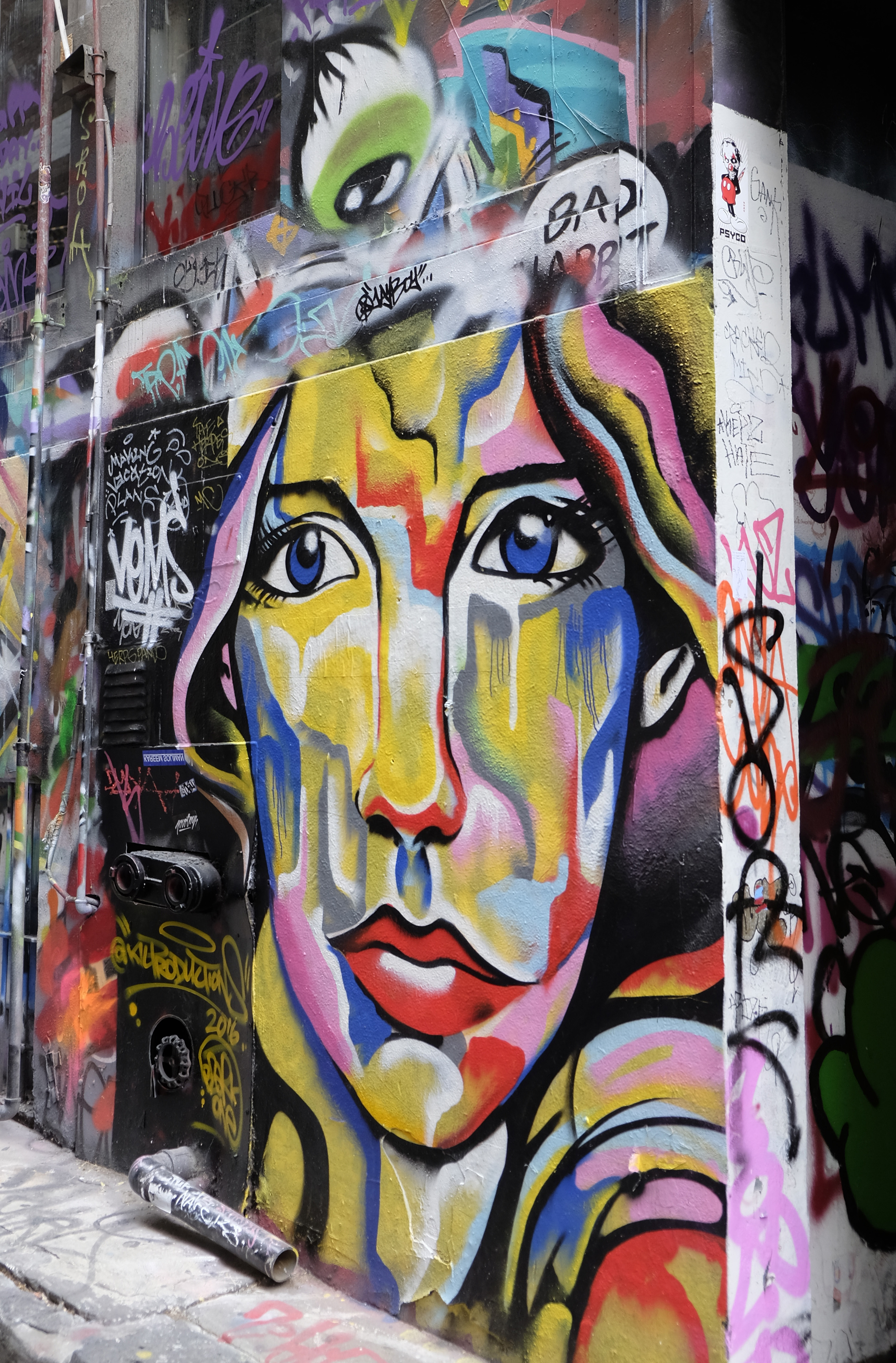
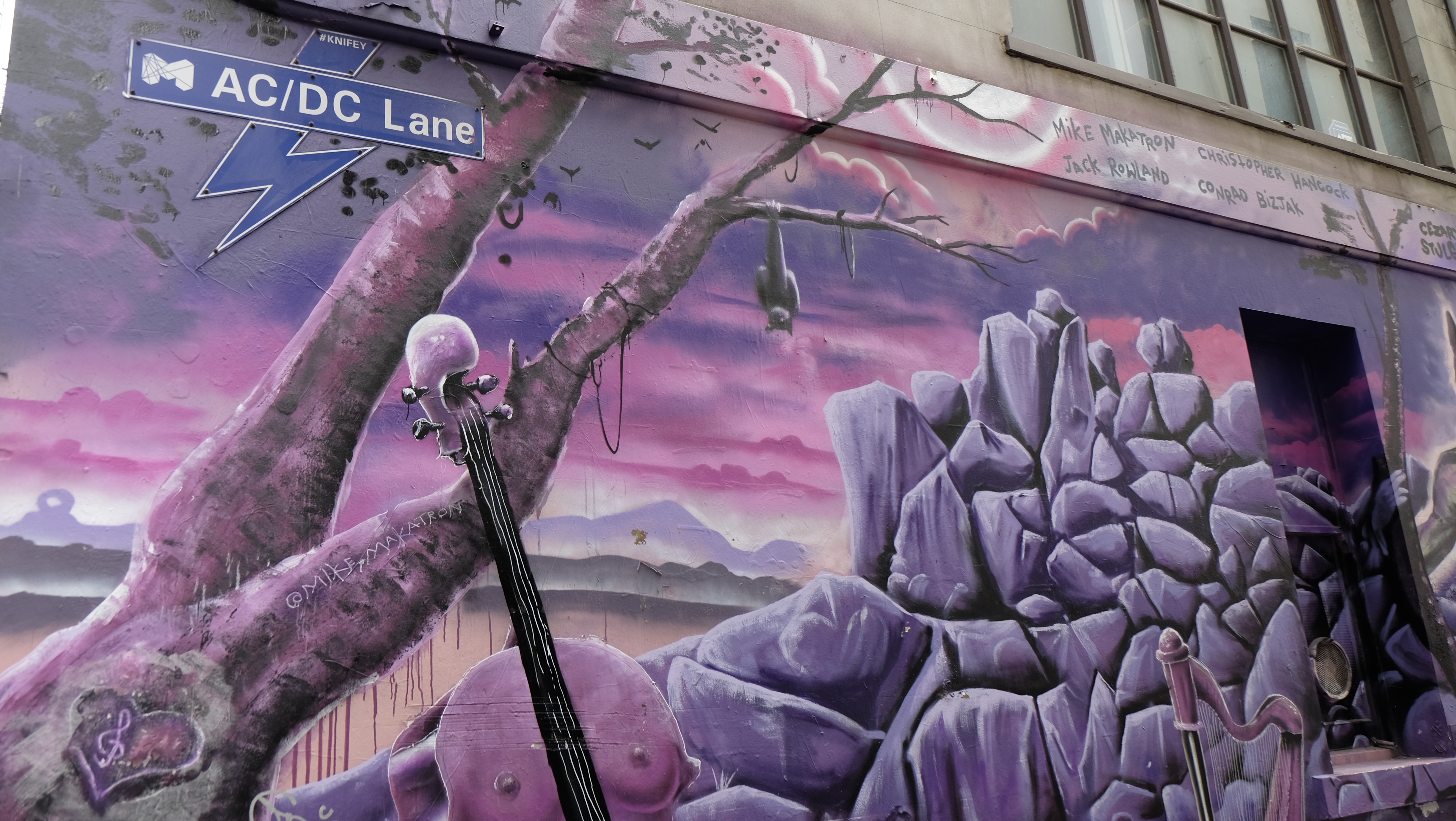
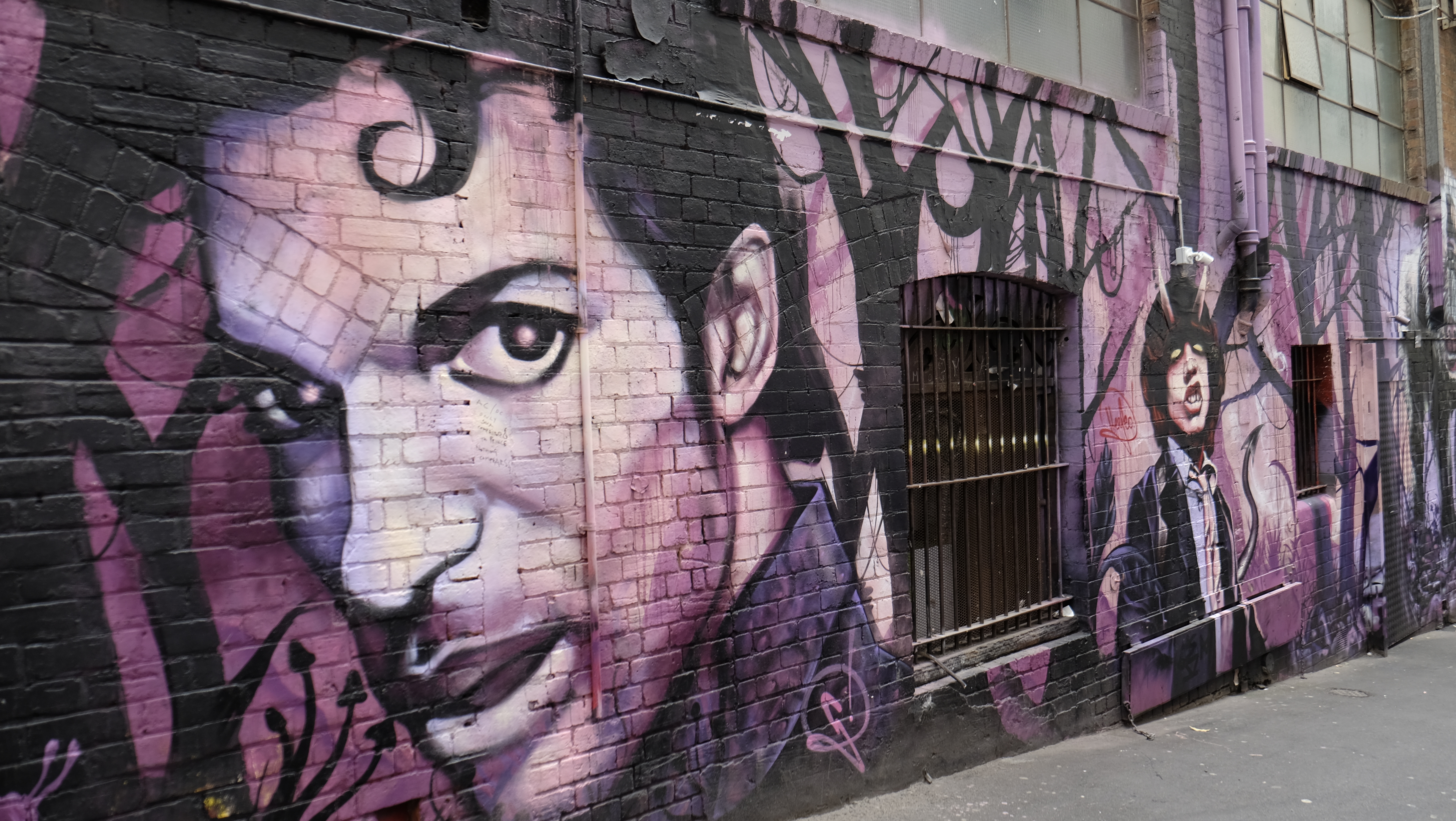
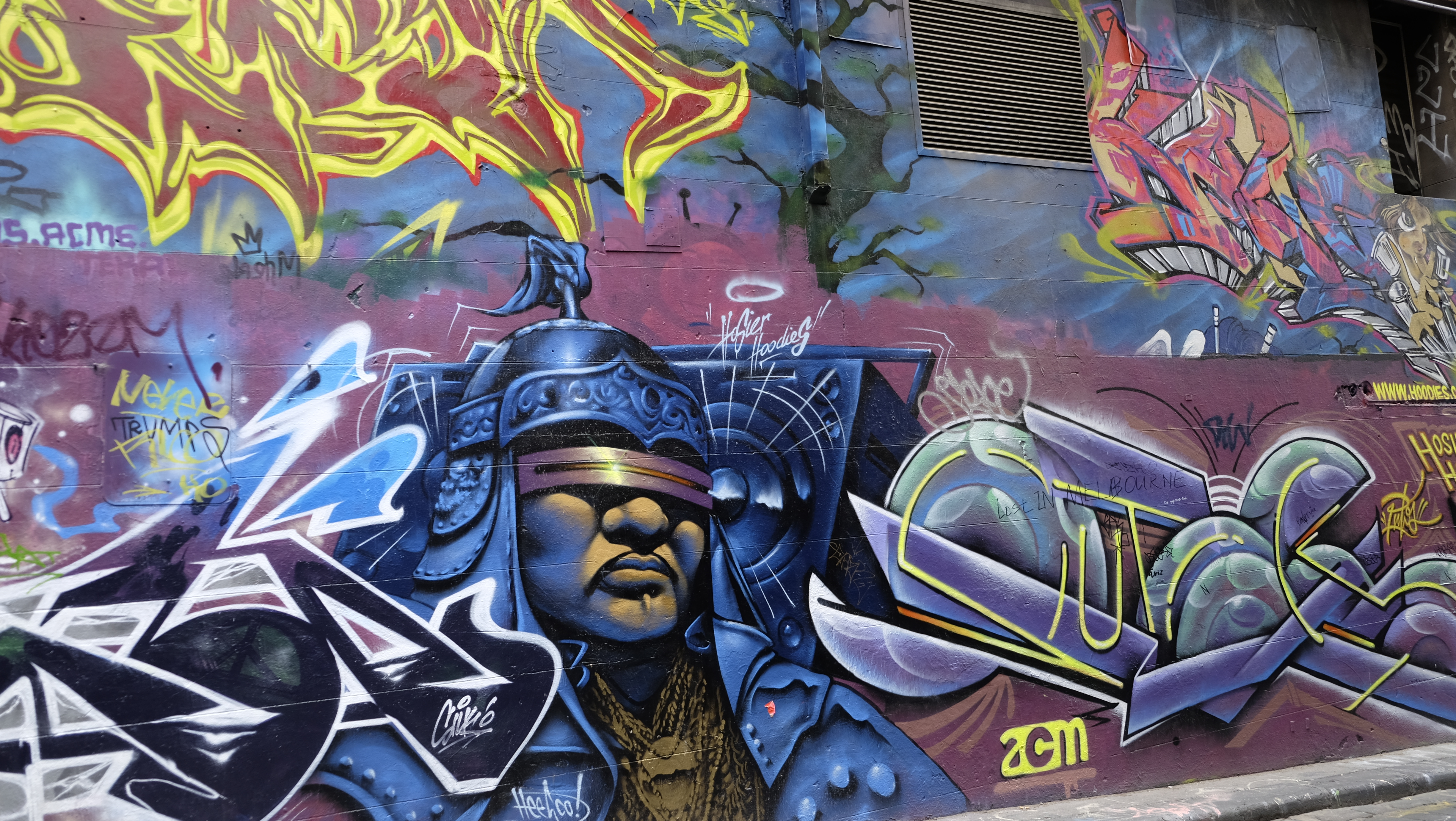
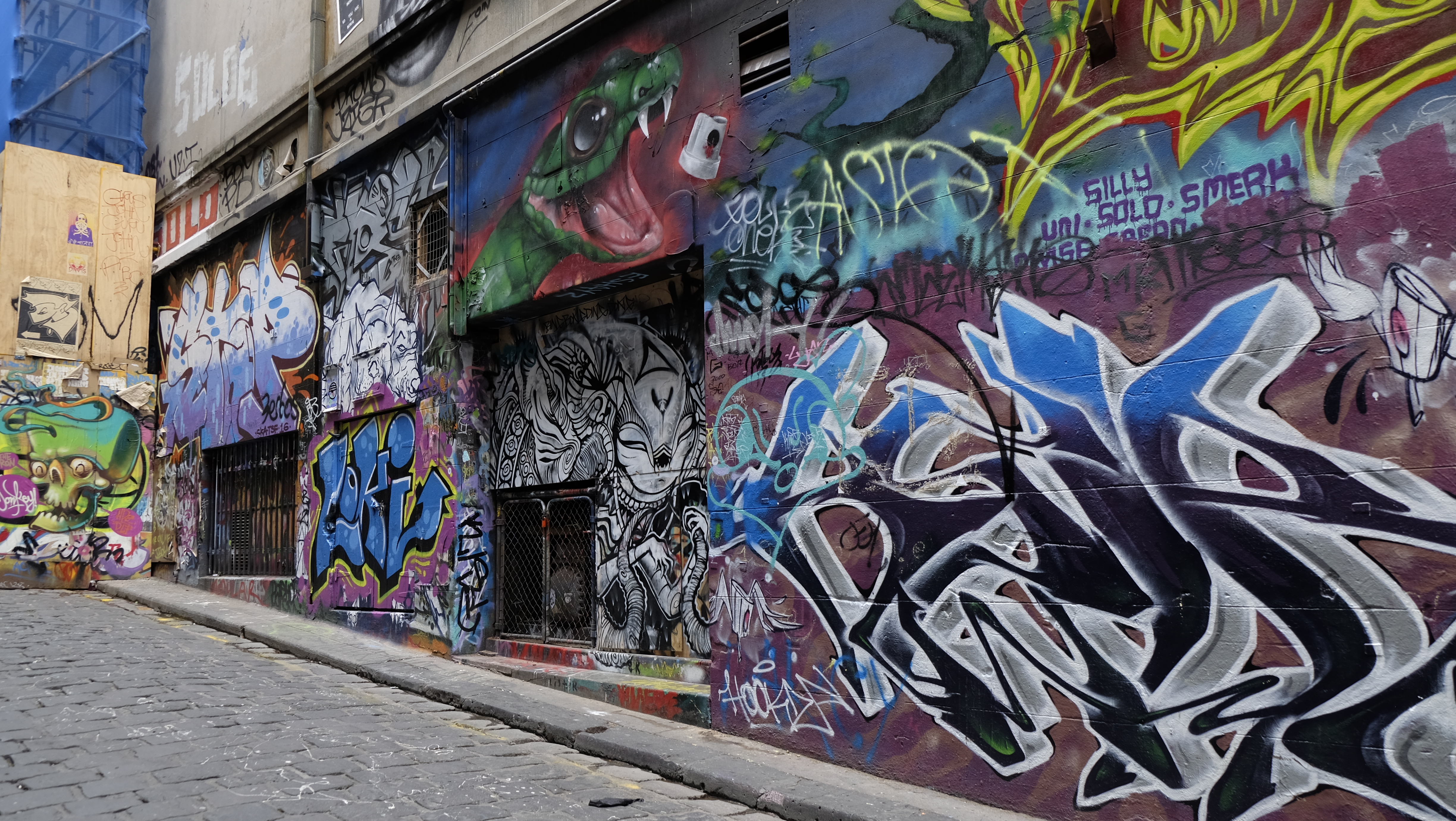
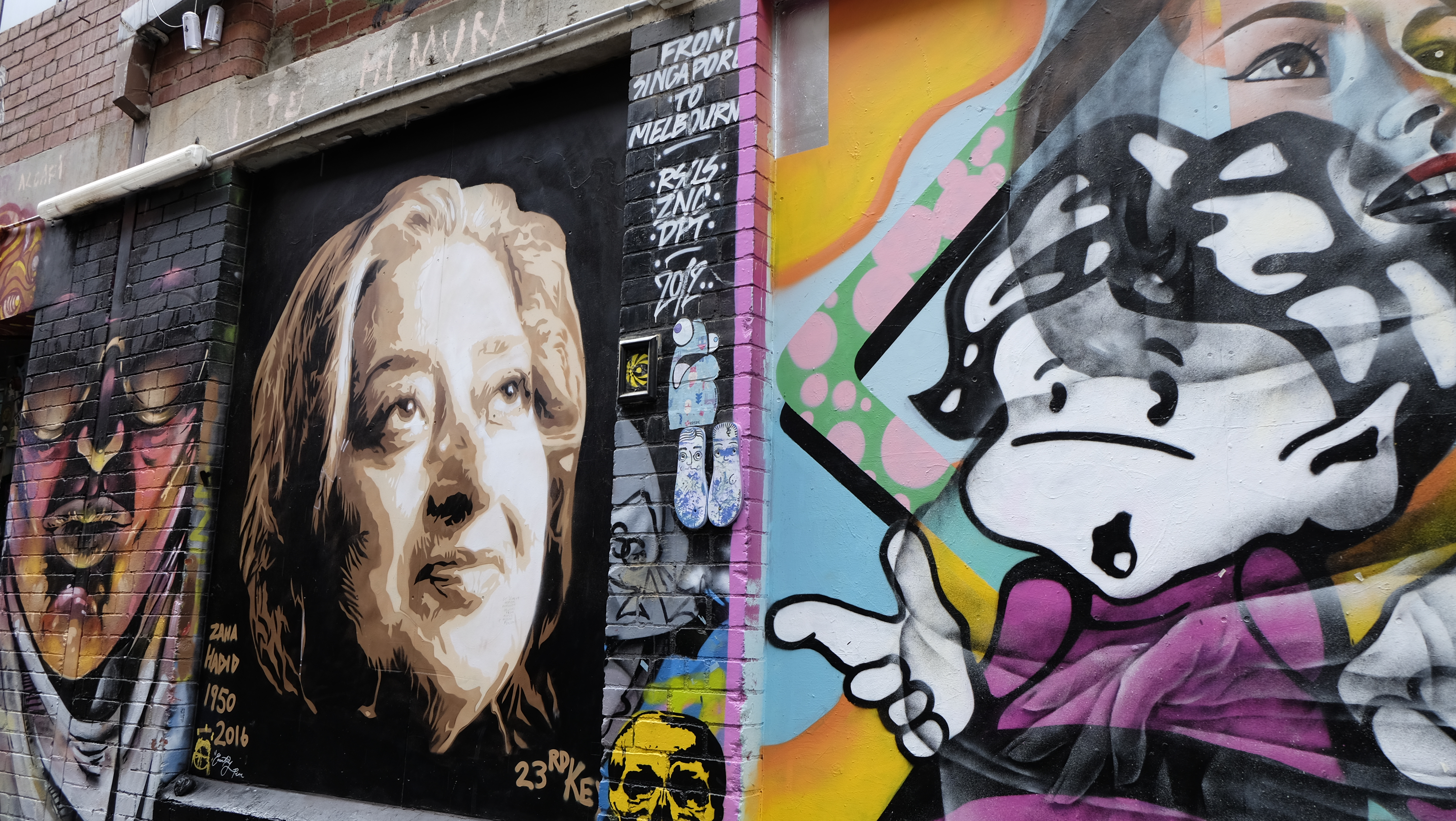
Today was quite an education in learning about a city’s subculture through the context of art. Street art to be specific.
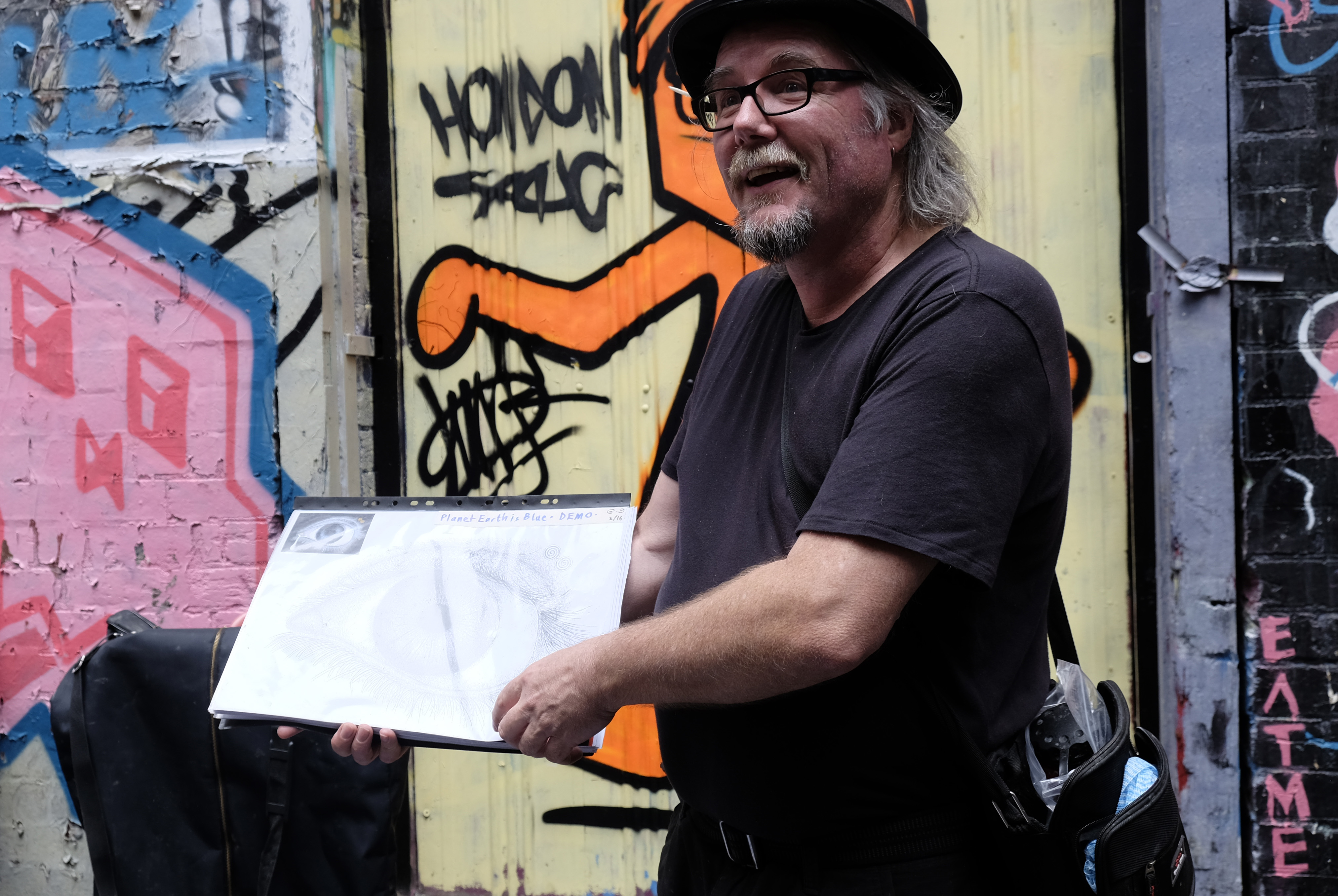
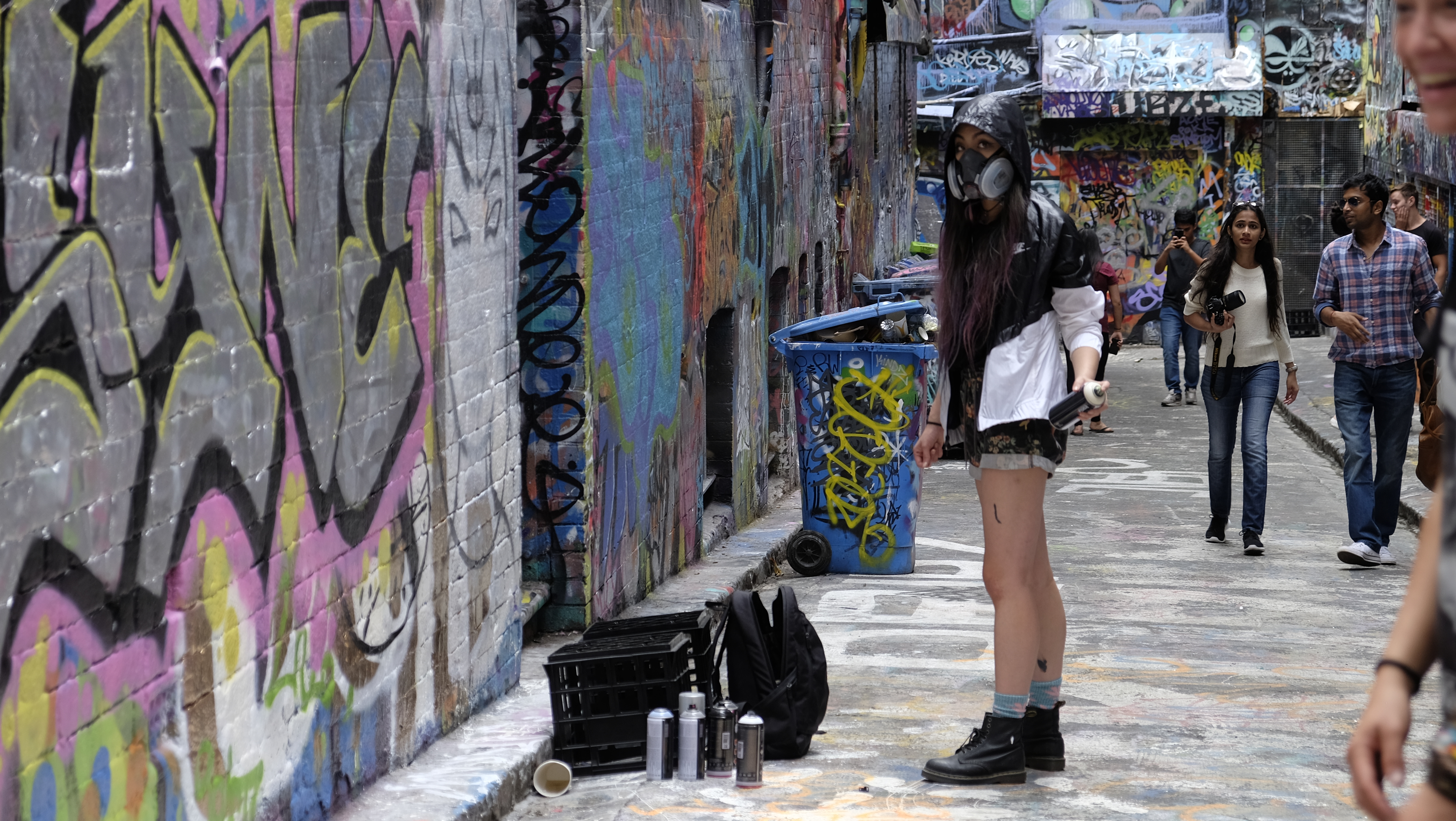
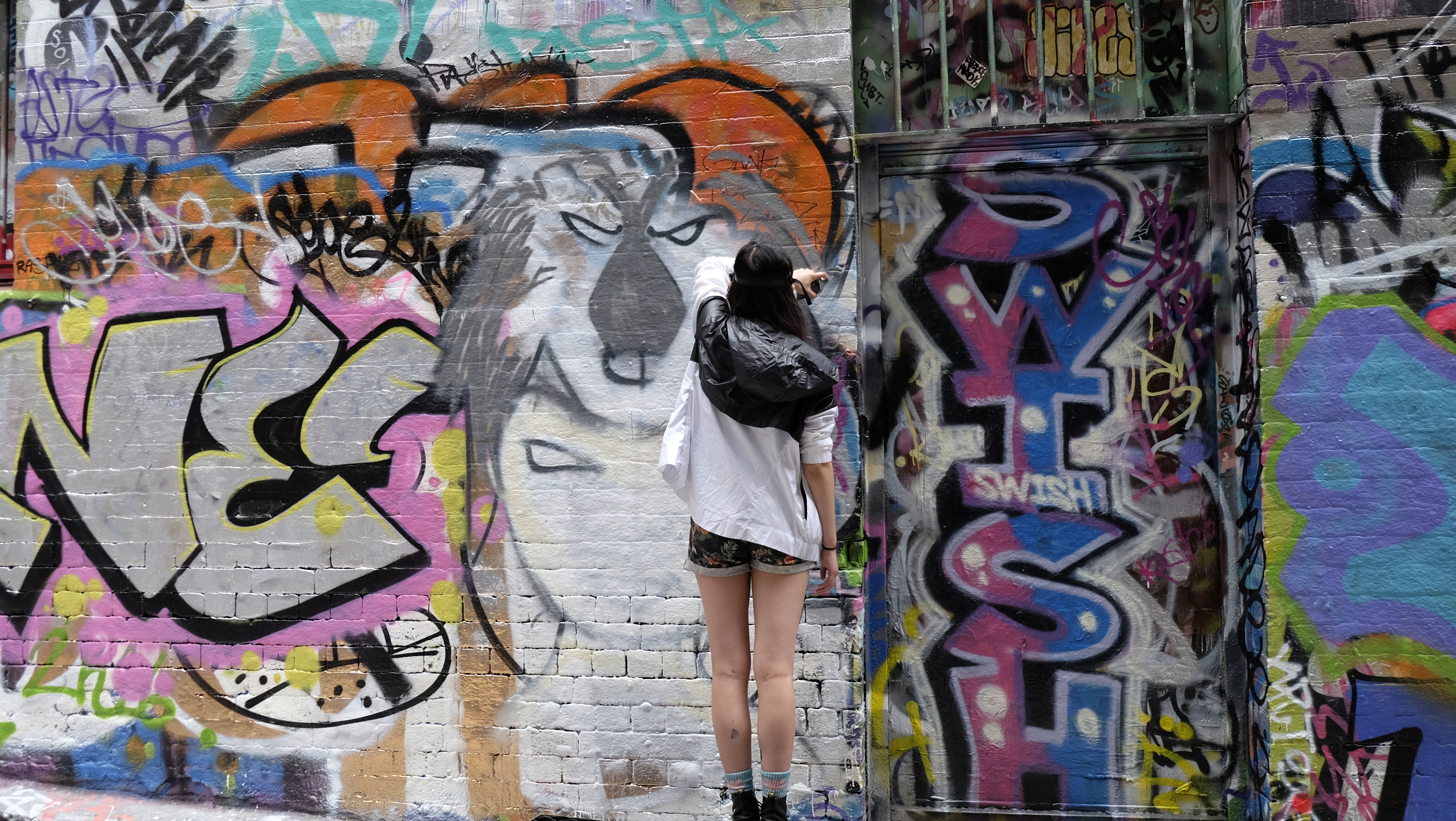
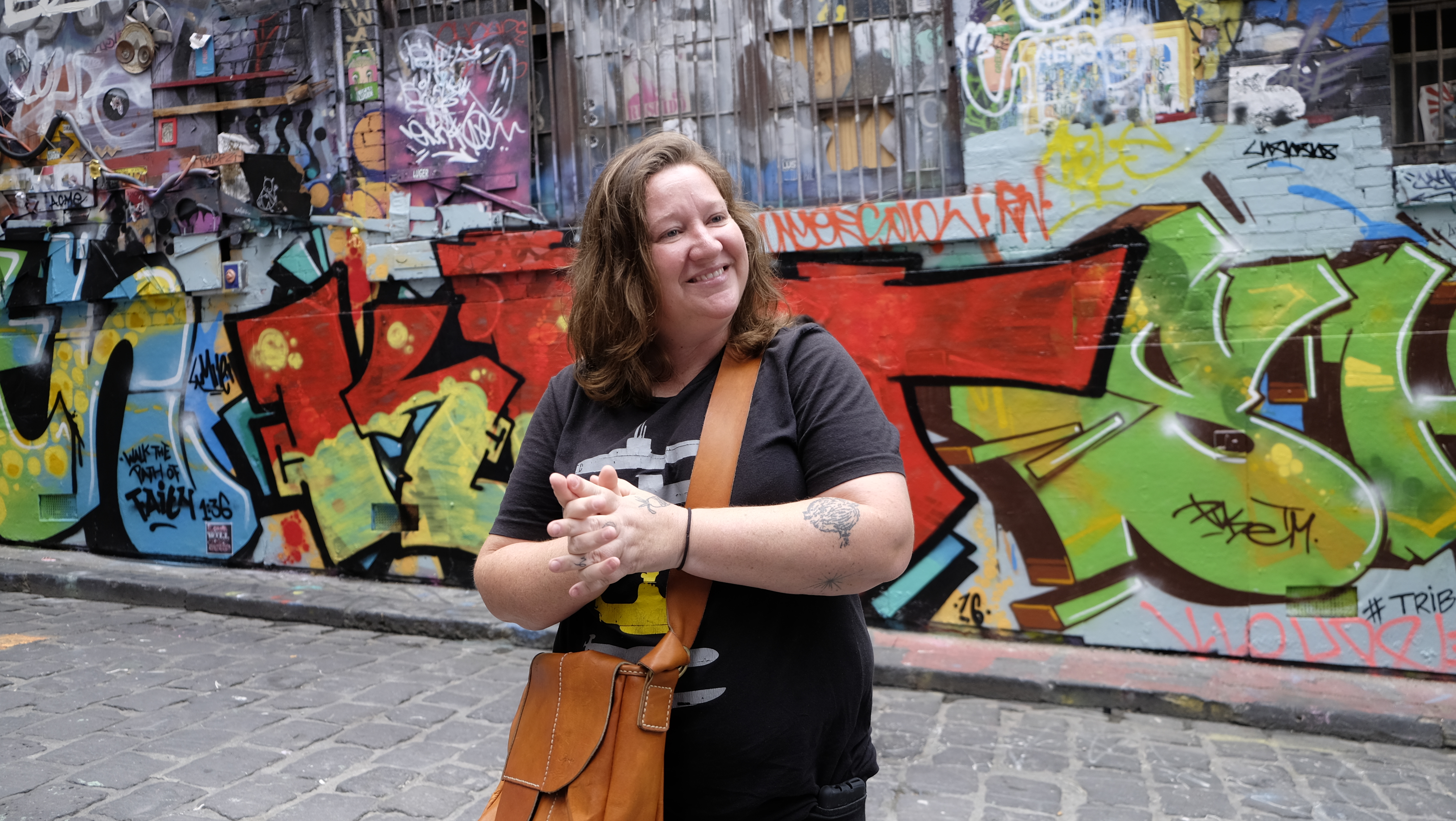
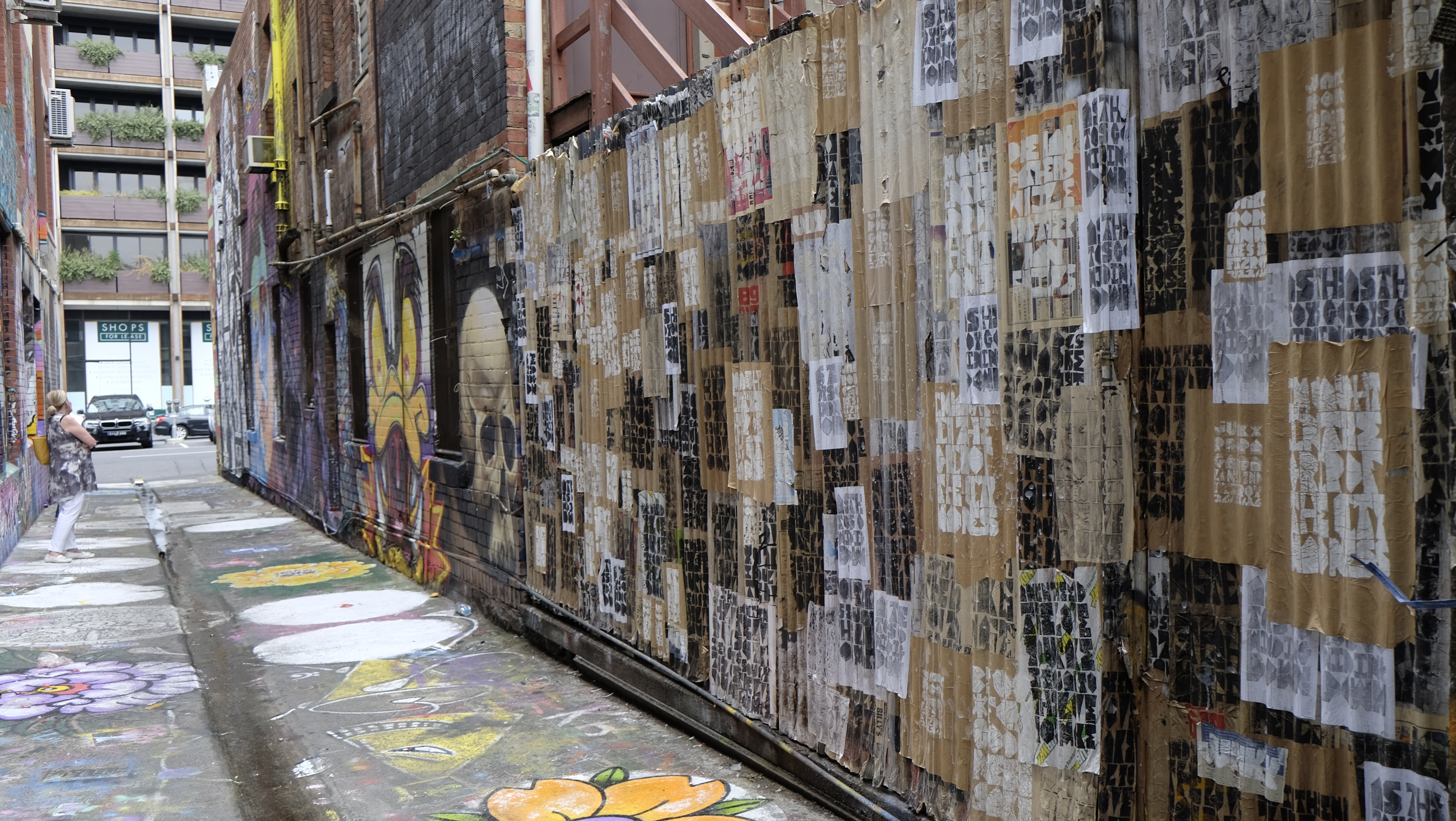
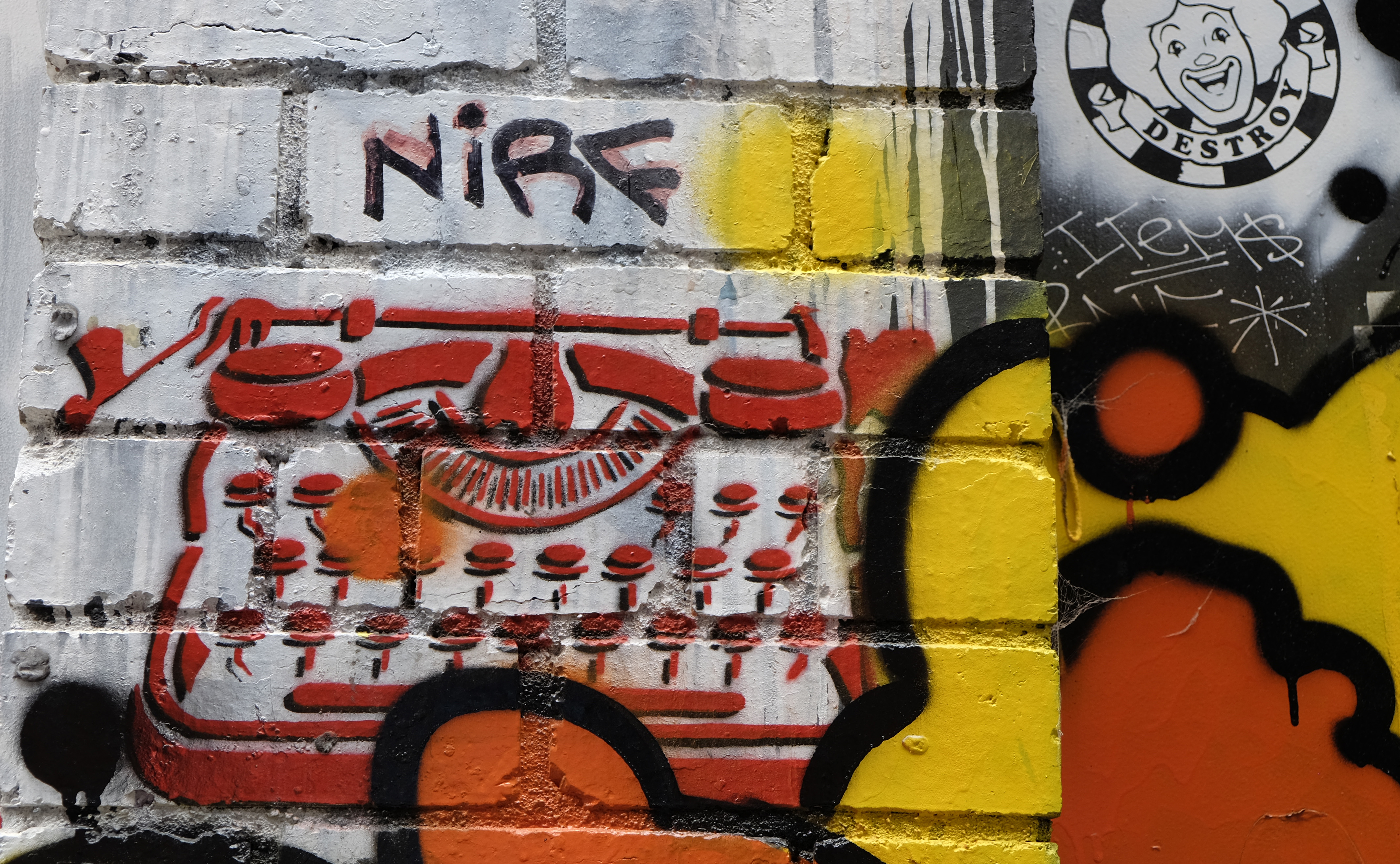
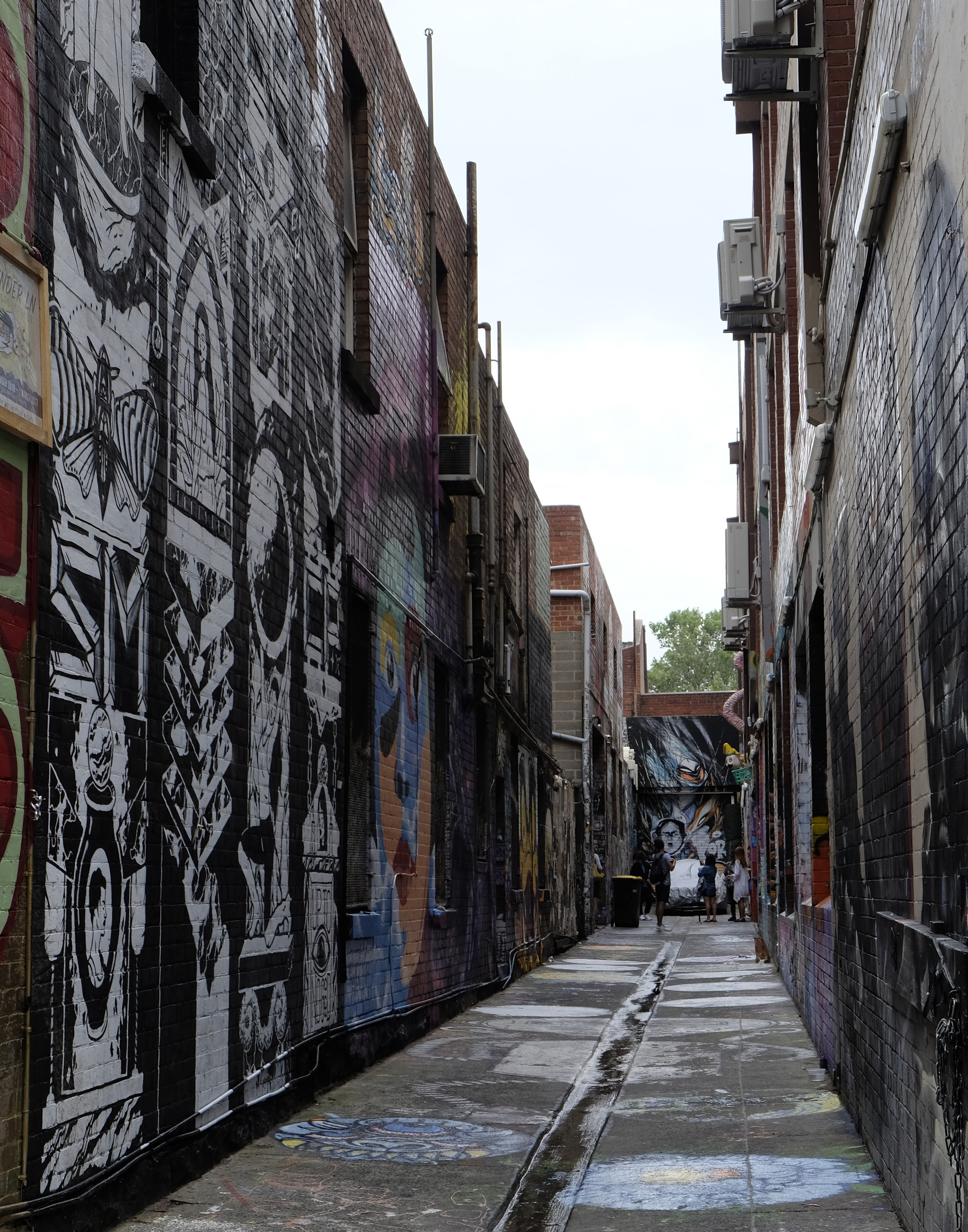
Andrew Gaynor, an art aficionado and tour guide, led us through the graffiti-covered lanes of Melbourne where we found small bits of decades-old art layered in low places and high art sprayed large covering the whole side of a building. This is not graffiti spray-painted on sides of vacant buildings; that is just vandalism. This was art. Real art. Art like you have-never-seen-before art. By artists you’ve never heard of.
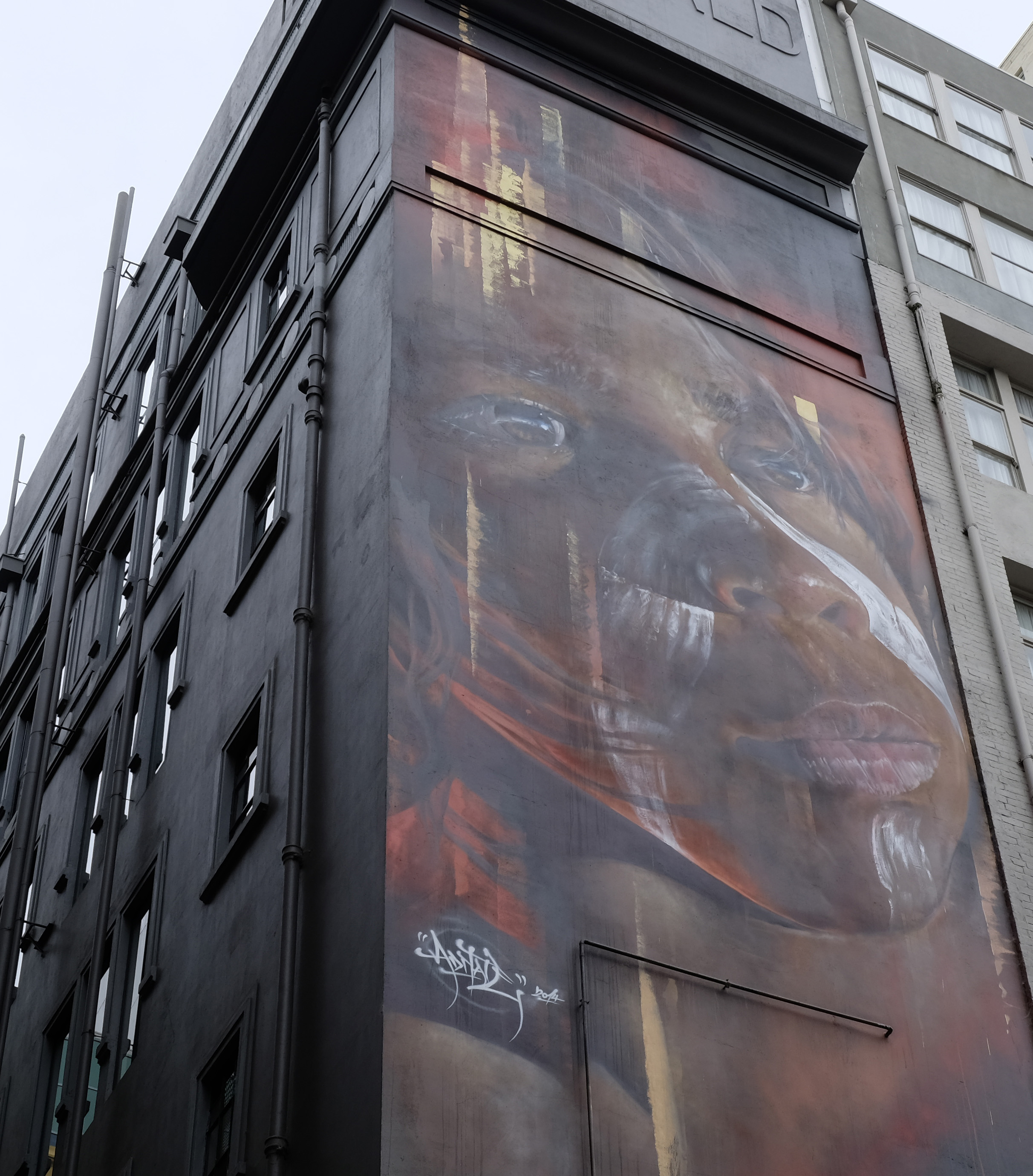
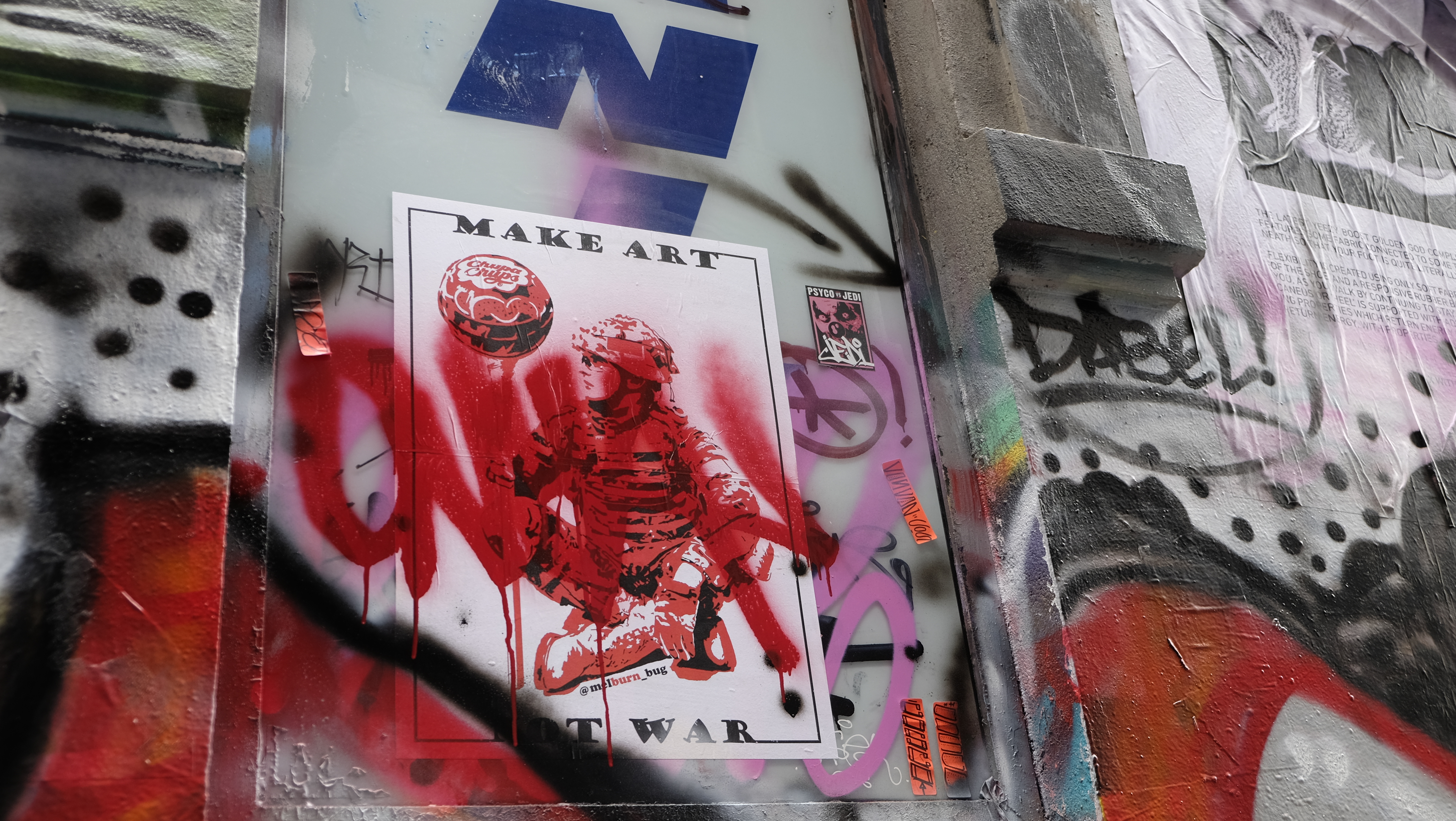
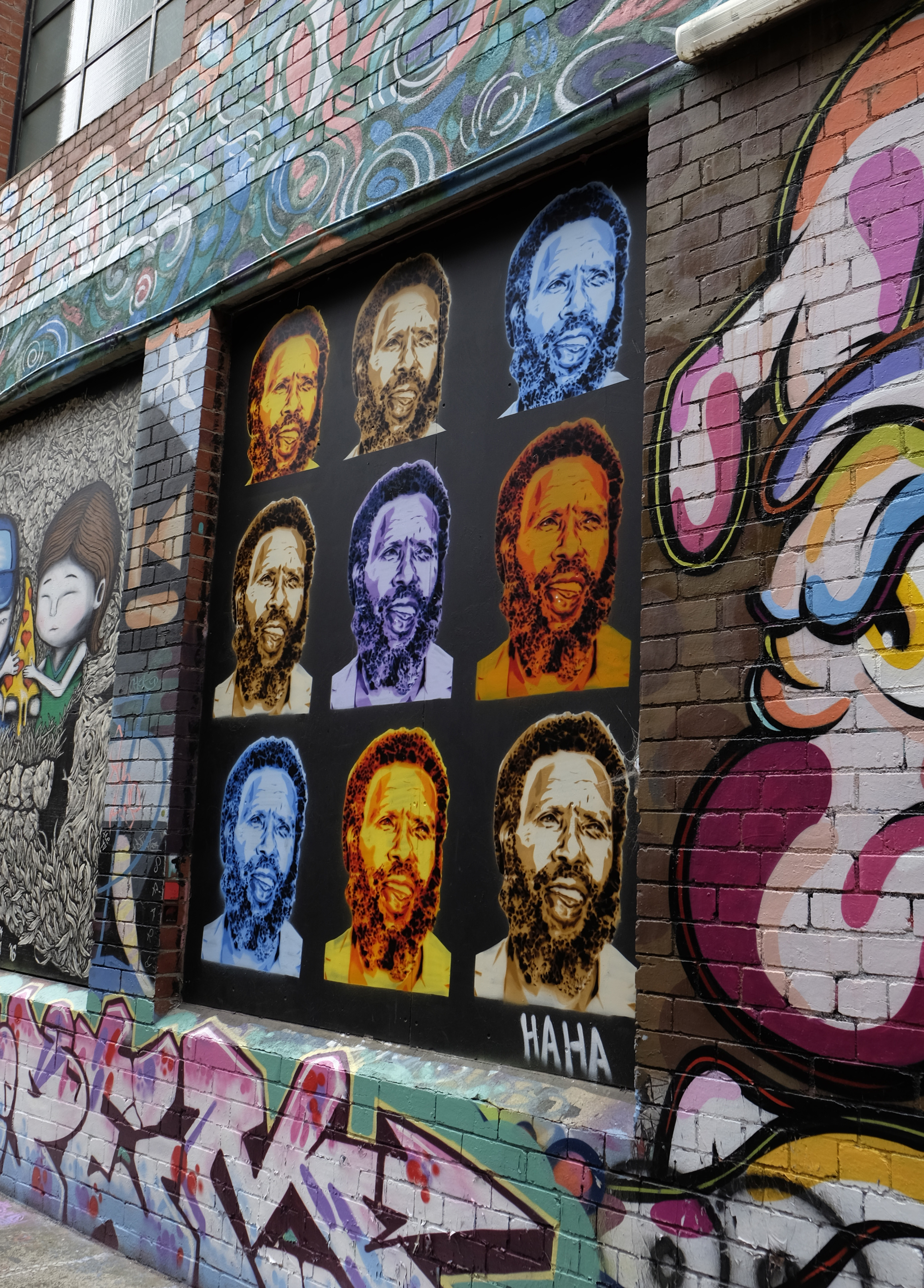
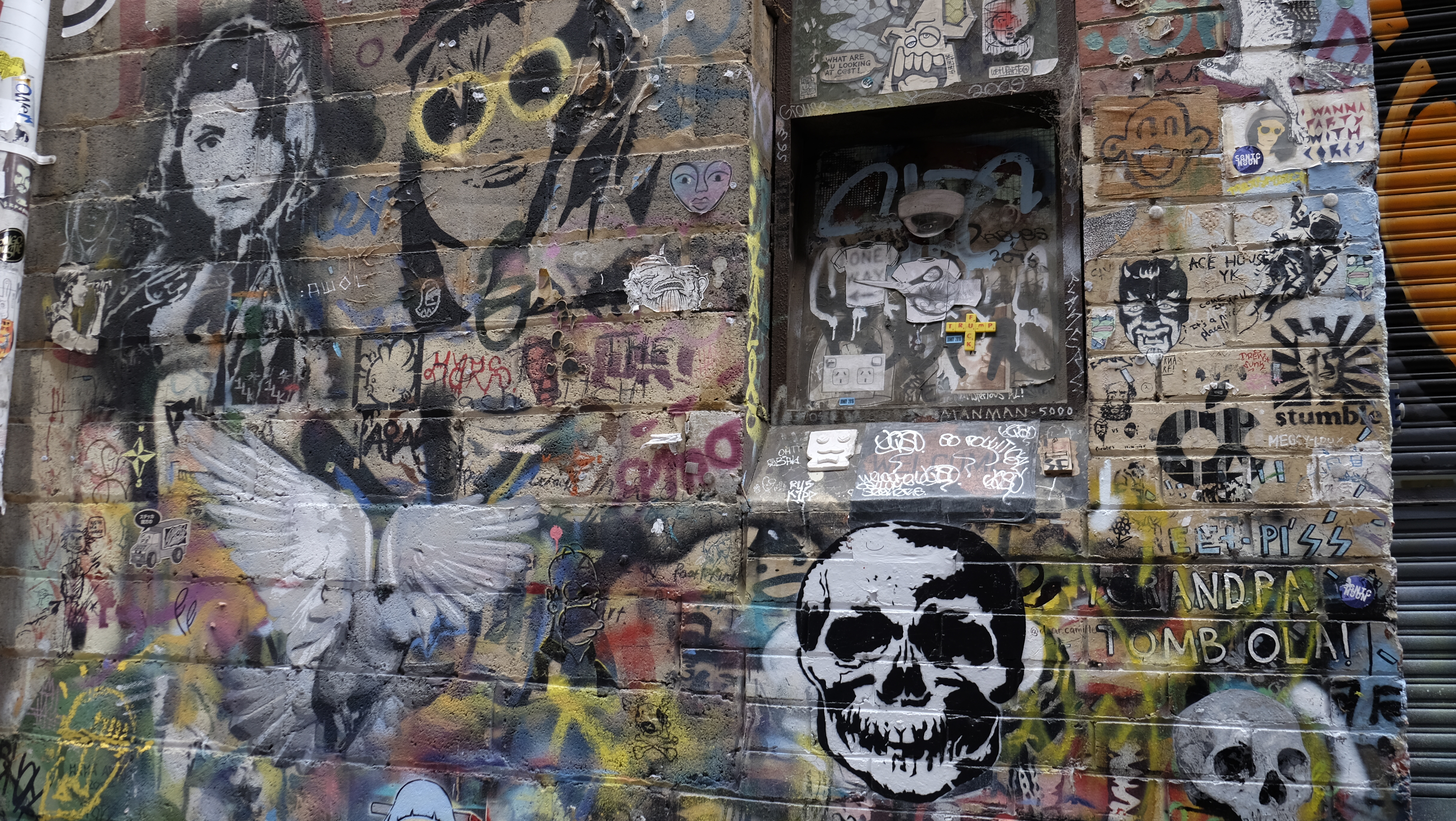
Andrew dropped names – Bansky, HaHa, Fafi, D*Face, Dem189, Adnate, Phoenix, Kaff-Eine. He showed us techniques – aerosol spray paint, stencils, wheatpasting, sticker art, sculpture and commissioned murals. He explained motivations – tagging, commentary, activism, subversion, provocation, advertising and to break from the perceived confines of the formal art world, bringing art to the public for free.
We learned about the challenges and risks that are associated with installing illicit artwork in public spaces. We learned how some in society have transitioned from disdain to quiet acceptance. We learned about cities embracing it, recognizing its importance in contributing to a vibrant urban culture. We learned that Melbourne’s graffiti-covered walls have become a popular backdrop for tourism, fashion and wedding photography.
Exact origins are not completely known. Some credit the Kilroy Was Here graffiti of the World War II era, a simple line-drawing of a long-nosed man peering from behind a fence. (I remember doodling this image in elementary school.) ADD PIX OF KILROY Much of what can now be defined as modern street art has well-documented origins dating from New York City’s graffiti boom, with its infancy in the 1960s, maturation in the 1970s and peaking with the aerosol spray-painted full-car subway train murals of the 1980s. Today it can be found all around the world and has morphed from graffiti into street art.
Spray paint in aerosol cans is the number one and original medium due to the speed required to paint without being caught. Tagging, writing your graffiti name in spray paint to mark your territory, is the most basic form of graffiti; it is often encrypted and only meant to be understood by those in a select community or gang.
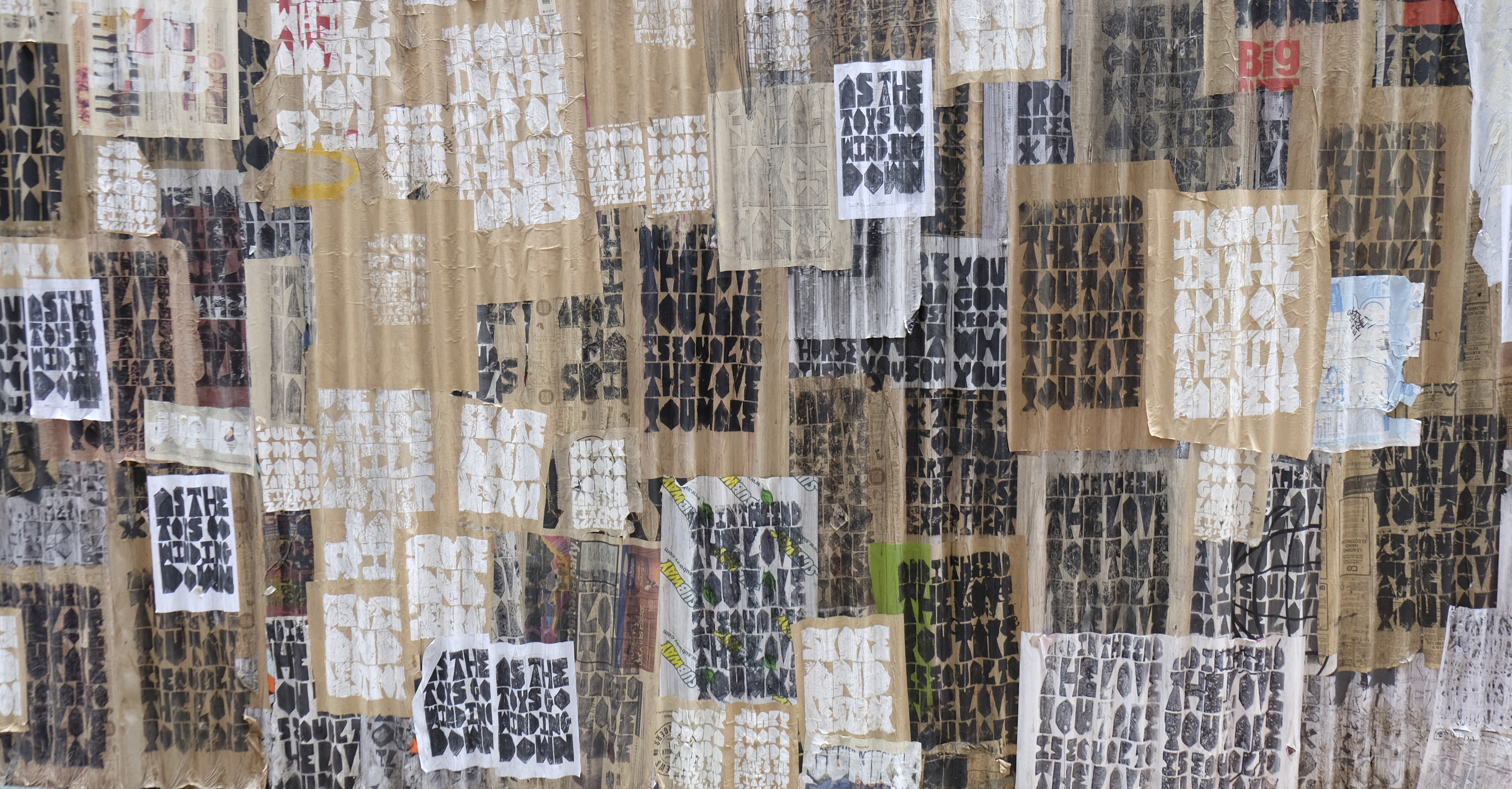
As artists wanted to create more detailed work but retain the speed necessary, stencil art originated. Pre-cut boards are used, often many times just slightly shifted for a layered look. As more detailed work came onto the scene, wheatpasting (gluing drawings prepared off the street) and sticker art became widely used in Melbourne. Stencil art was embraced at an early stage in Melbourne, leading to the name of the “Stencil Capital of the World.”
In Melbourne, it is still illegal to deface a building without the owner’s permission, punishable by a fine of $20,000 and up to two years in prison. Just the act of holding a can of spray paint in a public area could put you behind bars. But the law is rarely, if ever, used today.
You may have heard of Bansky, one of the most notorious and popular street artists. Banksy has developed an entire art subculture devoted to his works. His identity remains unknown, even after over 20 years of being involved with the graffiti scene. He keeps his identity a secret to avoid arrest.
He is credited with developing the stencil technique after nearly being caught vandalizing public spaces by police. As his crew fled from the scene, Banksy was stuck hiding beneath a garbage truck. It was at this time that Banksy saw stencil letters on the truck. Looking for a faster way to paint, Banksy decided stenciling would be his new graffiti type.
You may remember a news story in the last few years about Bansky selling original, signed canvases of his work in a pop-up stall in Central Park. He had few takers and only earned $420 after a full day. Today, those prints are estimated to be worth over $500,000 if sold at auction.
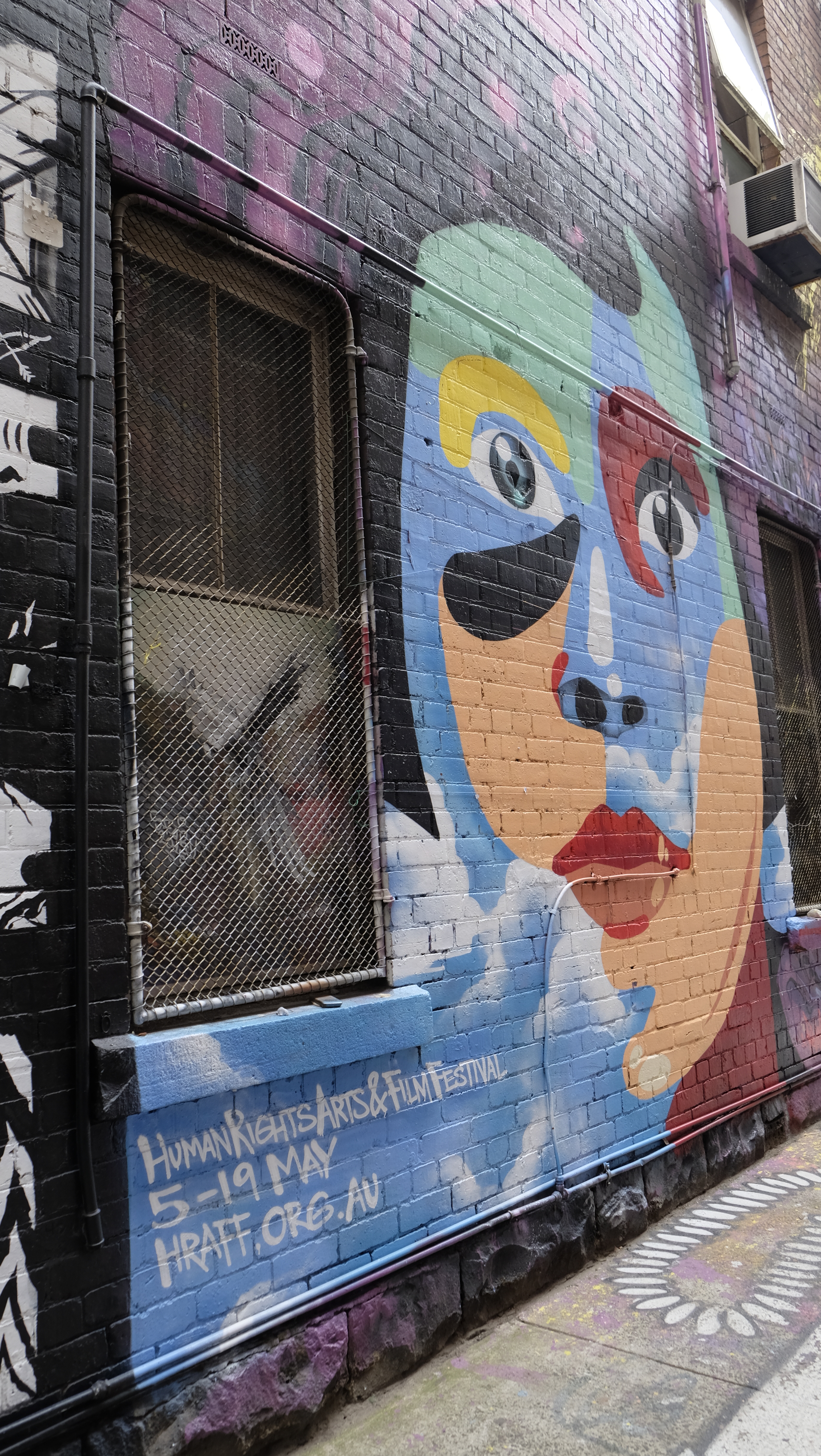
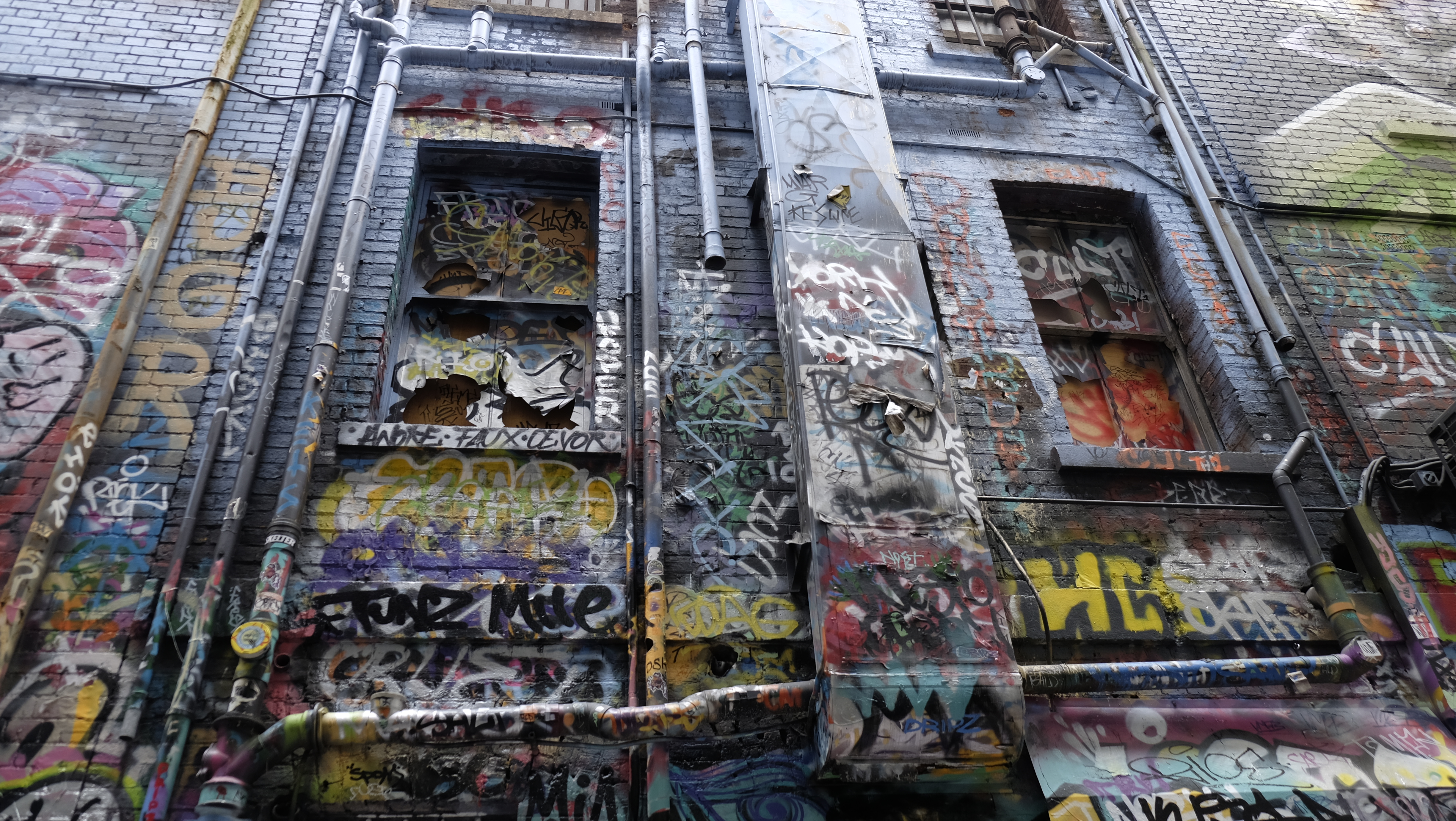
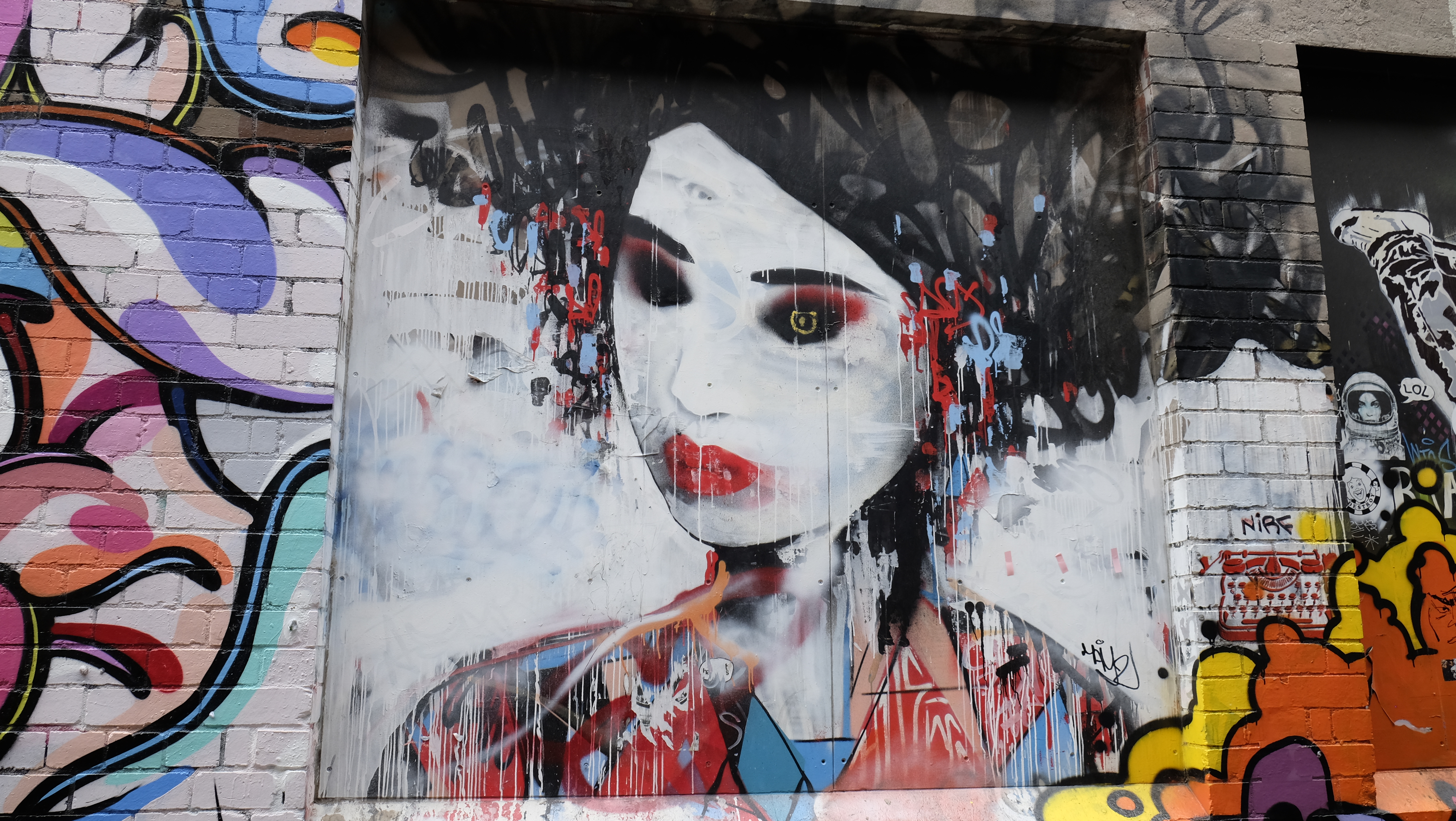
I could go on about this day forever but it’s time to let the photos speak for themselves.
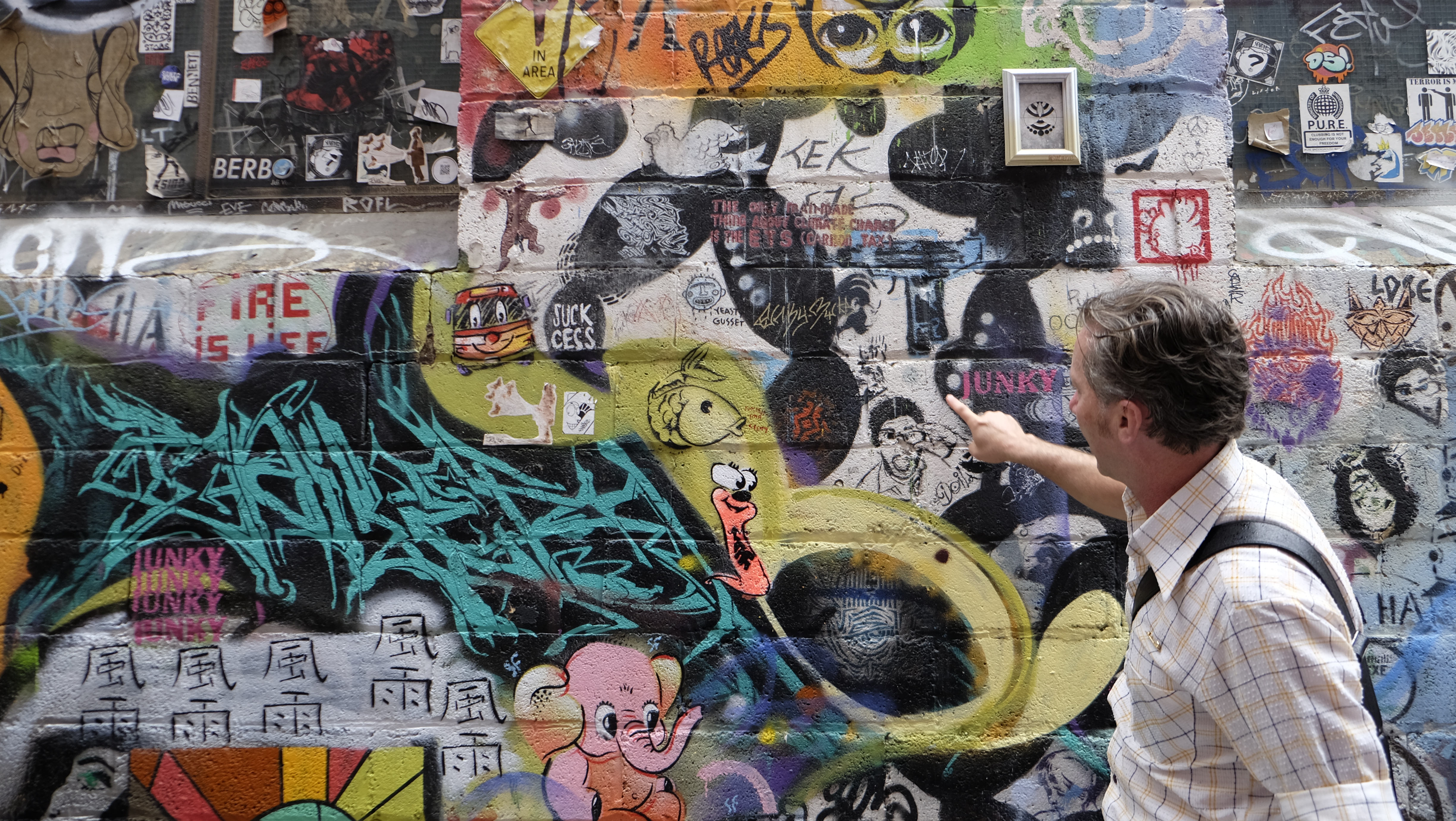
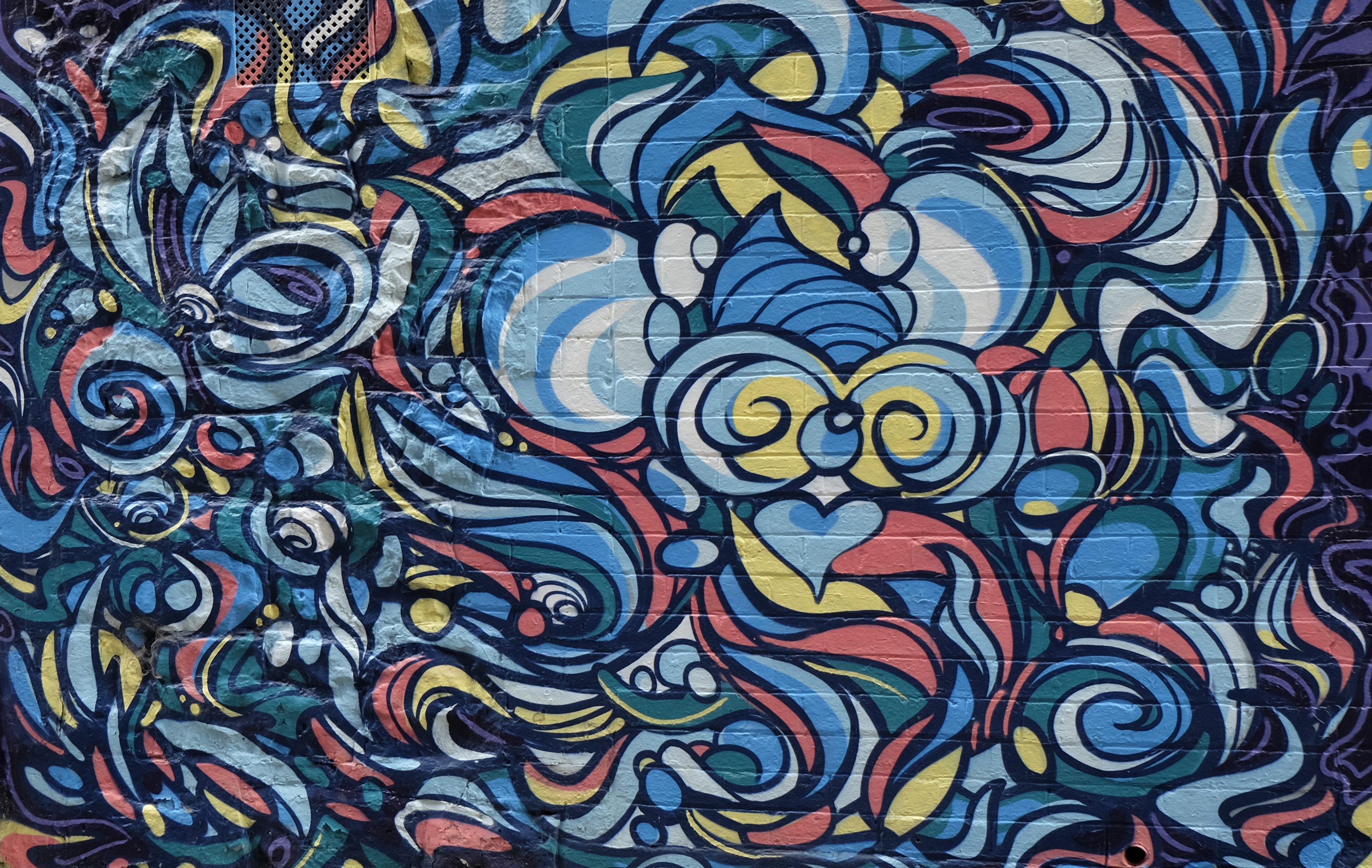
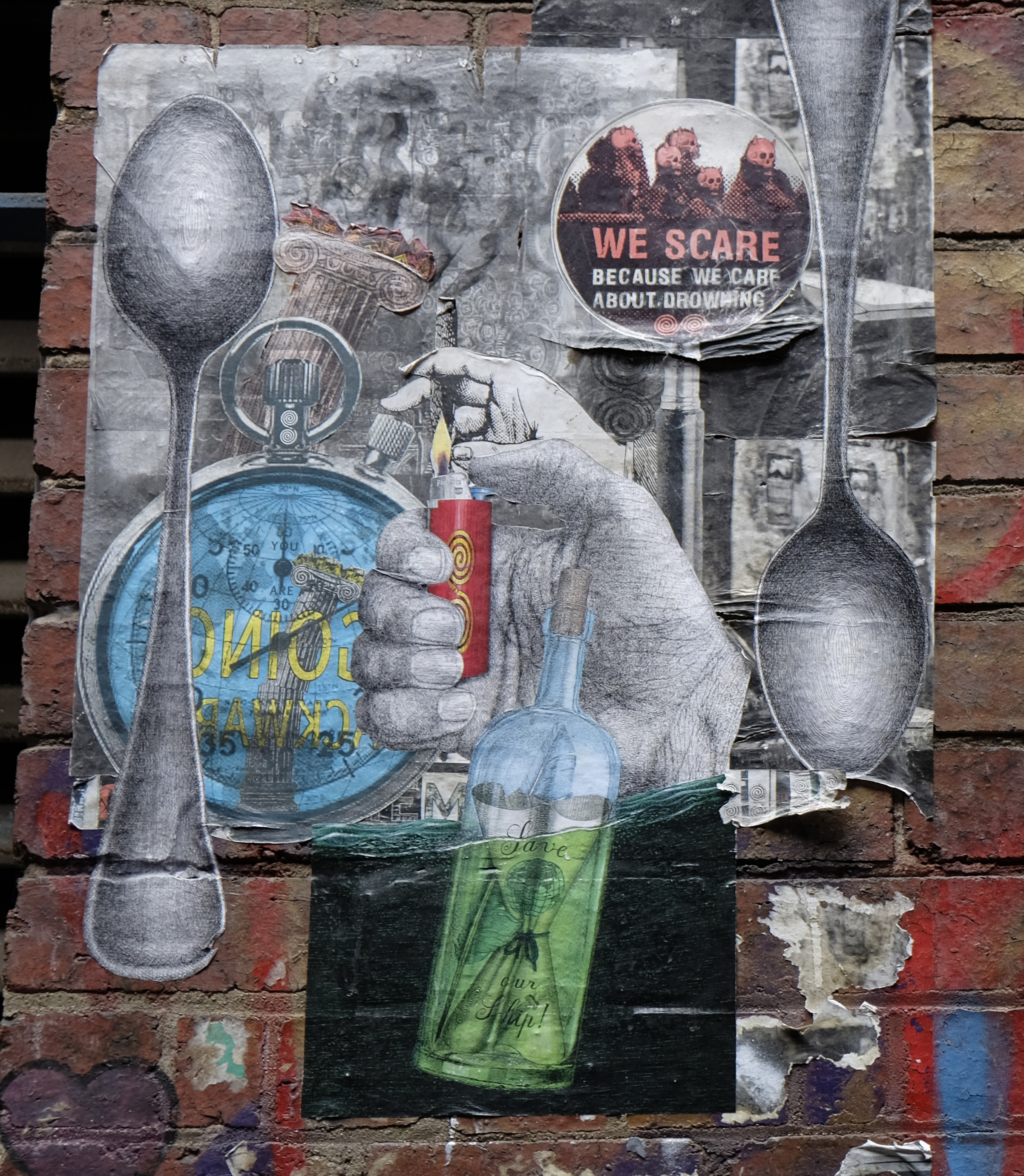
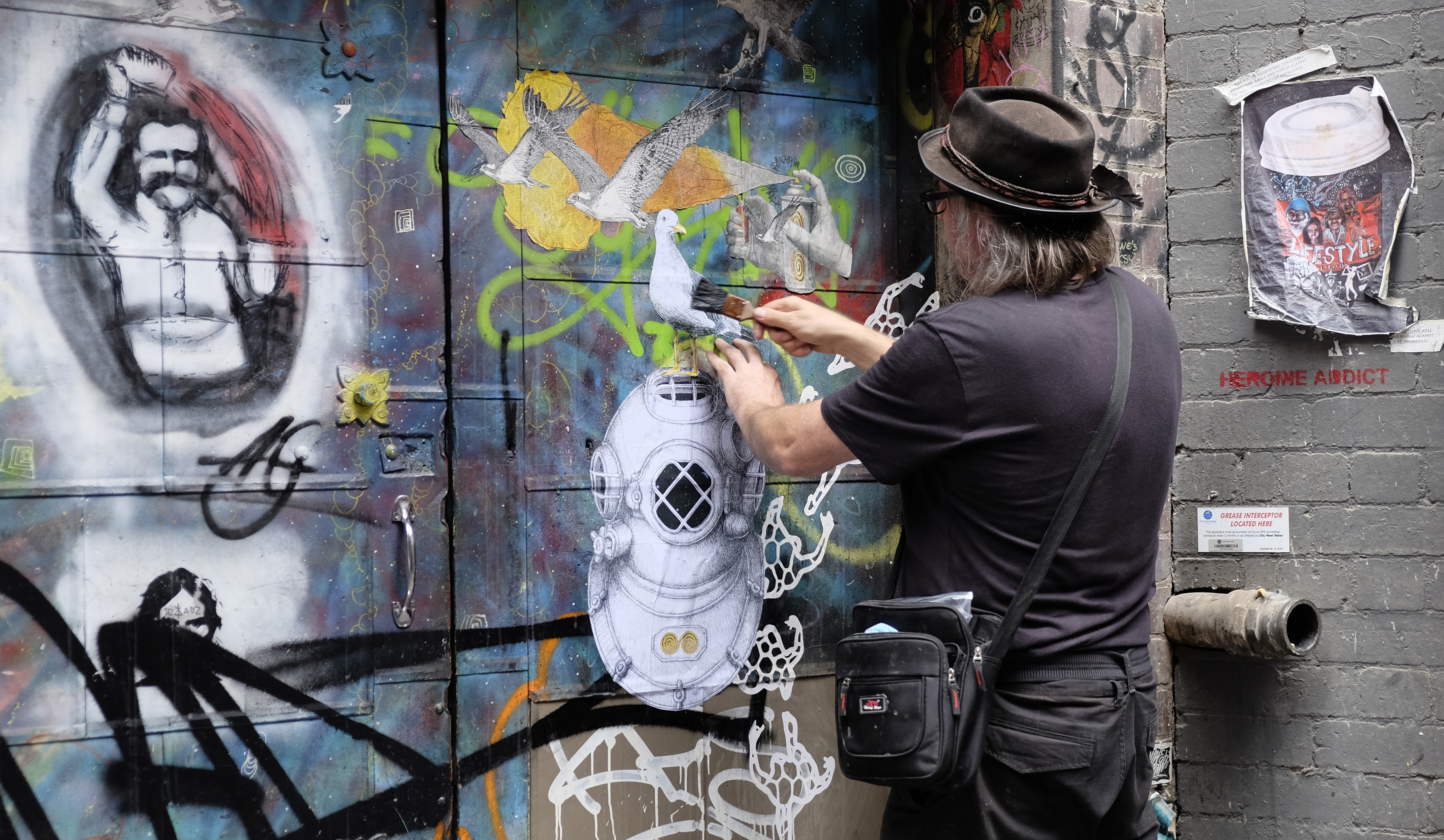
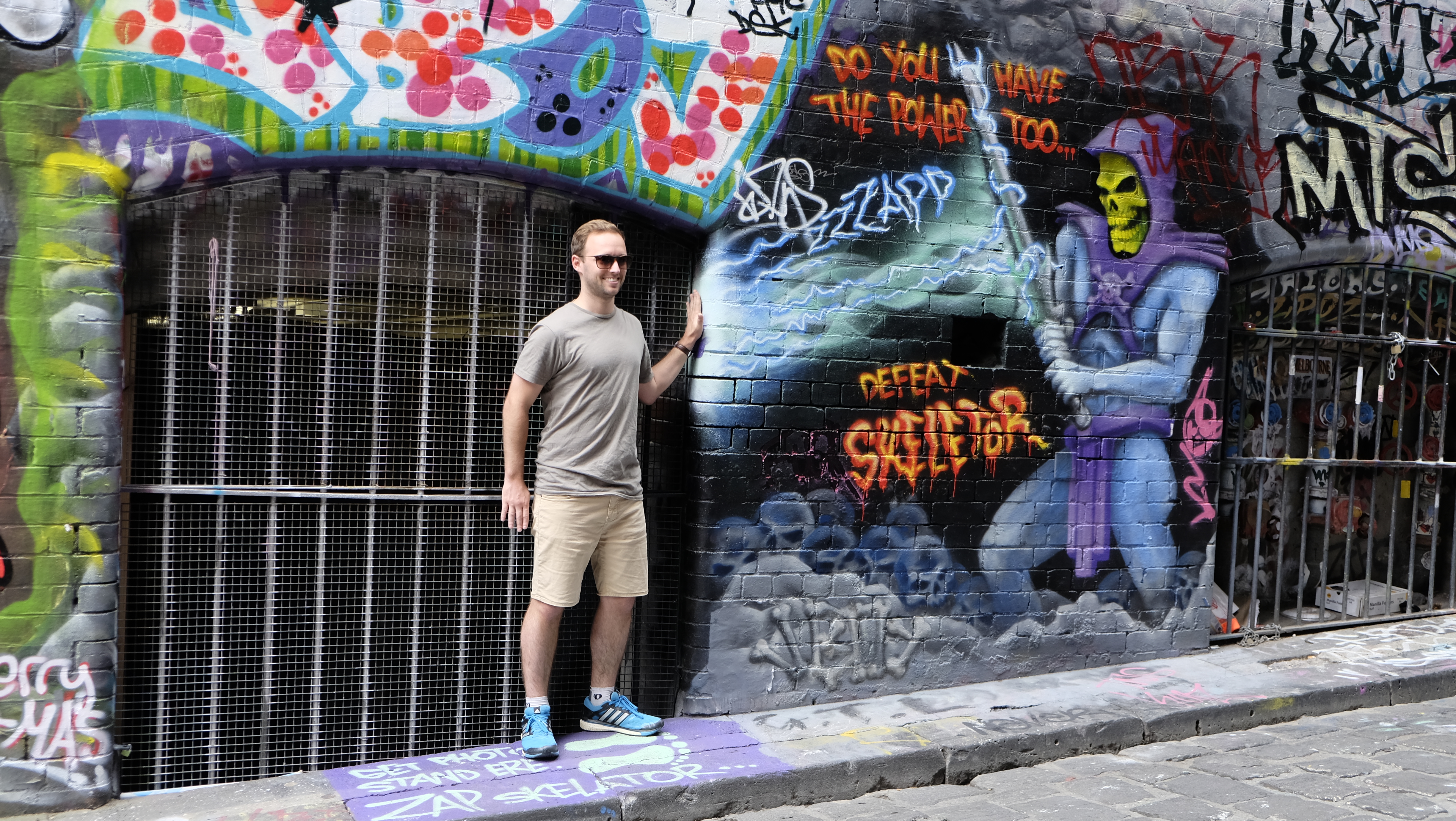
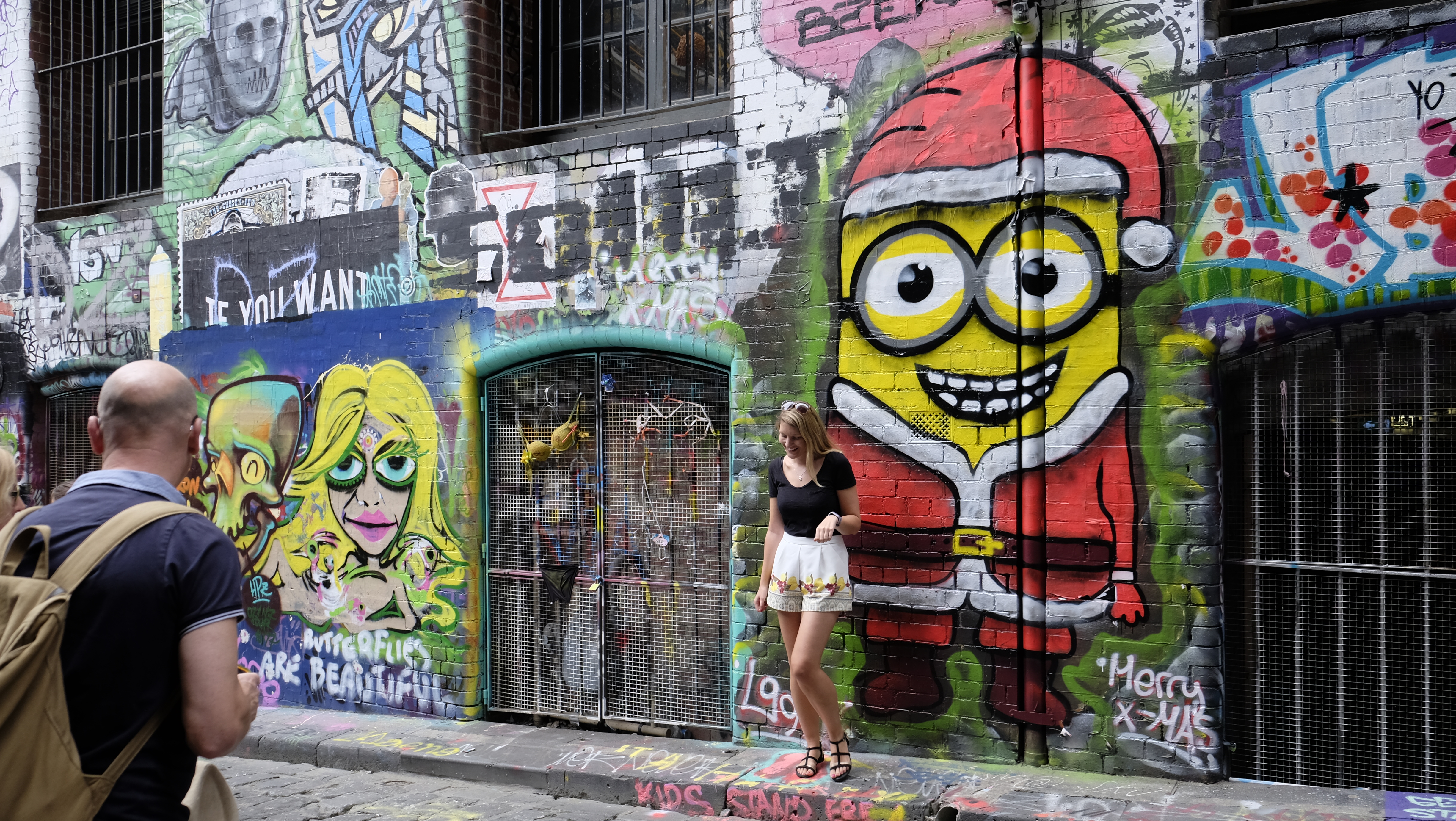
The massive (see people standing on sidewalk in photo on right for context) tree design is by Dem189 from France who brought in a scissor-lift to paint.
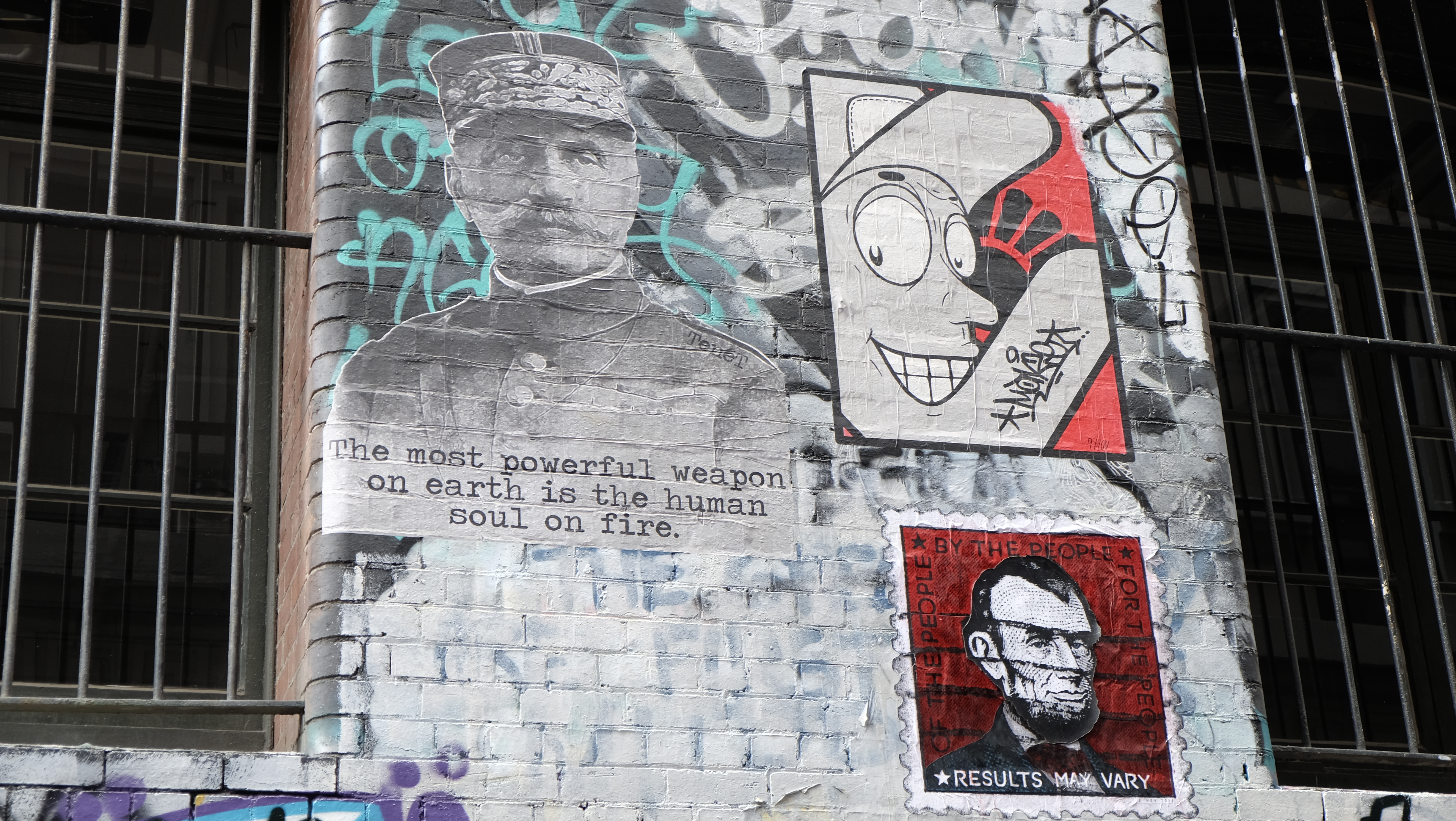
Some other Tenet’s words: When you want to fool the world tell the truth. If voting changed anything they would make it illegal. We swallow greedily any lie that flatters us, but we sip only little by little at a truth we bitter. Everyone has value, even if only to serve as a bad example. Any girl can be glamorous; all you need to do is stand still and look stupid.
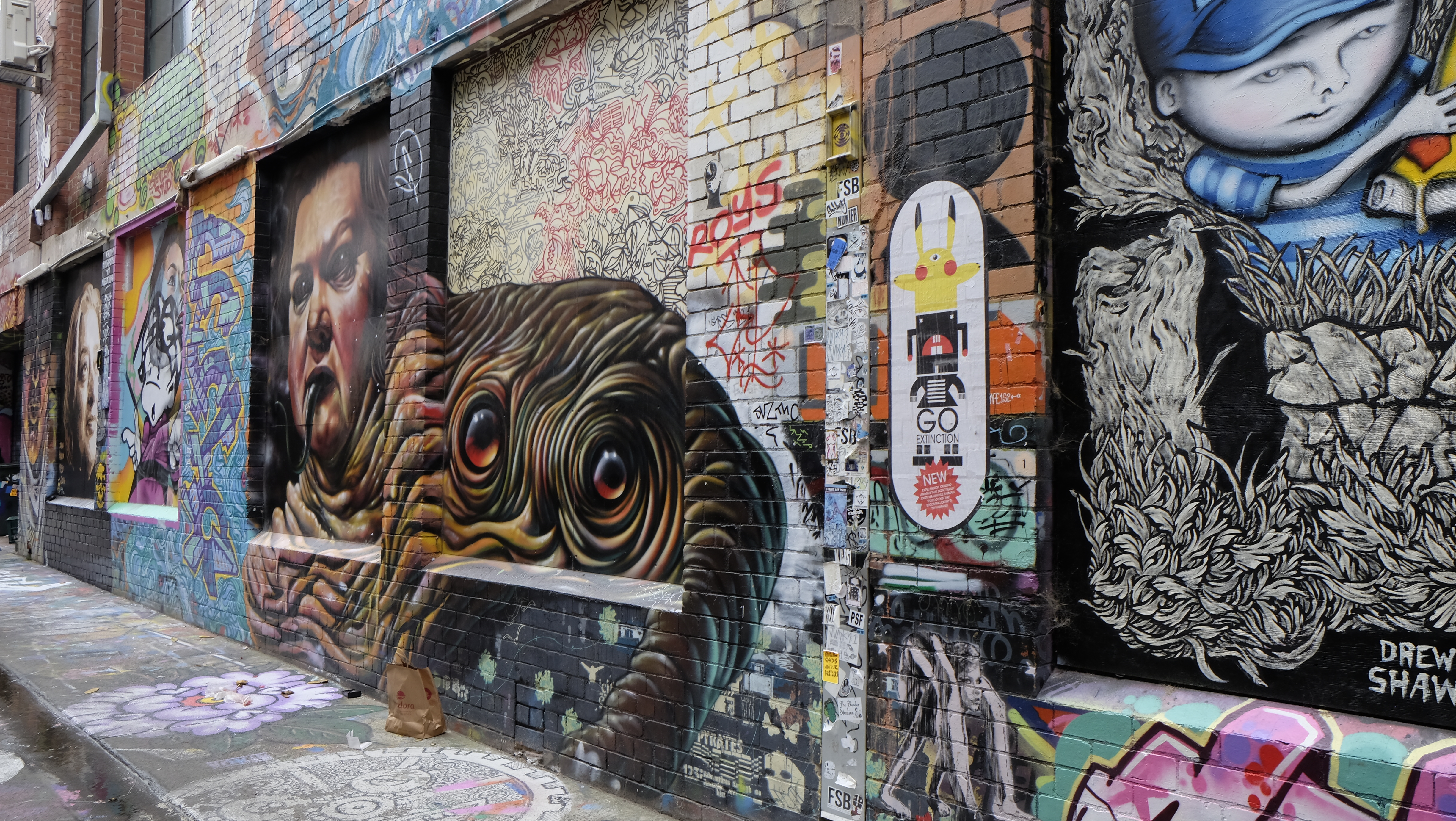
And that’s it. Sorry Larry, no wildlife today but plenty of wild things.

Leave a Reply