Wednesday, December 18, 2019 | Siem Reap, Cambodia | Language: Khmer, French and English widely spoken | Population: 139,458 | Currency: Cambodian Riel
Finally, we arrive to Angkor Wat (wat means temple), the real reason we came to Cambodia. It is considered to be the eighth Wonder of the World.
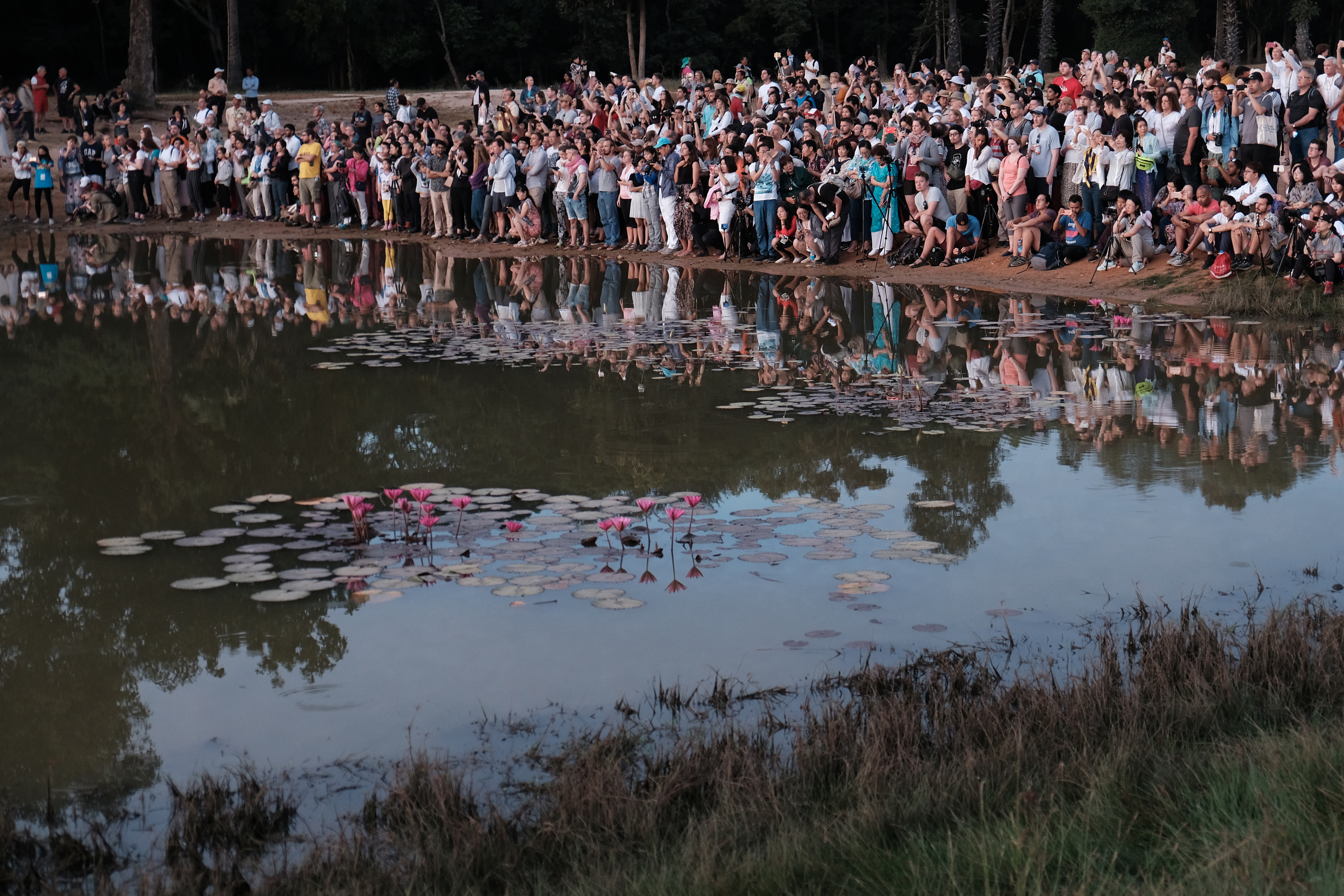
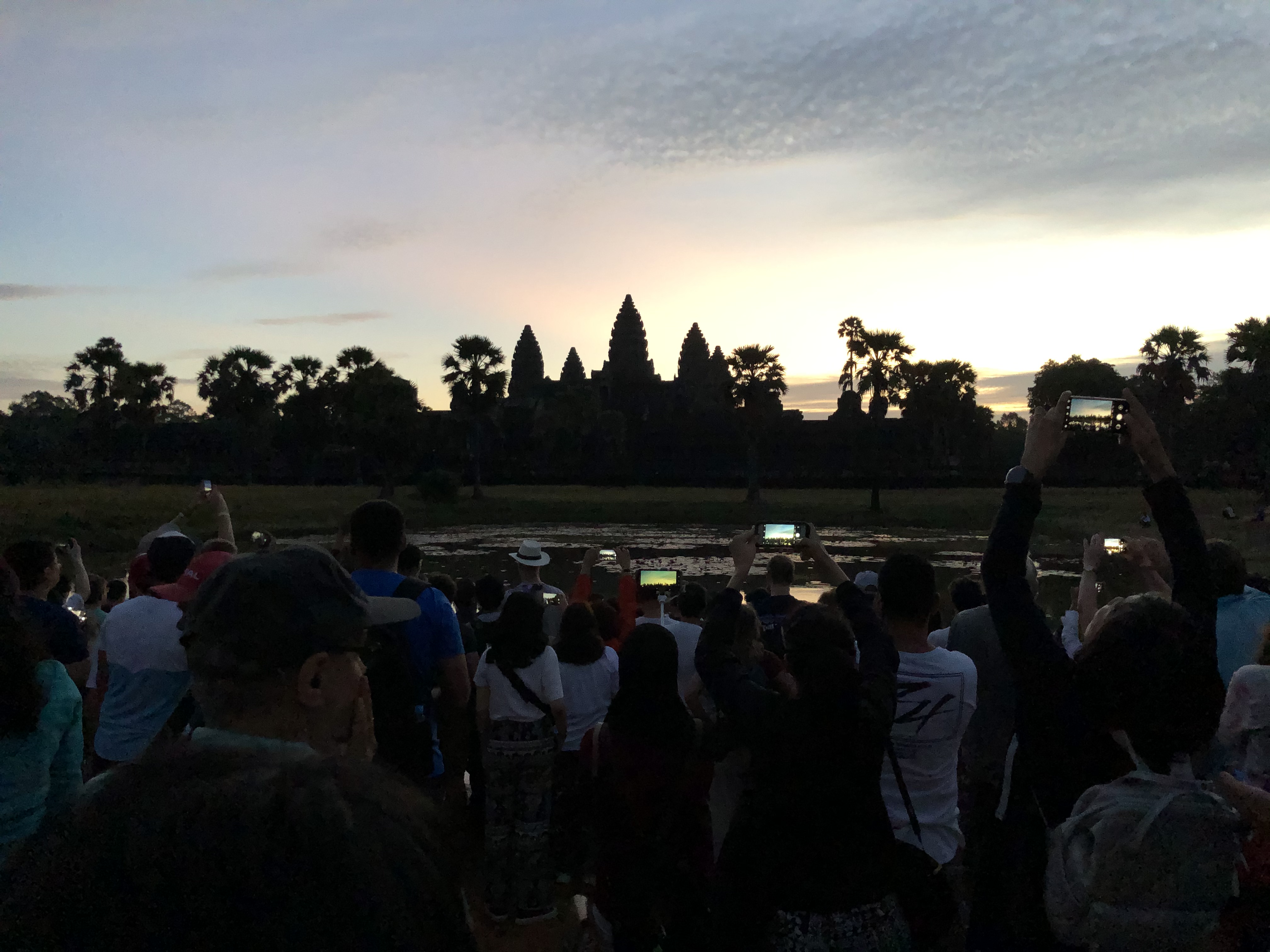
This is how our day was described to us, “As the day breaks, early risers will have the pleasure of witnessing light dance across the sandstone balconies and early-Dravidian structures at Angkor Wat. Though constructed by Suryavarman in the early 12th century to honor the Hindu god Vishnu II, less than a century later it became a fully functioning Buddhist temple.” What this description failed to mention was the sheer number of tourists arising at 4:00 am to get the picture of the sun rising over Angkor Wat creating a perfect reflection in the moat in front of the landscape.
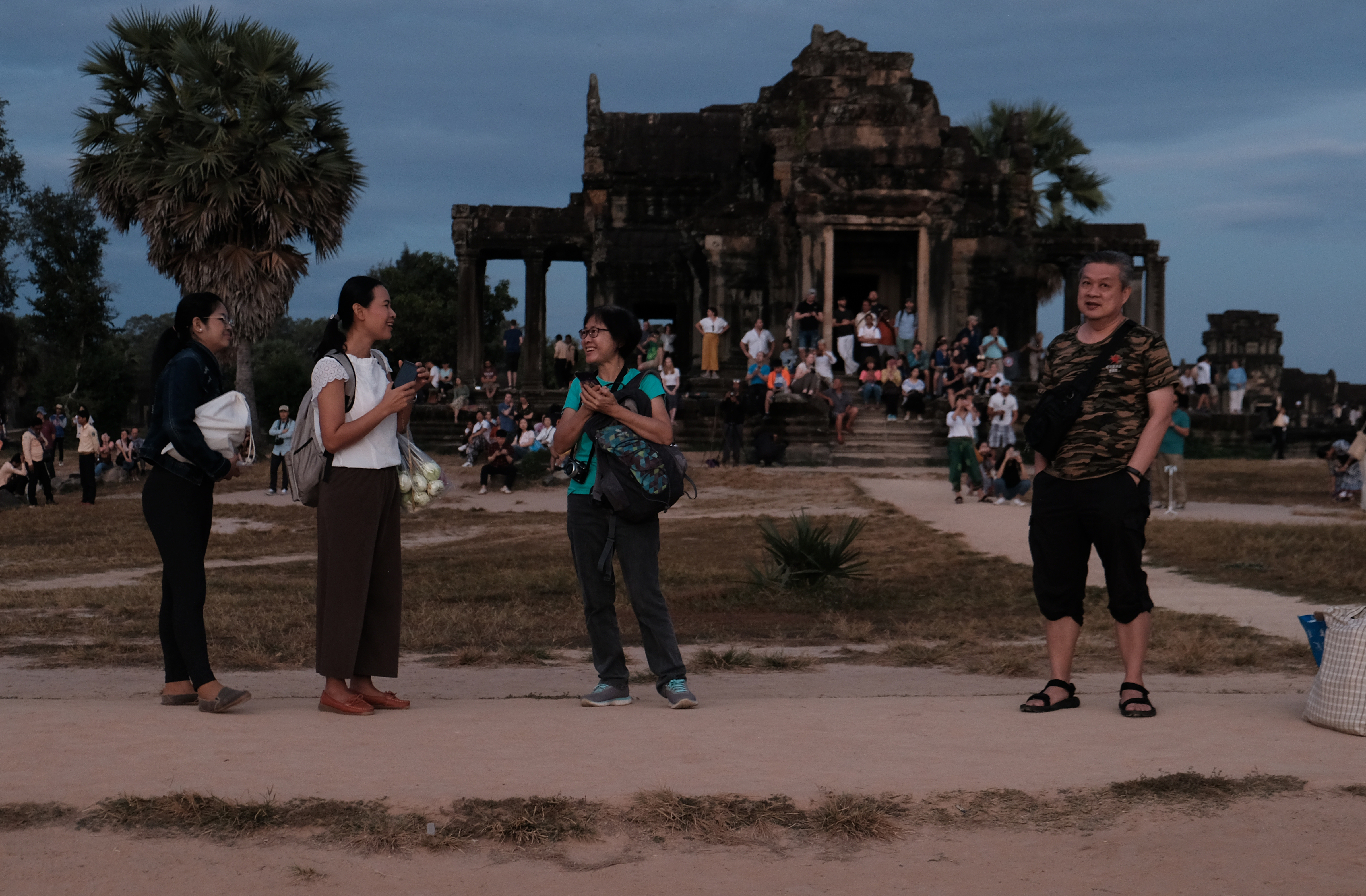
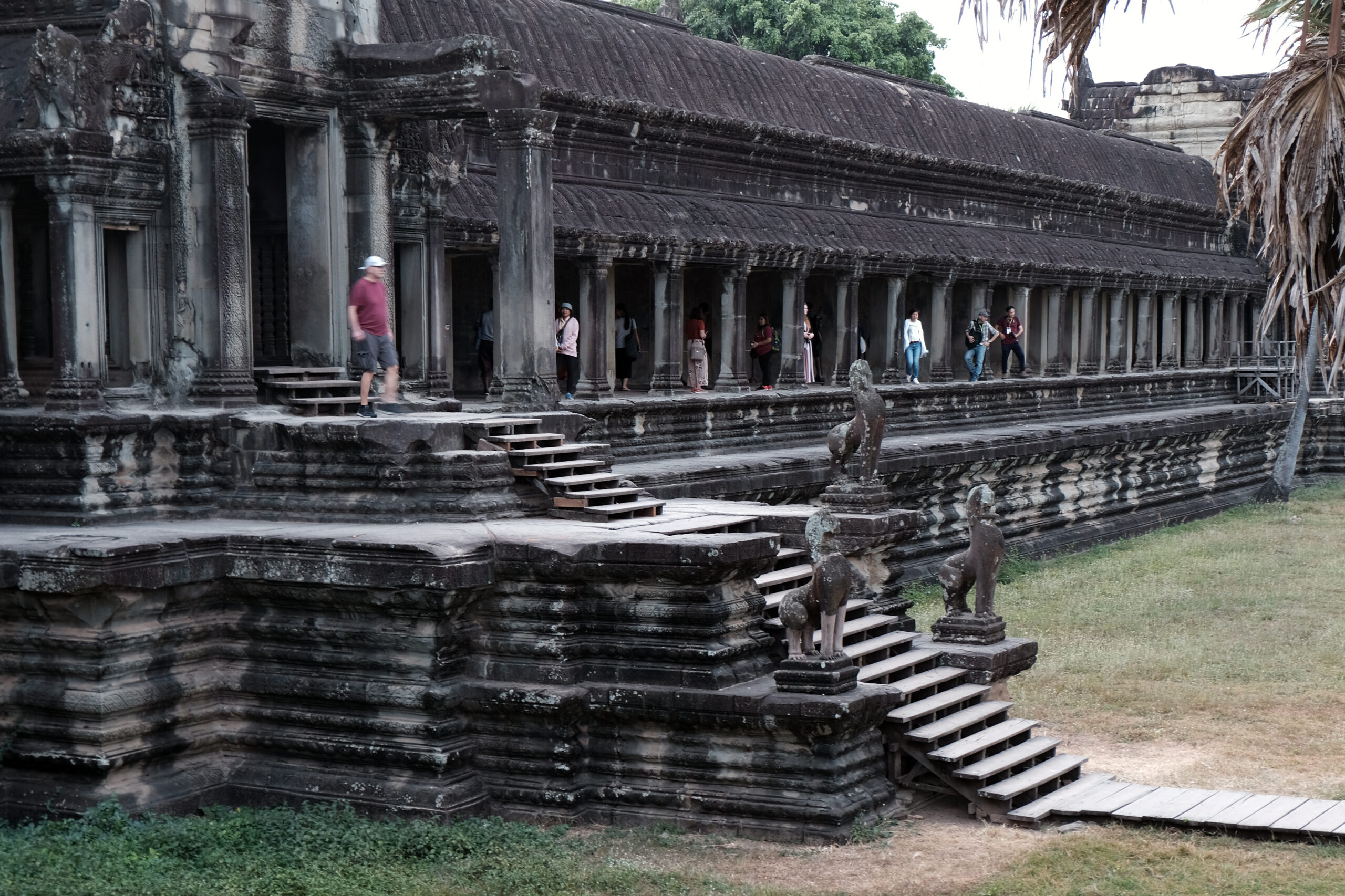
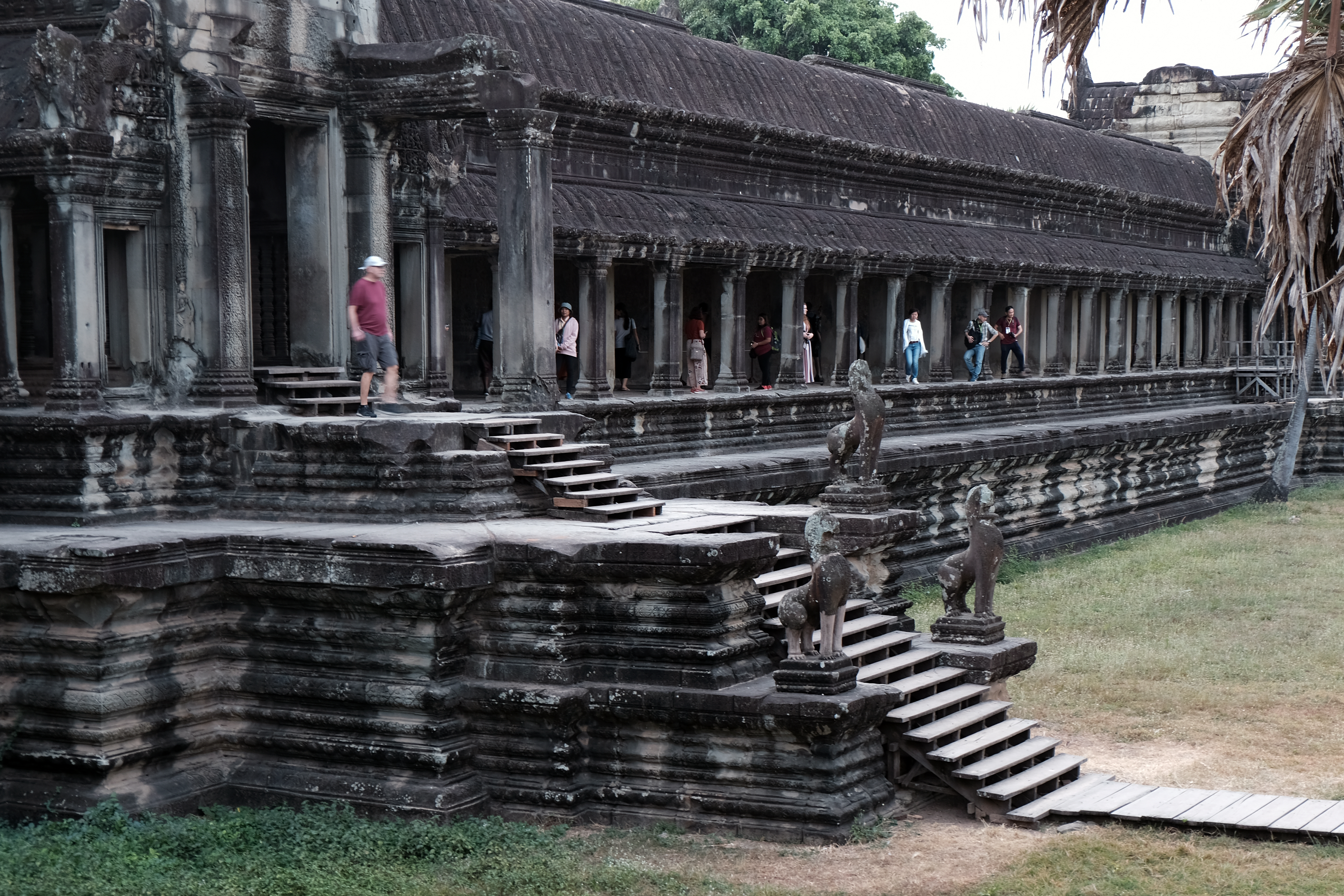
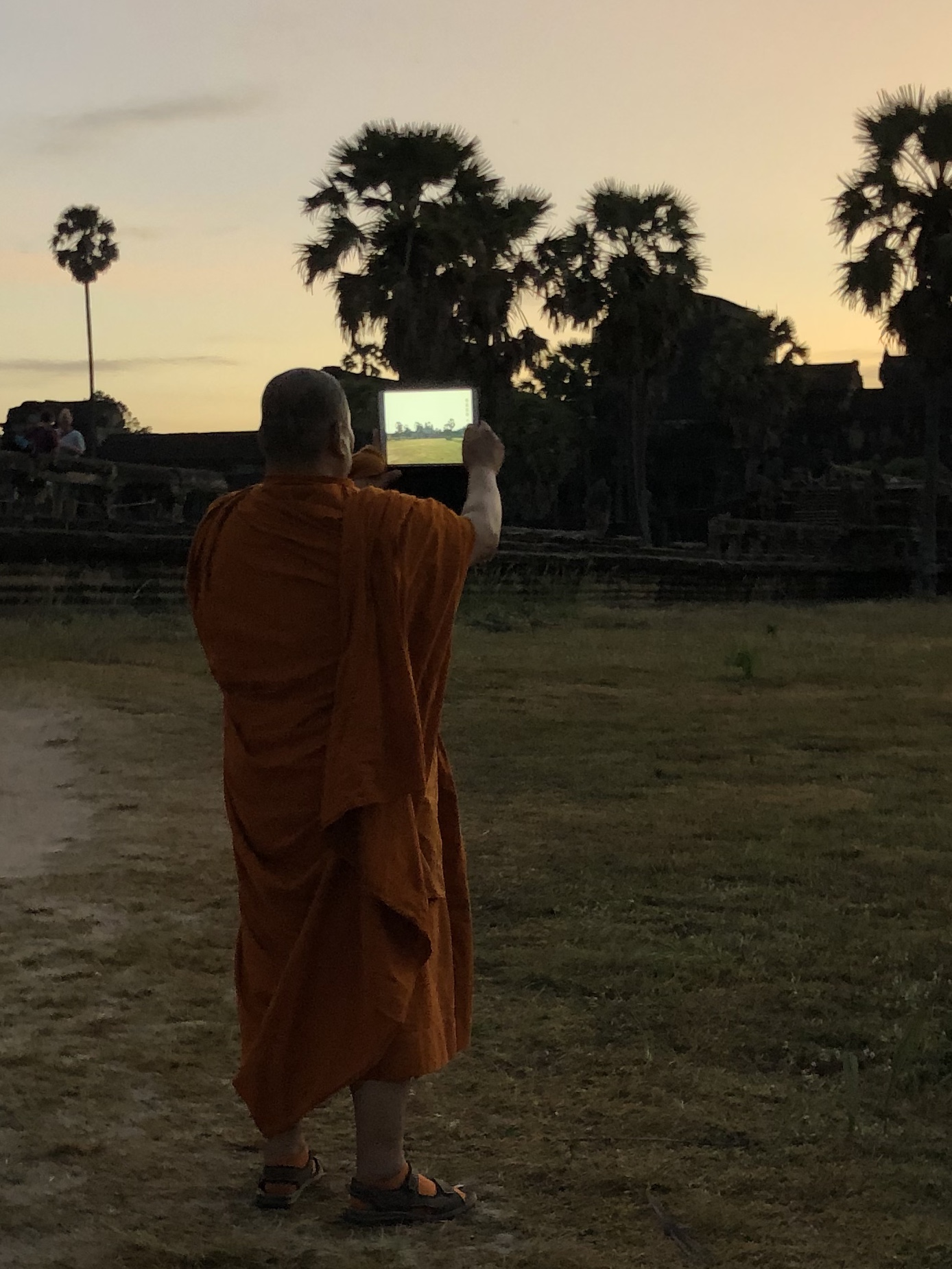
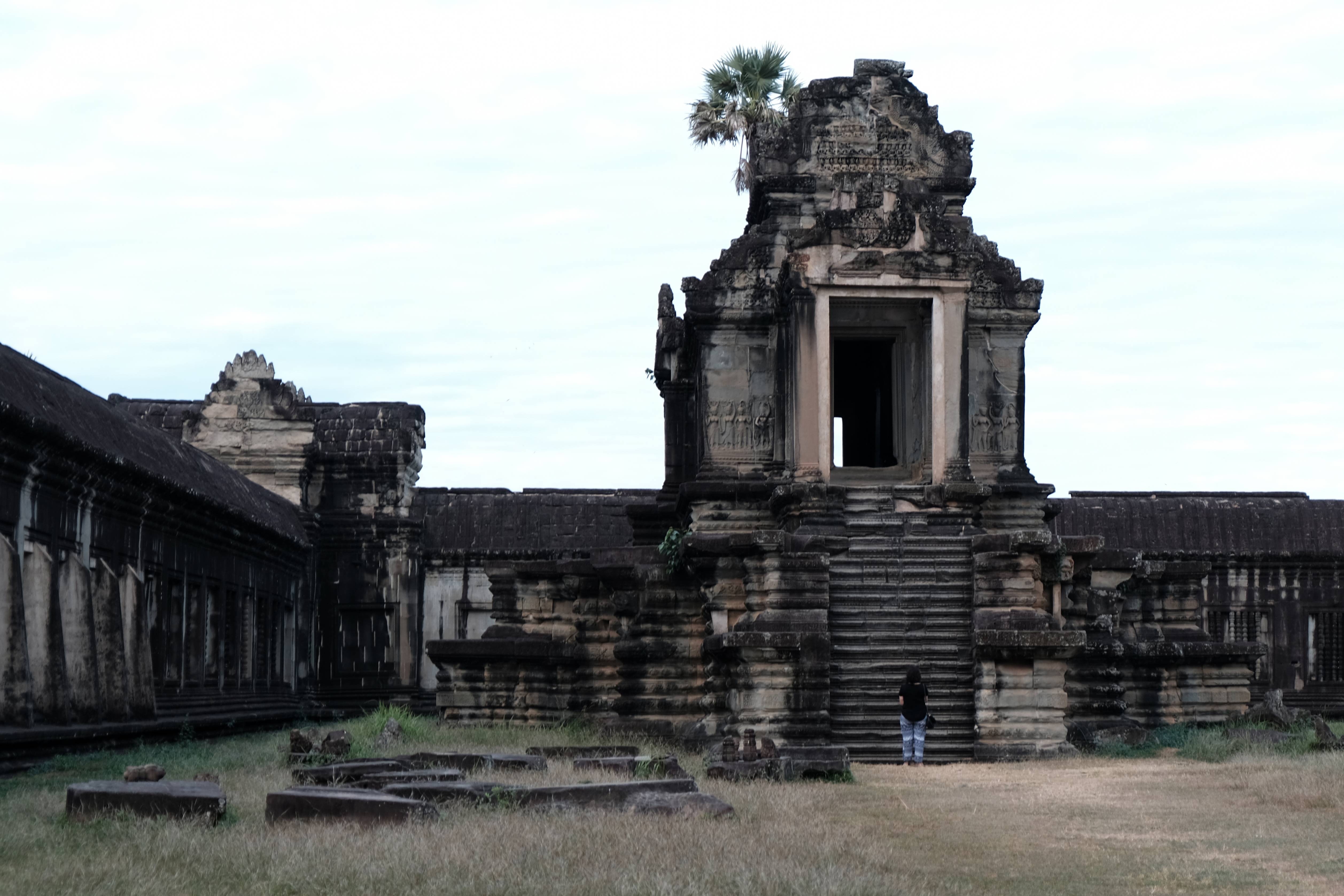
Rather than fight my way into the crowds I looked around for a different angle. Here’s what I found.
This is what everyone else was looking for.
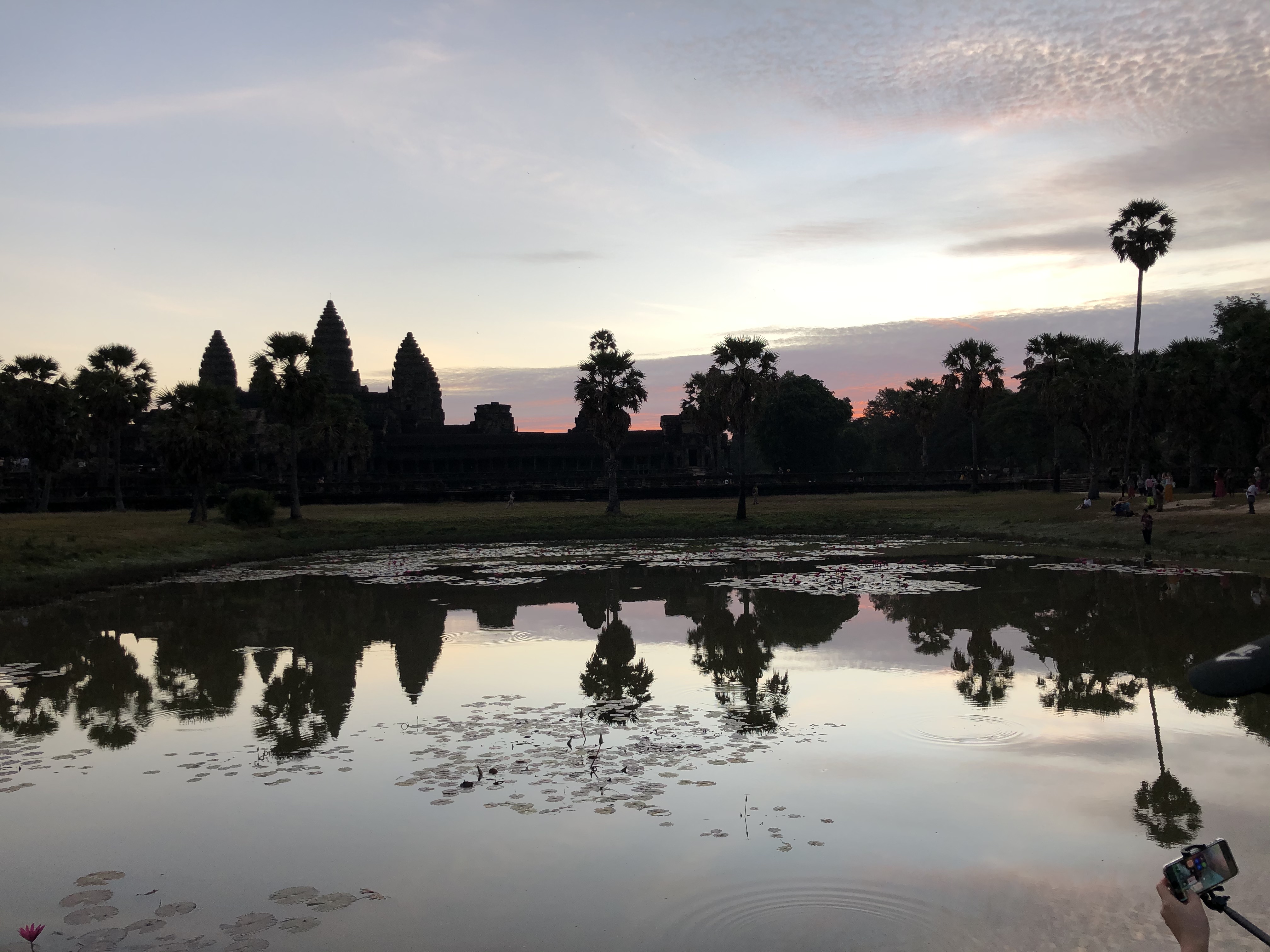
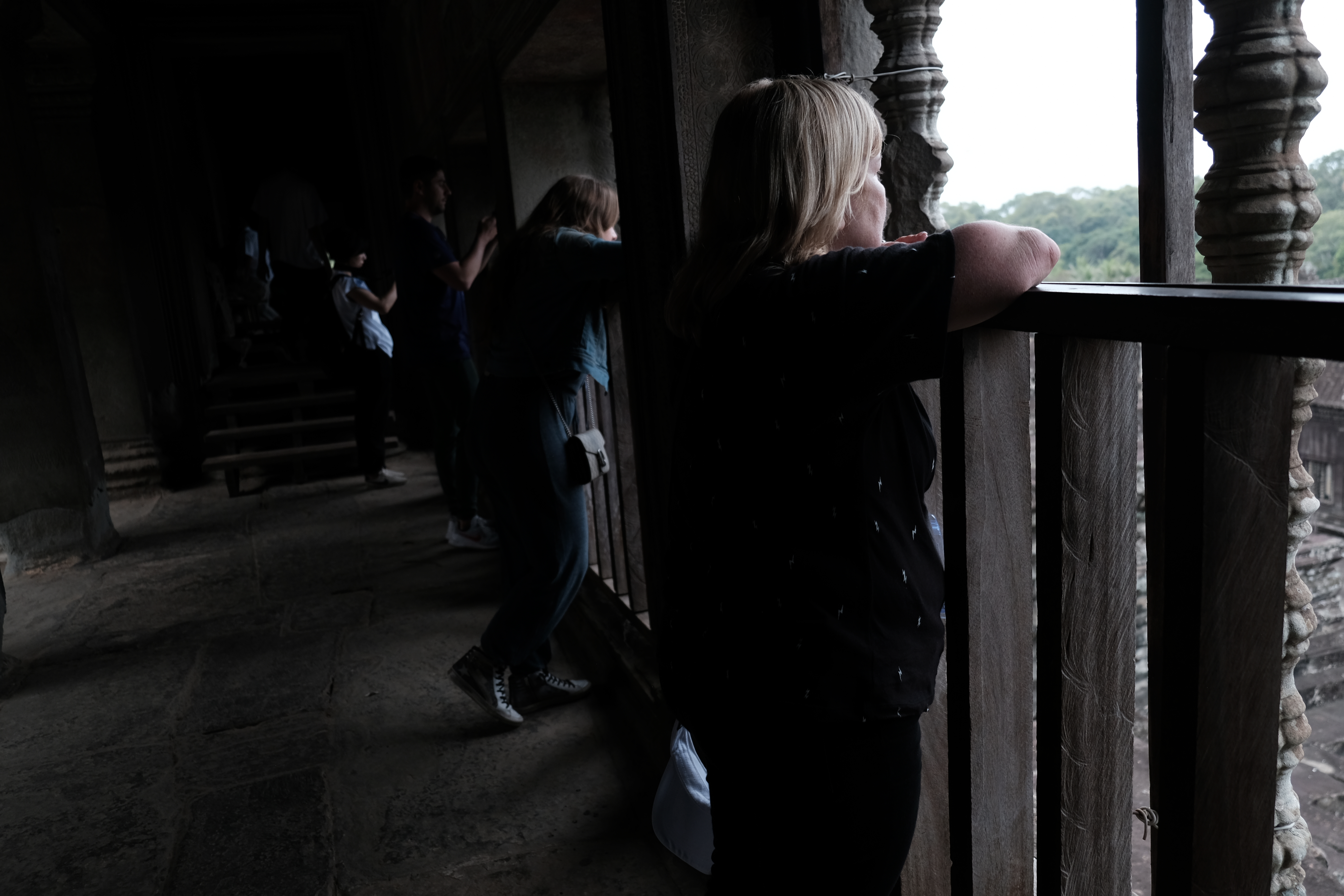
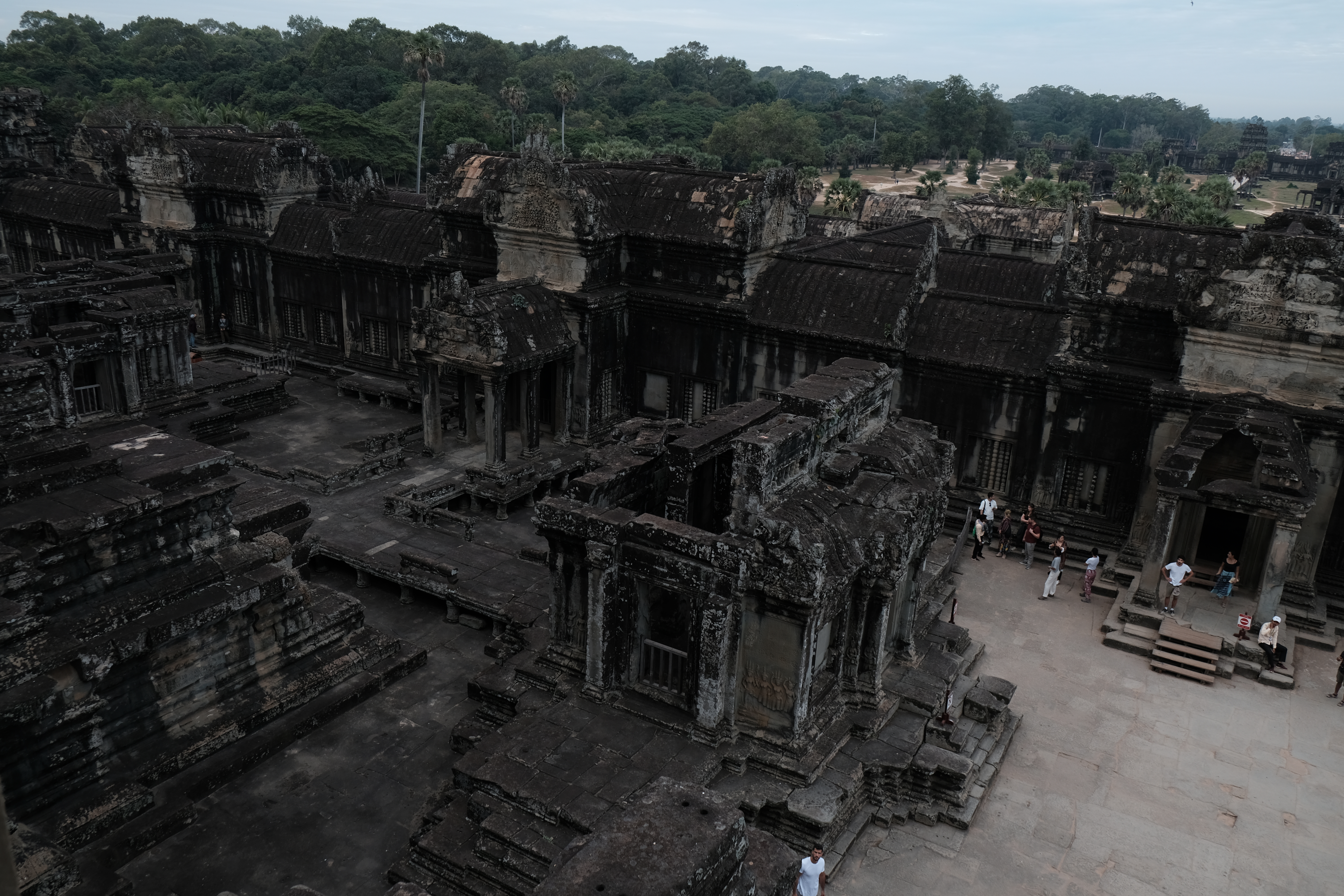
Once the sun was up, the temple was so vast you could actually find places to take a picture that appeared you were the only one there. Of course, sometimes you stood in line to do so but it went fast.
Angkor Wat is a vast, intricate temple complex whose architecture has only been recently discovered in the modern age. The structures and art in Angkor Wat and the surrounding temples tell the story with great history, religion and culture of the Khmer Empire. There is still so much we do not know about this ancient wonder of the world, but what has been uncovered thus far.
It is the largest religious monument in the world. The sheer size of the temple complex is mind boggling, as it is set on over 500 acres deep in the Cambodian jungle. The area is filled with over 1,000 separate temples that make up what was once the Angkor Kingdom. To put it in perspective, it is bigger than both modern-day Paris and the five boroughs of New York City.
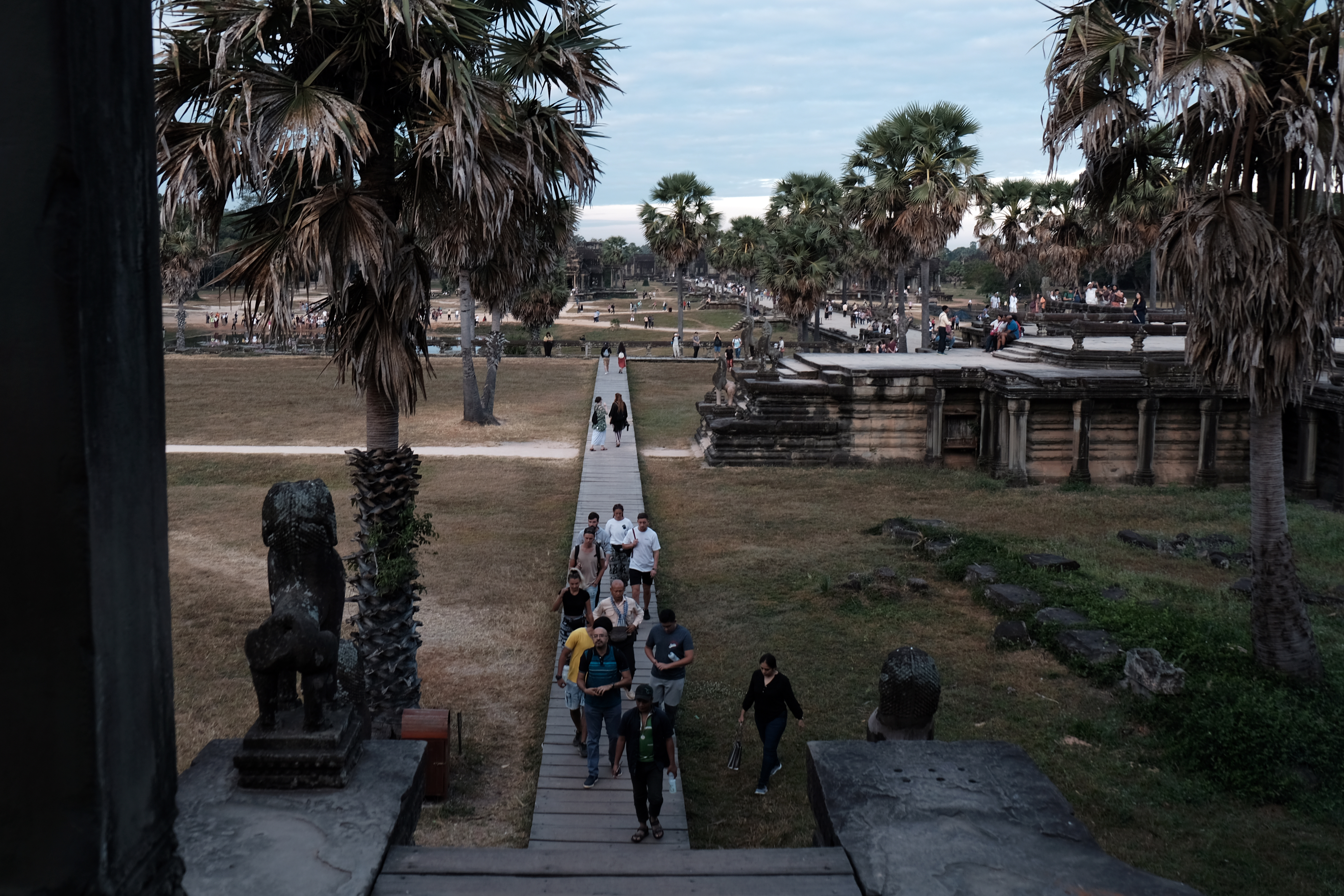
There were ancient riches. At its peak, the Khmer Empire covered Cambodia, Thailand, Laos, and the southern half of Vietnam. It was one of the most powerful of its time, and that was shown through the gold, pearls, gems, and immaculate architecture of Angkor Wat. The Bayon Temple is still to this day one of the most impressive temples in Angkor and had towers covered completely in gold. Preah Khan Temple alone was said to have been filled with 60 tons of gold which would be worth billions in today’s money.
Five to ten million bricks of sandstone were transported from the jungle to build the Angkor temples. As you can only imagine, getting these materials there was no easy feat. The Khmer used a series of canals and waterways, over 3,000 ox, 6,000 elephants and countless slaves for manpower. The ancient city took over 35 years to build in total.
Capital City. In 802 CE King Jayavarman II proclaimed himself the divine ruler and started to build his empire. The walled city of Angkor Thom became the biggest major city within Angkor. During the growth of the city, they took on an immense building project that included everything from hospitals and reservoirs, to public bathrooms and bridges. The greatest of the Khmer kings, Jayavarman VII, also spread religion which was responsible for bringing people in large numbers to the Angkor Wat Kingdom.
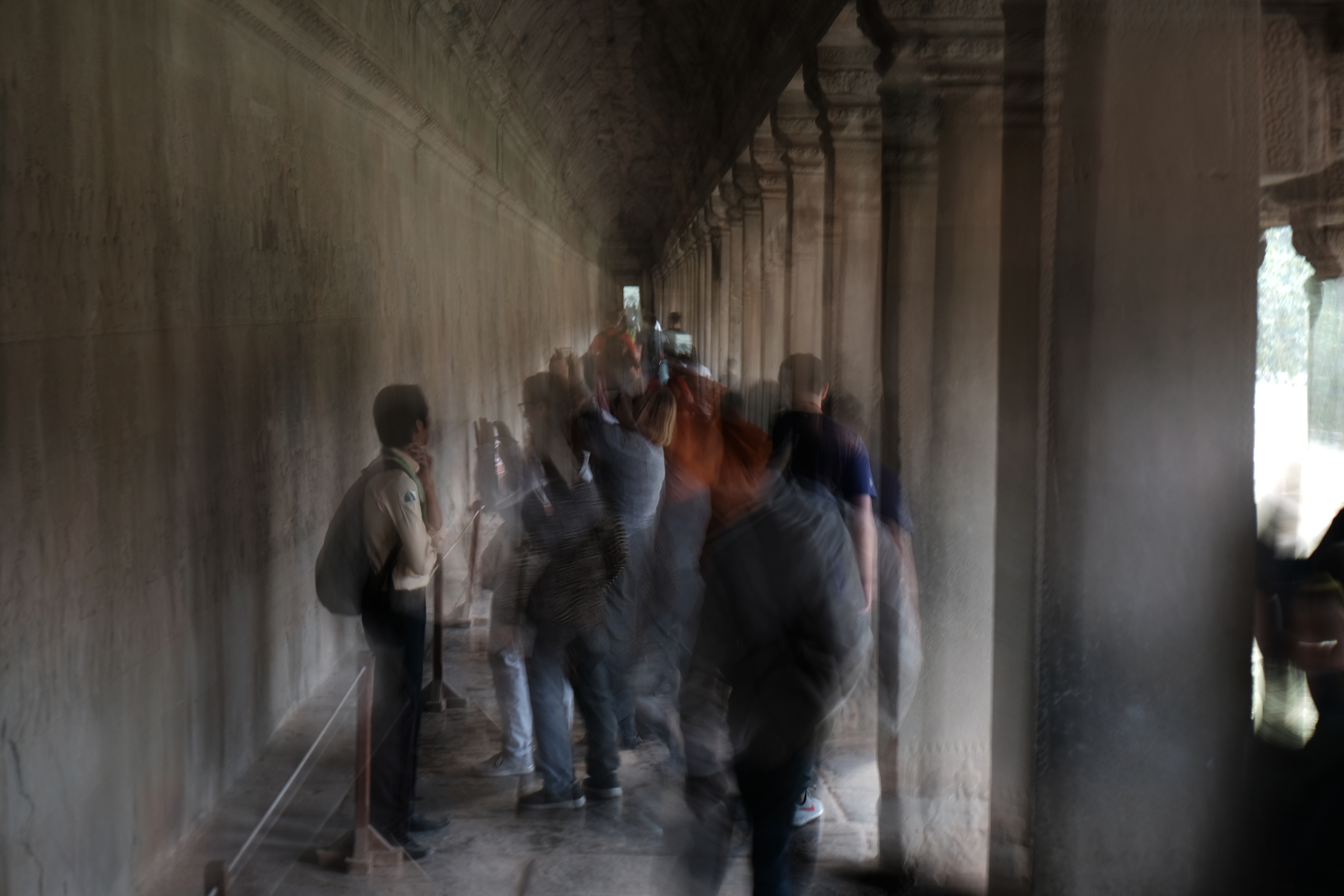
Hinduism to Buddhism. Angkor Wat was originally built to honor the Hindu god Vishnu but was eventually converted to Buddhism in the years that followed. The Angkor Wat religion shifted sometime in 13th century and Buddhism is still practiced there today.
Massive Population. The actual number is disputed, but historians estimate up to one million people lived in the Angkor Kingdom at its height. That number is mind boggling when you consider how many people lived in other developed parts of the world during the same time period. For instance, London still only had a population of under 100,000 at the peak of the Khmer Empire. Numbers indicate it was the largest city in the world up until the Industrial Revolution.
Flourishing Community. Celebrating, singing, and dancing were a huge part of life in Angkor. The city of Angkor Thom alone had a thriving population of up to 150,000 people. This included 650 dancers, 18 high priests, and over 80,000 citizens in the surrounding villages.
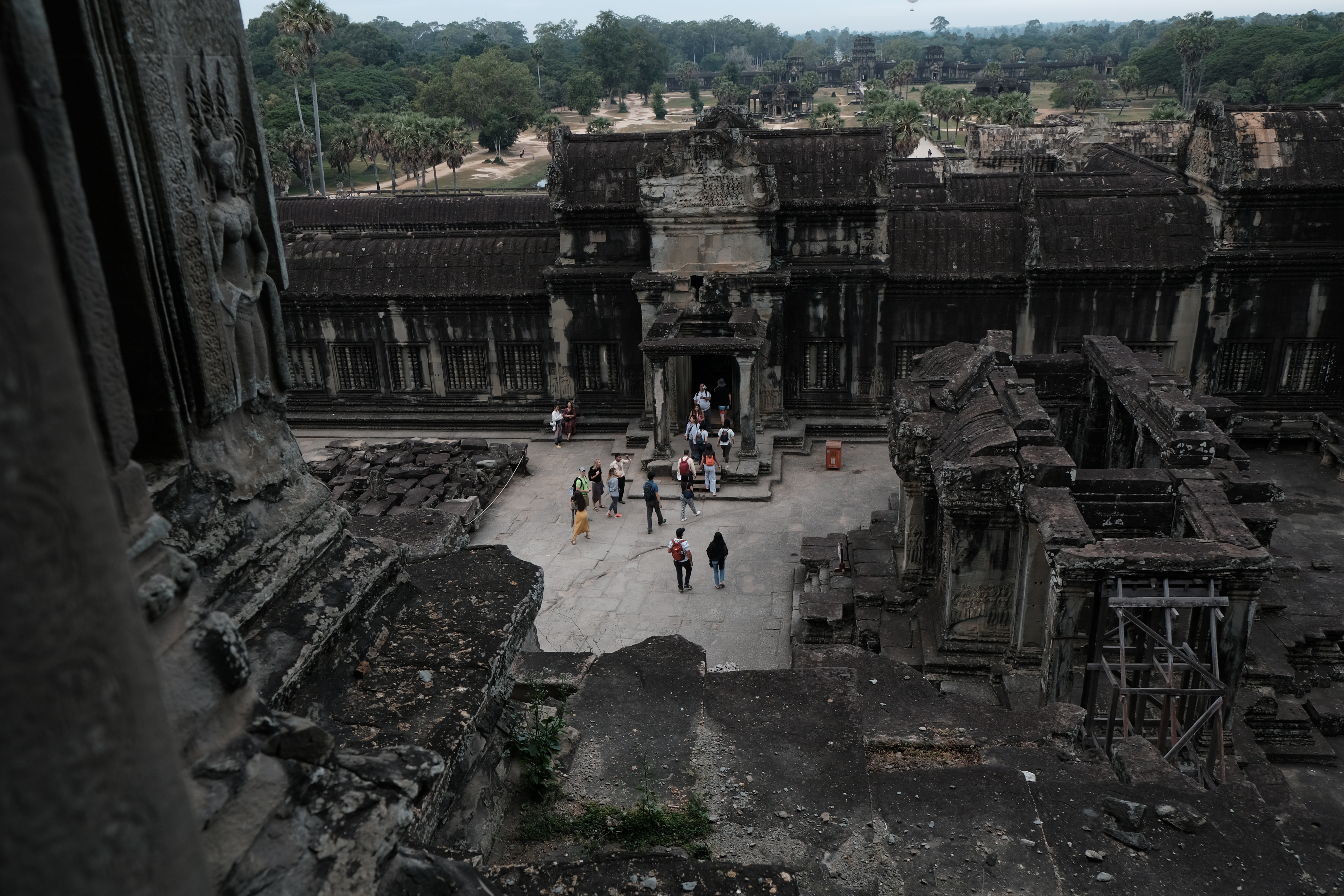
Intricate Waterways. The water technology that the Khmer Empire implemented was way before its time. Honestly, it’s hard to comprehend the scale of the water management system they built, but it stretched all the way from Lake Tonle Sap through man-made reservoirs called Barays. The string of connecting canals changed the way of life in the empire. They also used the waterways to transport the large sandstone bricks which helped speed up the building of the Angkor temples.
Zhou Daguan’s Account. You may be surprised that much of the Angkor Wat facts we know are based on the 13th century account of a Chinese explorer. Zhou Daguan was originally sent as a diplomat in 1296 to deliver an edict to the King Indravarman III. He ended up writing his account of the year he spent there and it is one of the only links we have about daily life at Angkor from the peak of the empire. It was a less than favorable account in some ways as he described the people as savages. Yet, he could not deny the grand scale of the Kingdom and what they had created.
Thriving Economy. Trade with neighboring states like China was the main source of the Khmer economy. While they produced crafts and other goods, life in Angkor truly revolved around growing rice. Instead of gold, the surplus of rice and fish were used as currency and exported outside the empire. Women ran most of the daily commerce inside the city and this can still be seen today in Cambodia and other Southeast Asian cultures.
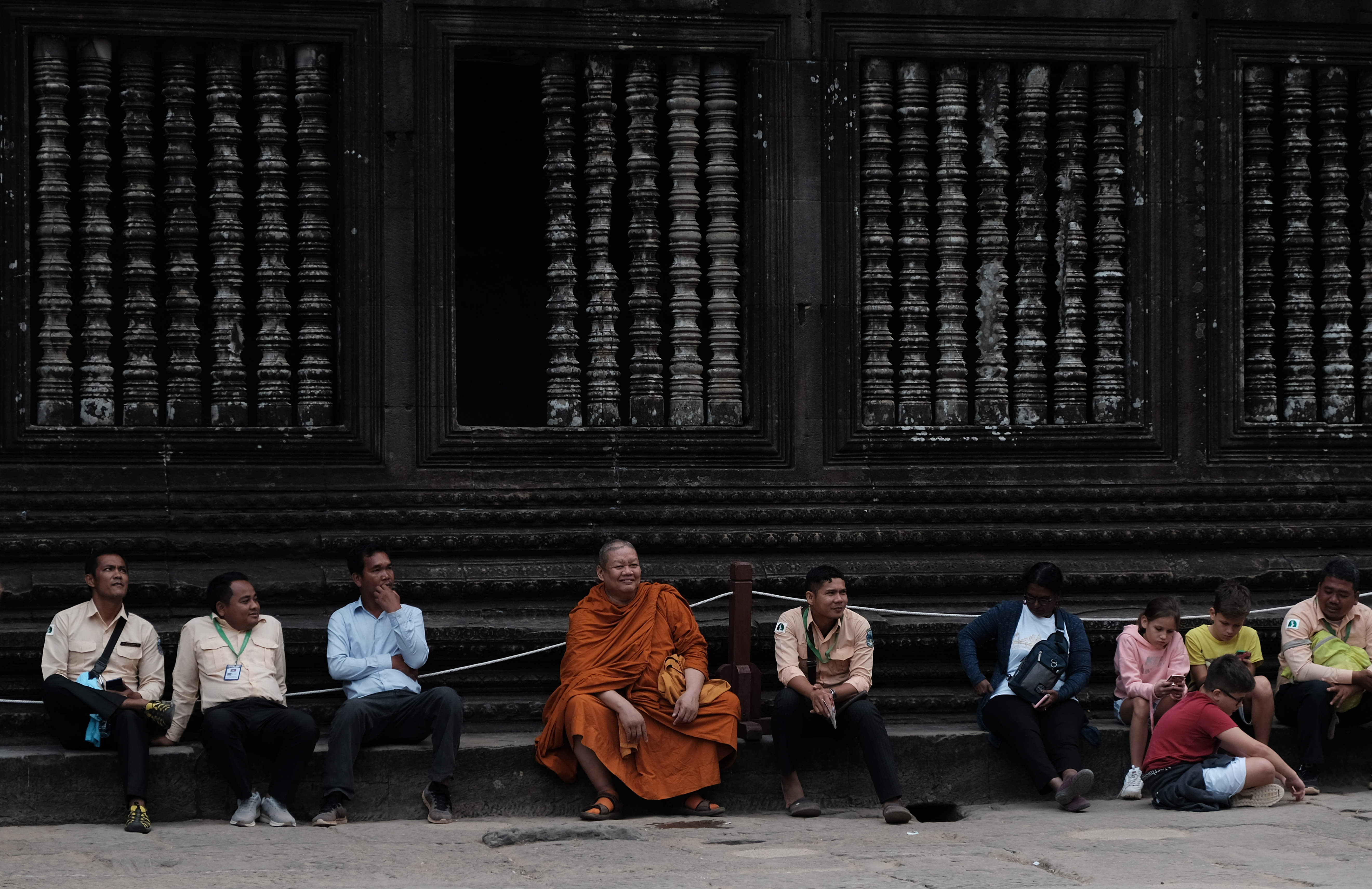
God Kings. Like many great empires throughout history, the Khmer worshipped their kings as real-life gods. “Deveraja” was essentially a cult that grew out the Hindu and indigenous religions. It claimed that Kings such as Jayavarman II were direct descendants of the Hindu god Siva. As you’re exploring Angkor Wat history, you’ll see images displaying the kings as divine through inscriptions and sculptures in the temples.
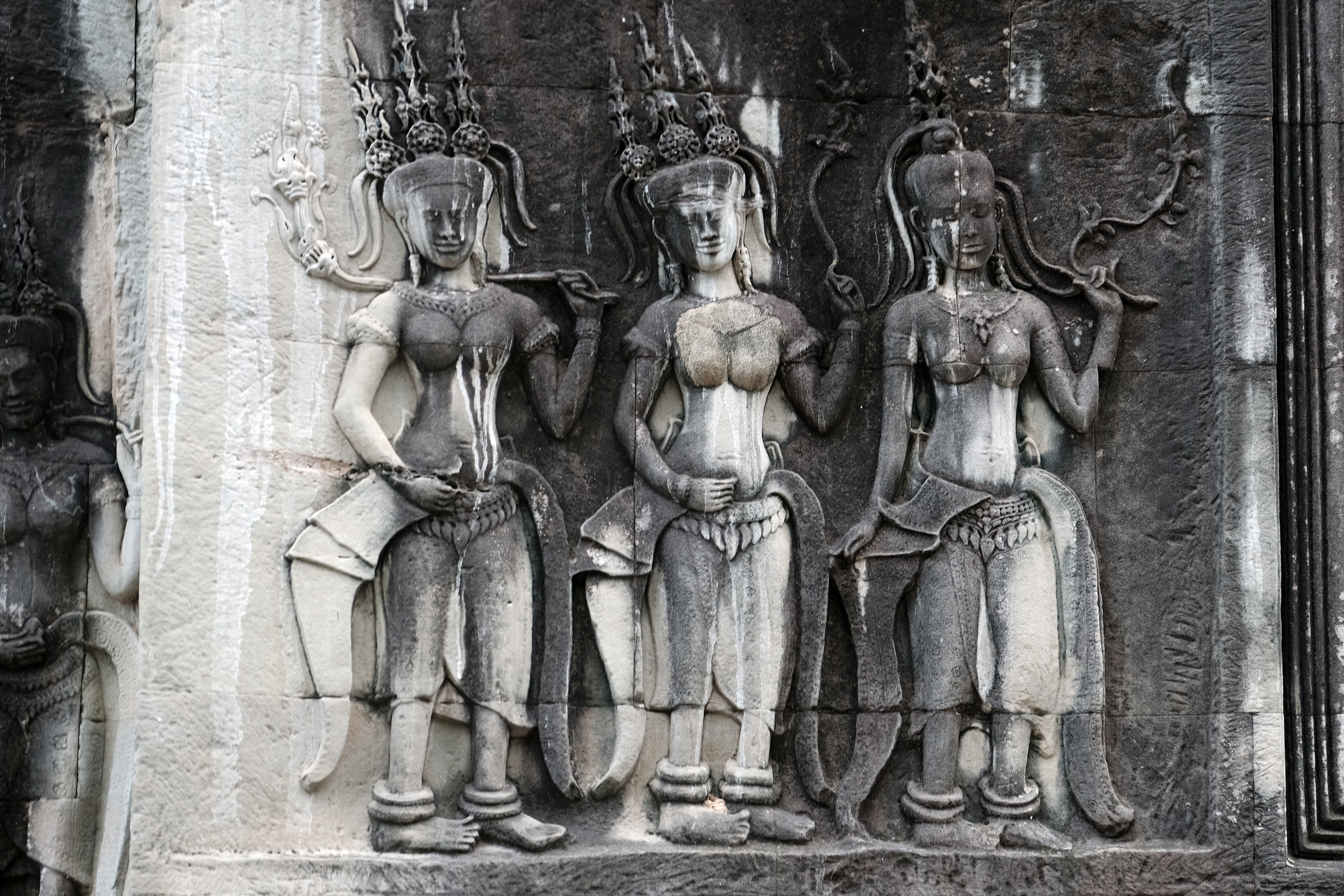
Insanely Detailed. The level of the detail in the walls of Angkor Wat is astounding and can only be understood by witnessing it yourself. Many of the images depict epic battle scenes from years ago, while others are of a spiritual nature. The millions of sandstone bricks lay beautifully, complete with reflective pools and sanctuaries all surrounded by moats and bridges. The skill and craftsmanship of Khmer builders is years ahead of its time, and more in depth than we will probably ever know.
European Discovery. Although Portuguese and Spanish Monks discovered the Angkor Wat Architecture in the 16th century, it was French Naturalist Henri Mouhot that popularized it in the mid-1800s. Mouhot’s travel notes were publicized in 1863 where he famously exclaimed Angkor Wat “is grander than anything left to us by Greece or Rome.” In fact, Europeans were so blown away that they didn’t initially believe the ancient people had the skills to build such a marvelous place.
Fall of the Khmer Empire. What was the reason for the fall of Angkor Wat? Was it trading elsewhere, a deadly disease outbreak or possibly contaminated water? The most likely scenario was the constant battles between nearby Cham and Siam Kingdoms (modern day Vietnam and Thailand). It must have been exhausting for the Khmer as they were constantly fending off attacks from all sides, which eventually ended in their demise.
Cambodian Civil War. During the 1970s, Cambodia went through one of the worst genocides the world has ever seen at the hands of Pol Pot. When the dust settled two million Cambodians were murdered by the Communist Khmer Rouge regime. During their reign of terror, the Khmer Rouge were out to destroy any and all markings of an individual. This included banning all religion, money, and any aspect of someone’s personal life. Miraculously, little damage was done to Angkor Wat during the war aside from various bullet holes. However, it did interrupt important archeology work that has since resumed over the last 20 years.
The Kennedy Connection. First Lady Jackie Kennedy fulfilled a lifelong dream of seeing Angkor Wat when she visited in 1967. This was especially newsworthy as the Vietnam conflict was in full swing on the border, and the United States had some very shaky relations with Cambodia. Four years after Jackie’s husband JFK had been assassinated, she was invited by the King of Cambodia to see the ruins at Angkor.
Modern Excavation. One of the most interesting characteristics of the temples today is how the first excavators chose to deal with them. Archeologists left parts of the temples untouched, leaving the massive trees to drip over the sides of the 800-year-old buildings. Ever since work resumed after the civil war, there are numerous countries being represented at Angkor Wat working to uncover the lost city.
Tomb Raider. So, after all these Angkor Wat facts, what really put it on the map? How about being featured in a Hollywood blockbuster. The camera crews and studio executives came calling in 2000 and created the smash hit Lara Croft: Tomb Raider. Paramount Pictures reportedly paid $10,000 per day to film inside Ta Prohm temple. Angelina Jolie even adopted a Cambodian baby after visiting a local orphanage.
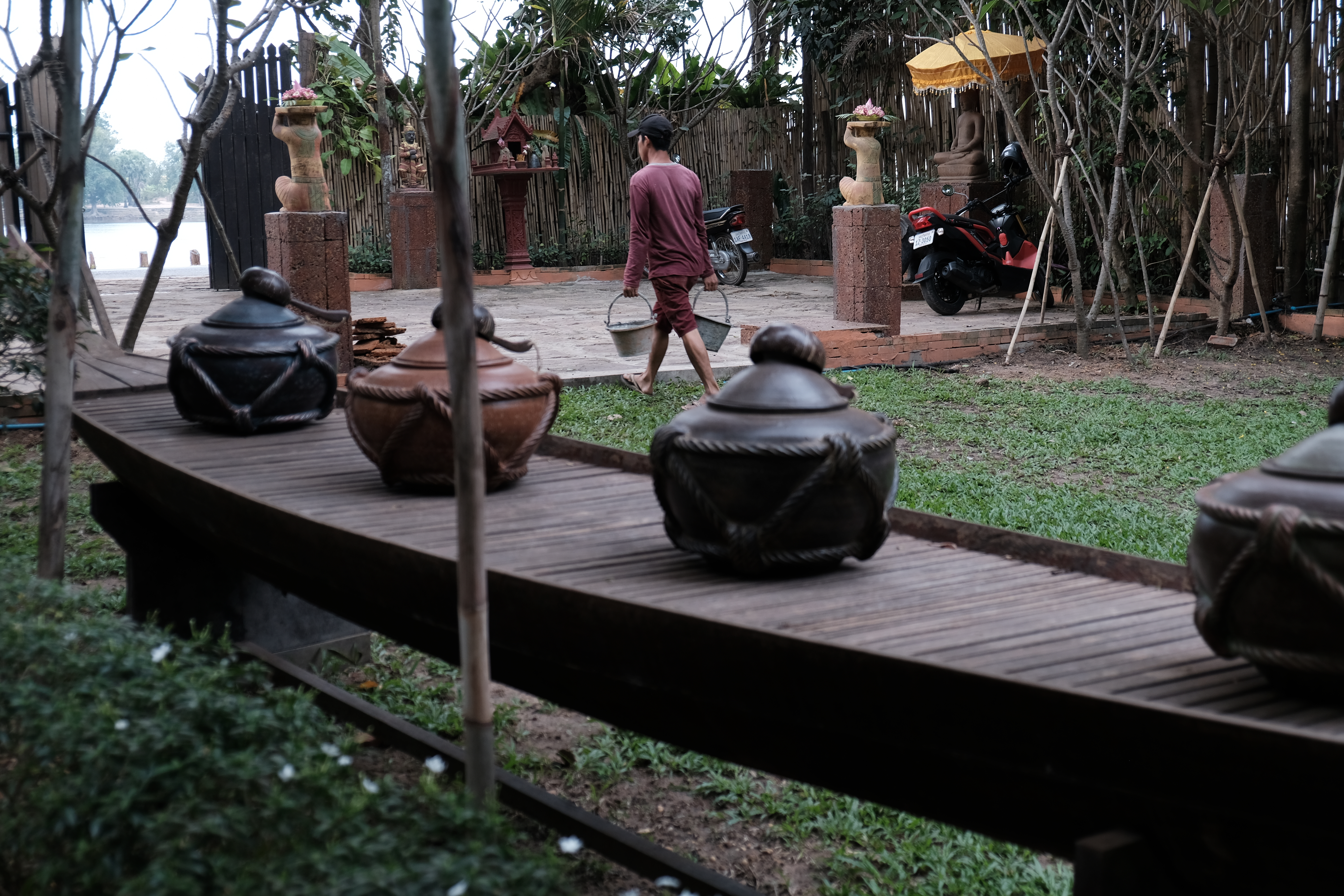
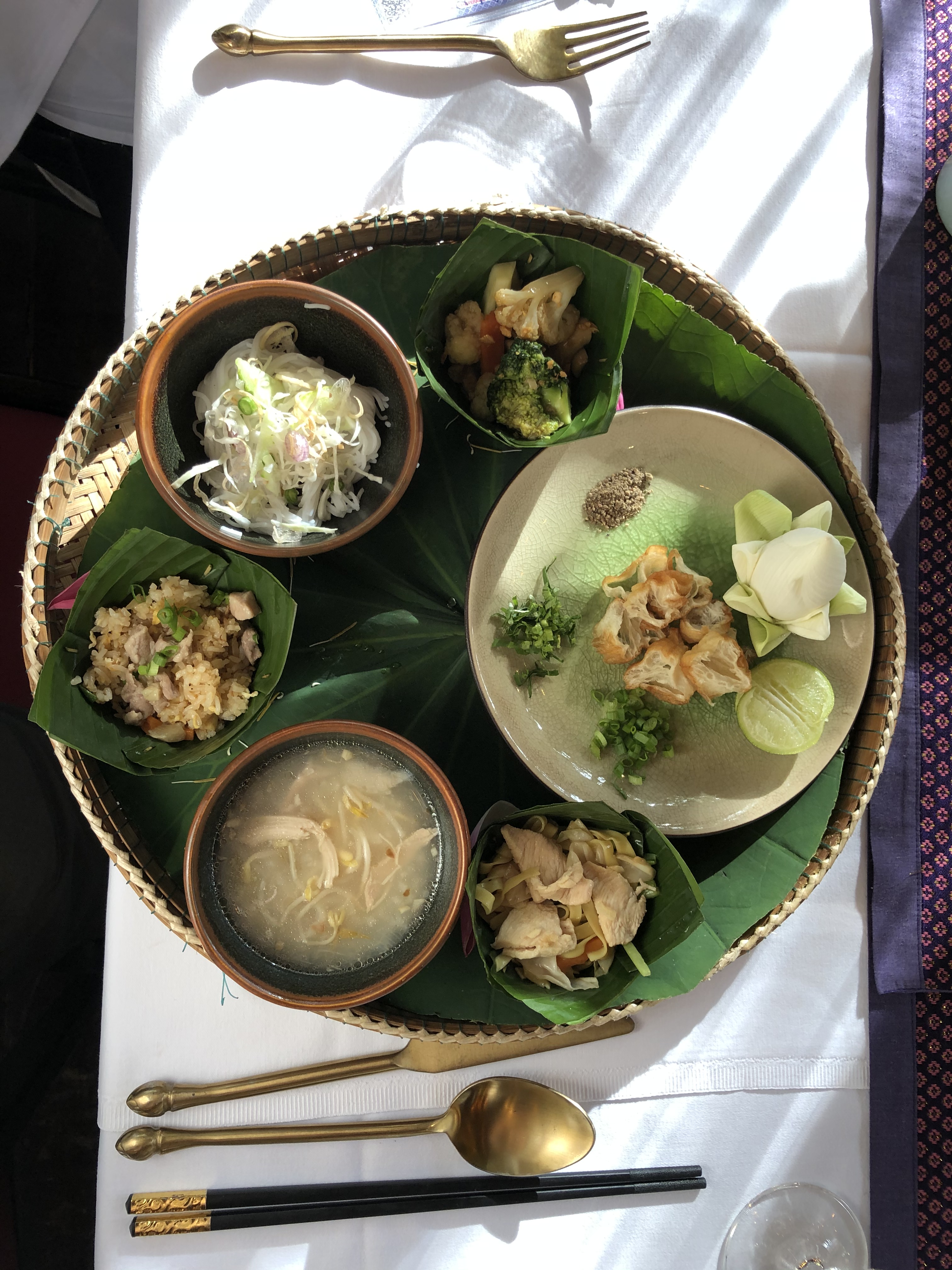
After the sun rose, we enjoyed a traditional breakfast at a wooden Khmer House.
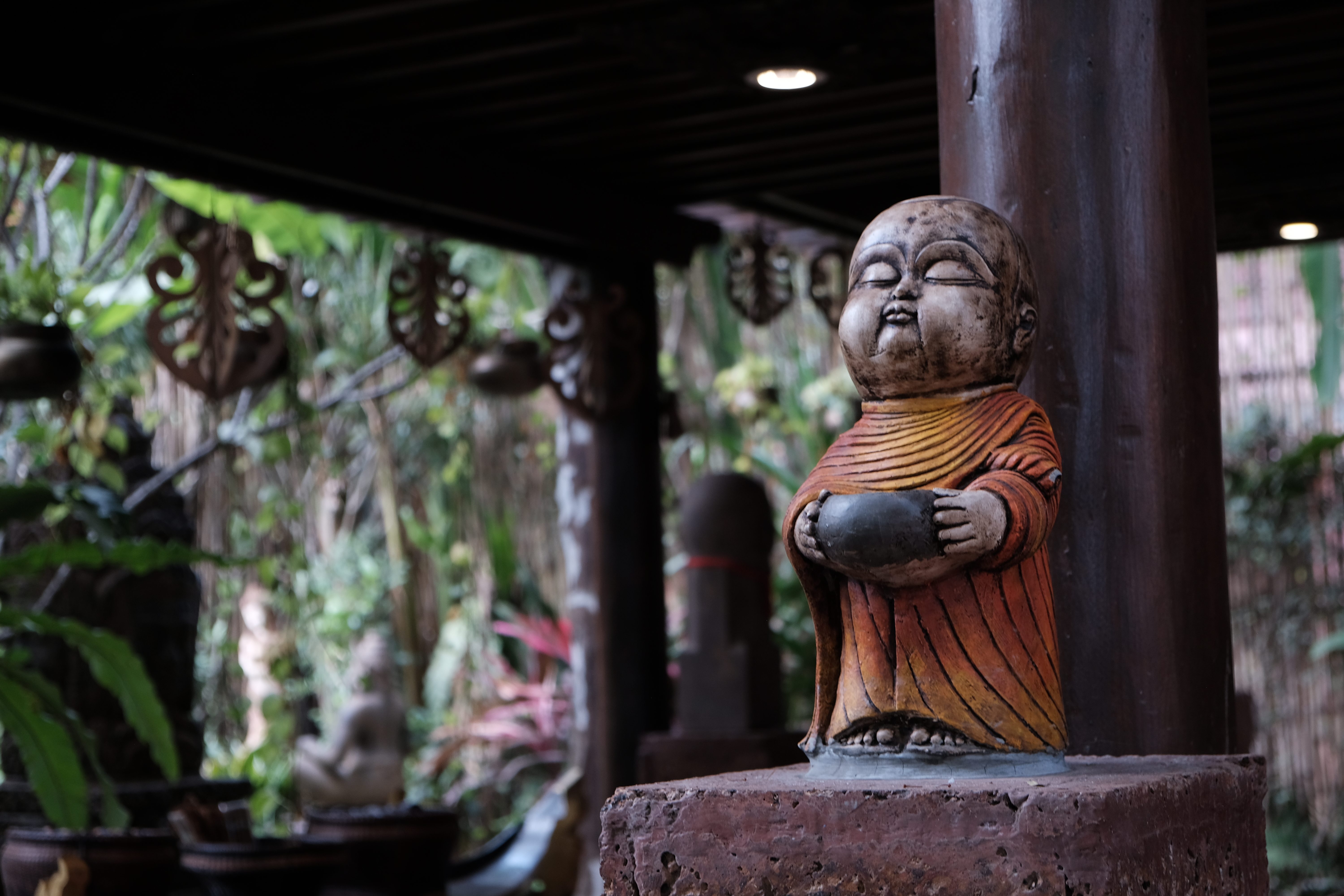
I fell in love with this little guy as soon as he caught my eye.
Leave a Reply