Thursday, December 22, 2016 | Language: English | Currency: Australian Dollar | Population = 4,500
Now we’re talking Australia … koalas dozing in lofty eucalyptus trees, sea lions basking on white sand beaches and kangaroos hopping through wild bushland. Today was everything I imagined here Down Under would be.
Starting first thing in the morning at Adelaide Airport, 19 of us boarded two 10-seater planes for a half-hour flight to Kangaroo Island, or as the locals say, KI. Approximately 1,700 square miles in area, KI is Australia’s third largest island (after Tasmania and Melville Island), is accessed by ferry or flight and has over 300 miles of coastline. KI is a wildlife wonderland, home to all of Australia’s unique, indigenous wildlife. Over one-third of the island is either protected parkland or undeveloped bushland, providing habitat for all sorts of animals.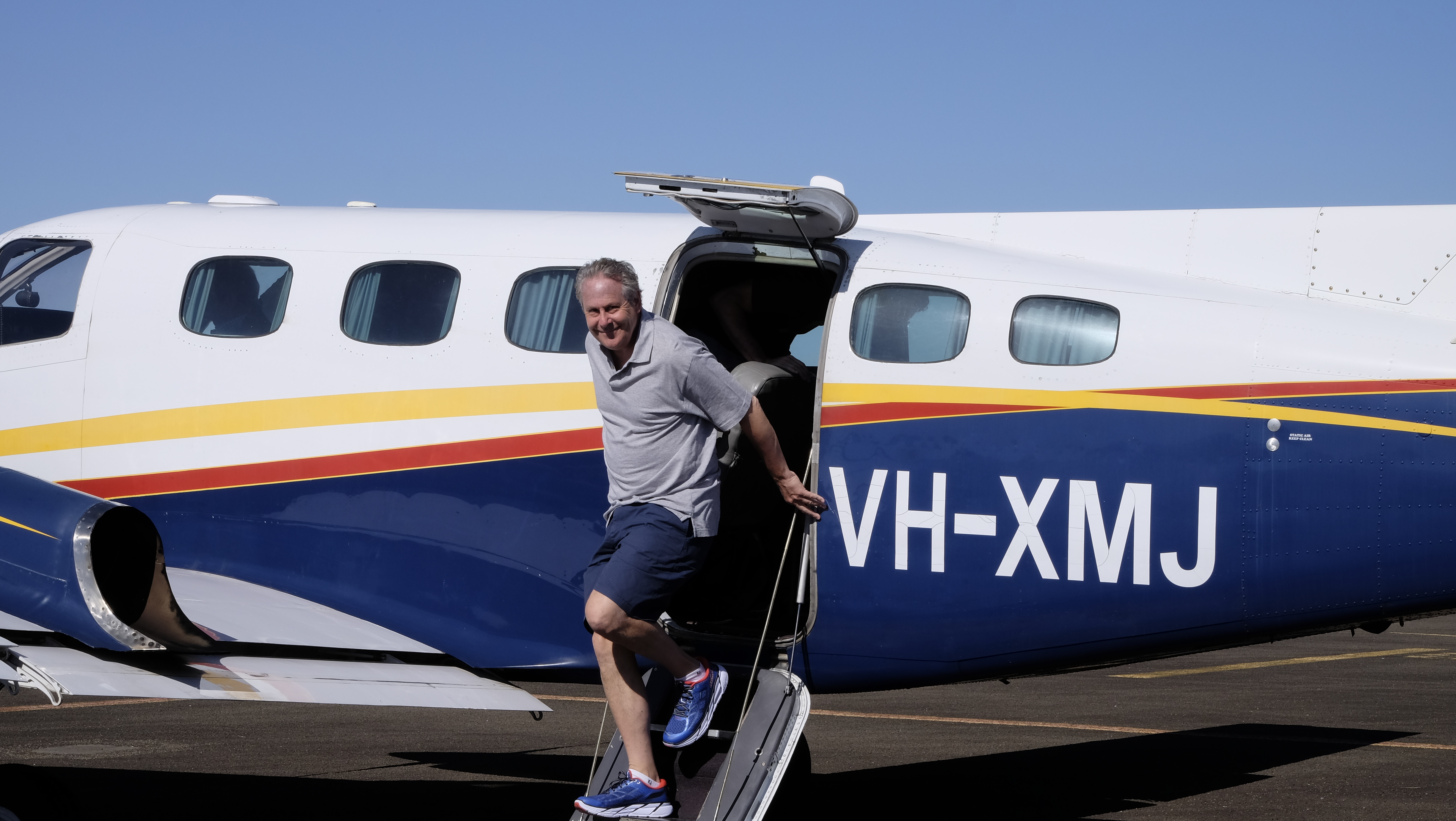
Surrounded on the west by the Indian Ocean, on the south by the Southern Ocean and on the north by the Pacific Ocean. The South Pacific to be exact. Down Under they go to the north to get warm, as opposed to the southern direction that we are accustomed to. Everything is literally upside down here. (Randy, we are holding on tight.)
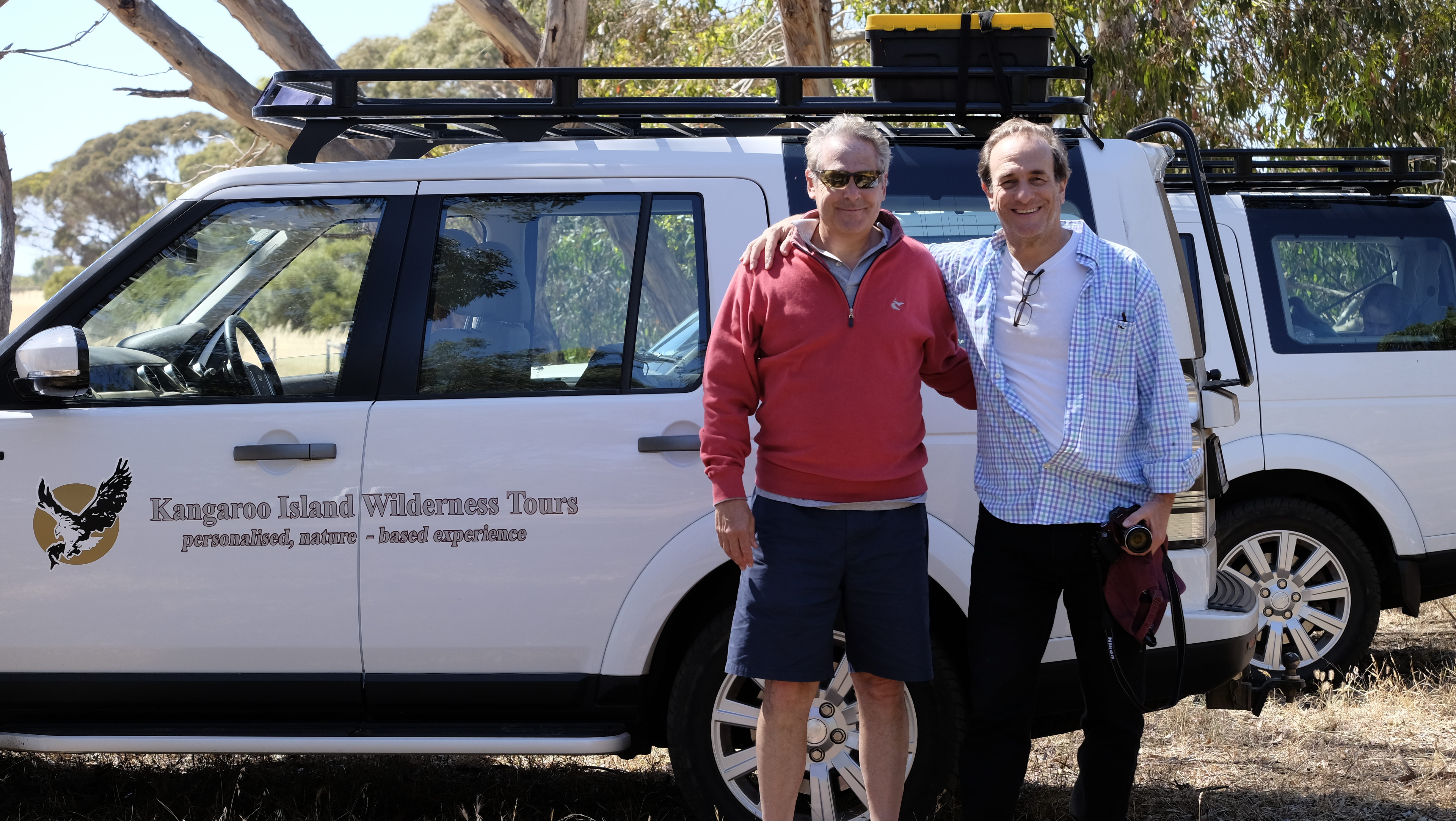
We are met by four 4WD Land Rovers and four local guides. We take a seat with Barb, Bob and Haley and begin our day of exploration with our driver and guide, Scott, who proved to be not just knowledgeable but quite enjoyable.
En route, Scott shares the history of the island. It was founded in 1802 when British explorer Captain Matthew Flinders made the first recorded sighting. Once onshore, Flinders and his quite hungry crew found no humans but recorded the joy of finding something else in his diary: “The ship’s company was employed this afternoon in the skinning and cleaning of kangaroos. They stewed half a hundredweight of heads, forequarters and tails down into soup for dinner … and as much steak, moreover to both officers and men as they could consume by day and night. In gratitude for so seasonable supply, I named this south land, Kangaroo Island.”
As Flinders traveled the circumference to map the island, he ran into French explorer, Nicolas Baudin with his crew. As Britain and France were currently at war, the two explorers sized each other up and decided to ignore the current state of affairs in their respective countries. Flinders invited Baudin in for a cup of tea, Baudin invited Flinders in for a glass of wine, they traded notes and each went on their merry way.
Although Flinders and other explorers thought the island was uninhabited, as evidenced by the lack of campfires and the tameness of wildlife, Aboriginal campsites have since been discovered. It is believed Aboriginal people were living on the island at long as 16,000 years ago and as recently as 2,000 years ago. Why the Aboriginals abandoned Kangaroo Island remains a mystery. Intriguingly, they called it “Karta” or “Land of the Dead.” I suspect that would be a pretty good clue.
Our first stop was a sheep-shearing farm where koalas had just been spotted in the tree tops.
Koalas are tree-hugging marsupials with big, round ears and black oval noses. They are an iconic symbol of Australia, the only place in the world where they are found. Koalas spend most of their time sleeping (about 20 hours a day) and eating. So, if someone calls you a koala bear, they may actually be calling you lazy rather than a cutie.
They are often called koala bears, but that is incorrect. Koalas are not bears at all. They got the “bear” tagline from English-speaking settlers in the late 18th century because of the koala’s bearlike appearance and behavior. 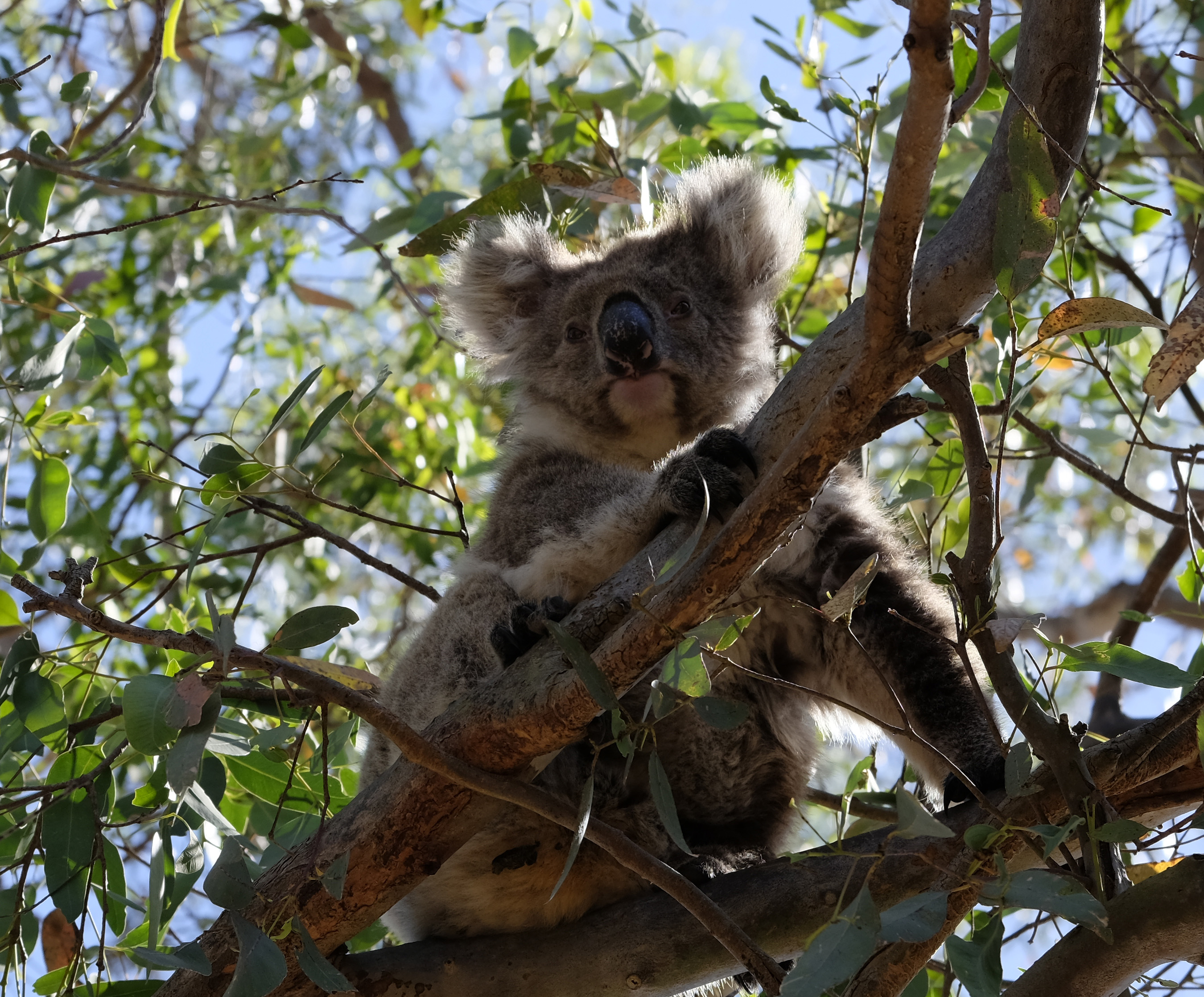
A baby koala is called a joey and female koalas have pouches like kangaroos. After spending six months in its mother’s pouch, the joey will climb on its mother’s back and ride there as they both snack on leaves. All of the stuffed animals we’ve seen in the stores have the joey attached to the mother’s back because it is just so damn cute that way. We were not lucky enough to see one today.
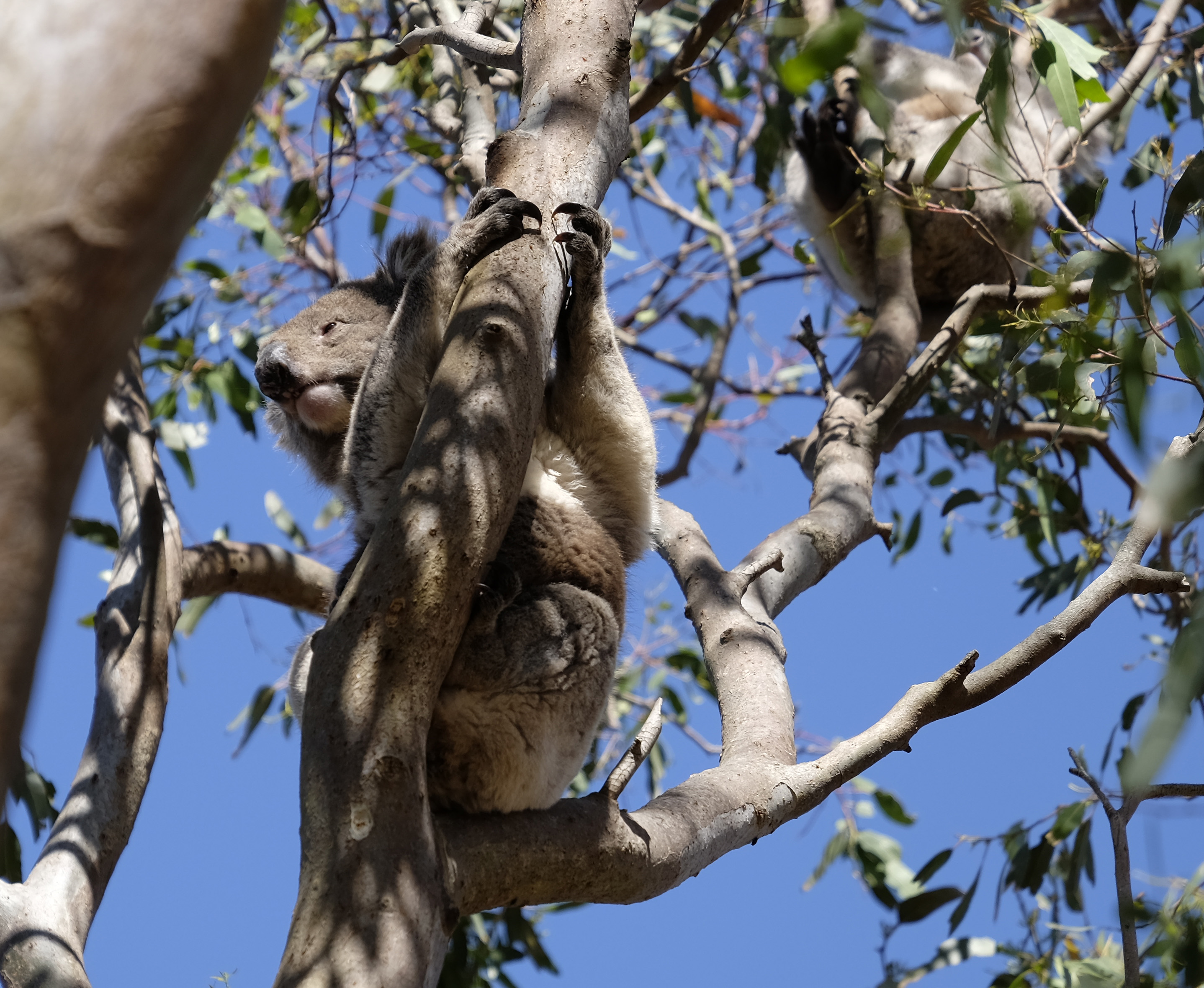
The word “koala” derives from an ancient Aboriginal word meaning “no drink” because they rarely ever drink water; they get 90% of their hydration from gum leaves. Like humans, koalas have fingerprints. They are the only other mammals besides primates to have them. Though koalas generally don’t make noise, the male has a loud call during breeding season that can be heard up to a kilometer away. Koalas can make other sounds, from snores to screams. Eucalyptus is poisonous to most animals but koalas’ digestion system creates bacteria that deactivate the poison. That’s probably why they spend so much time in Eucalyptus trees, they are free from predators there. 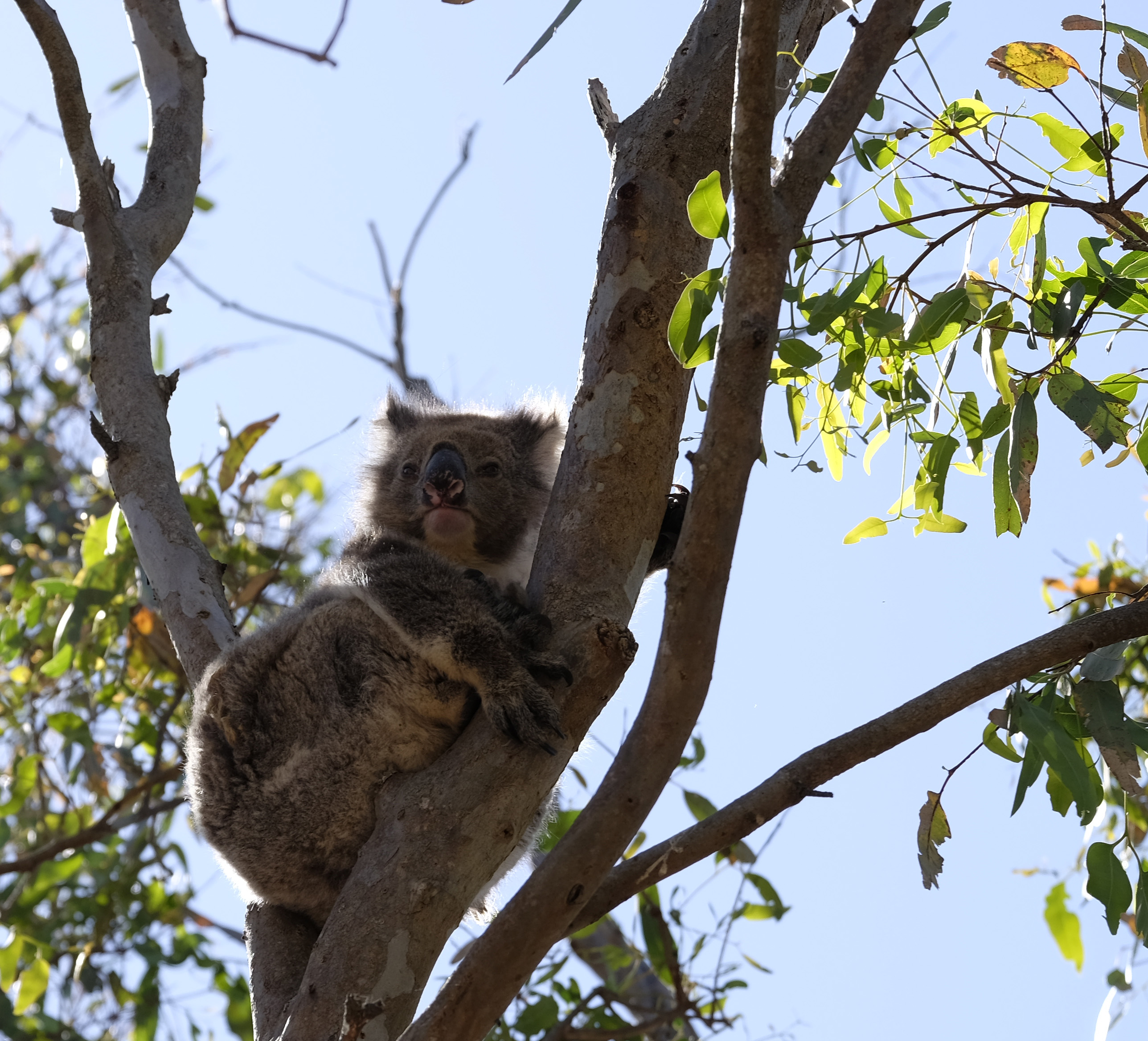
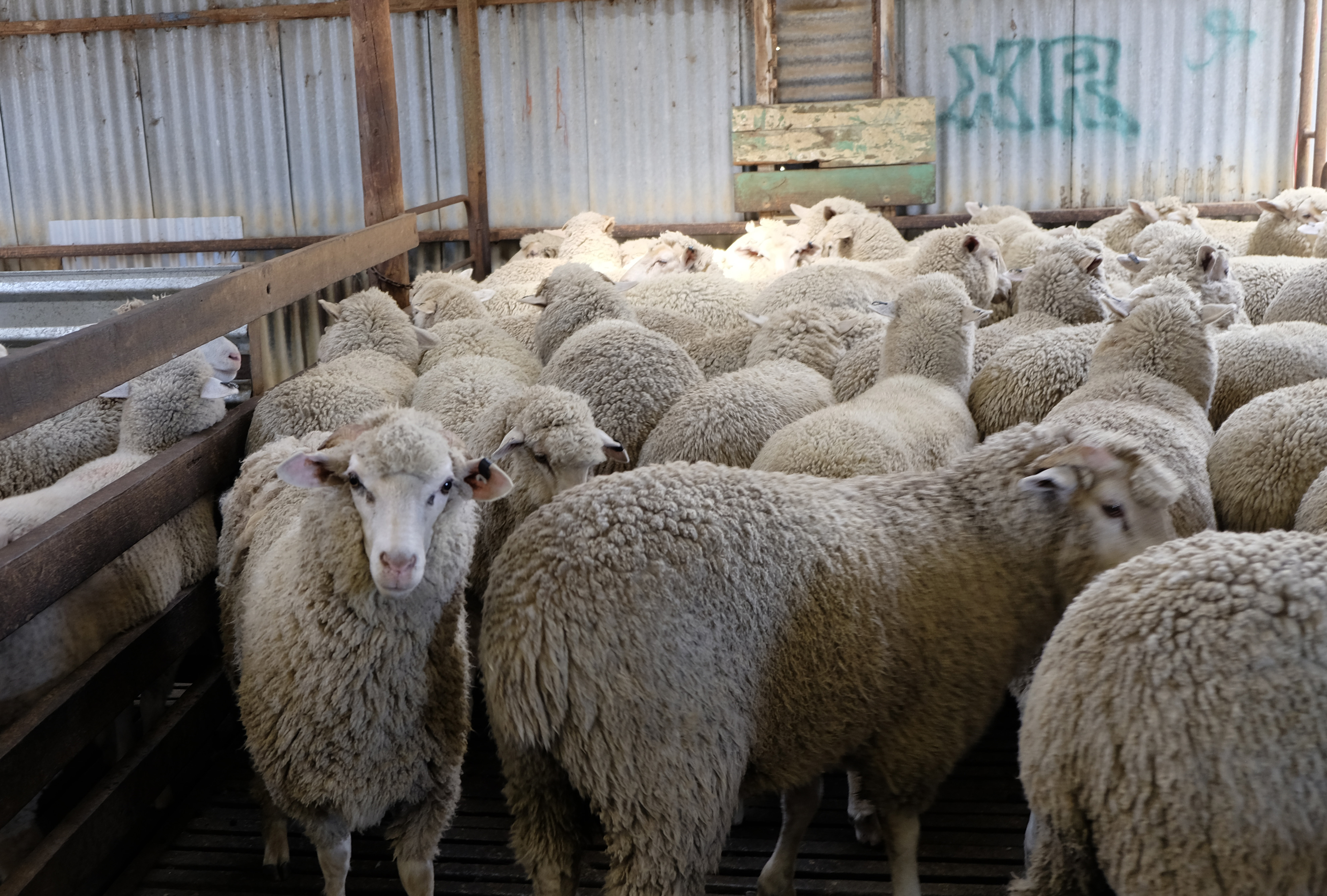
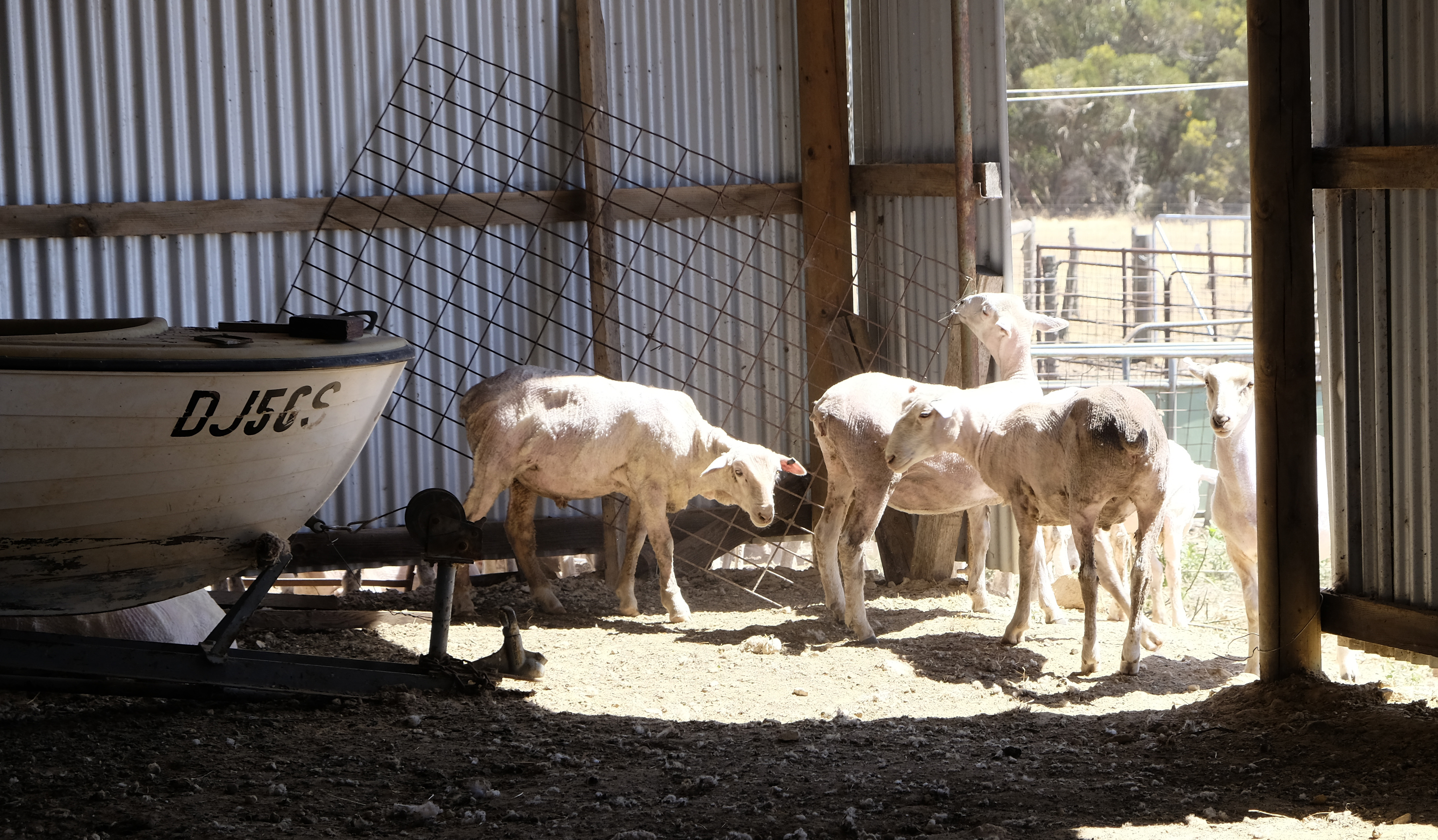
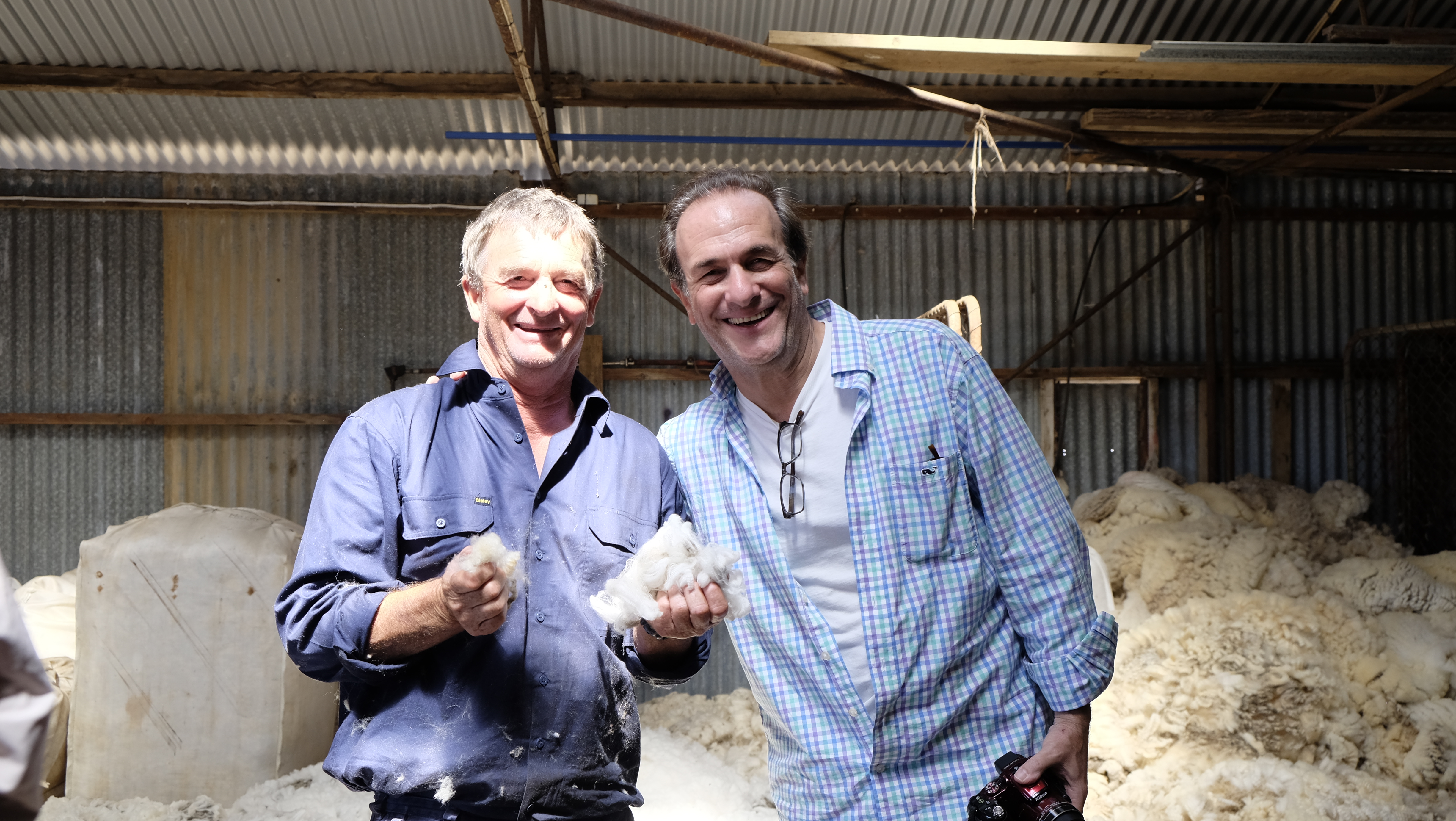
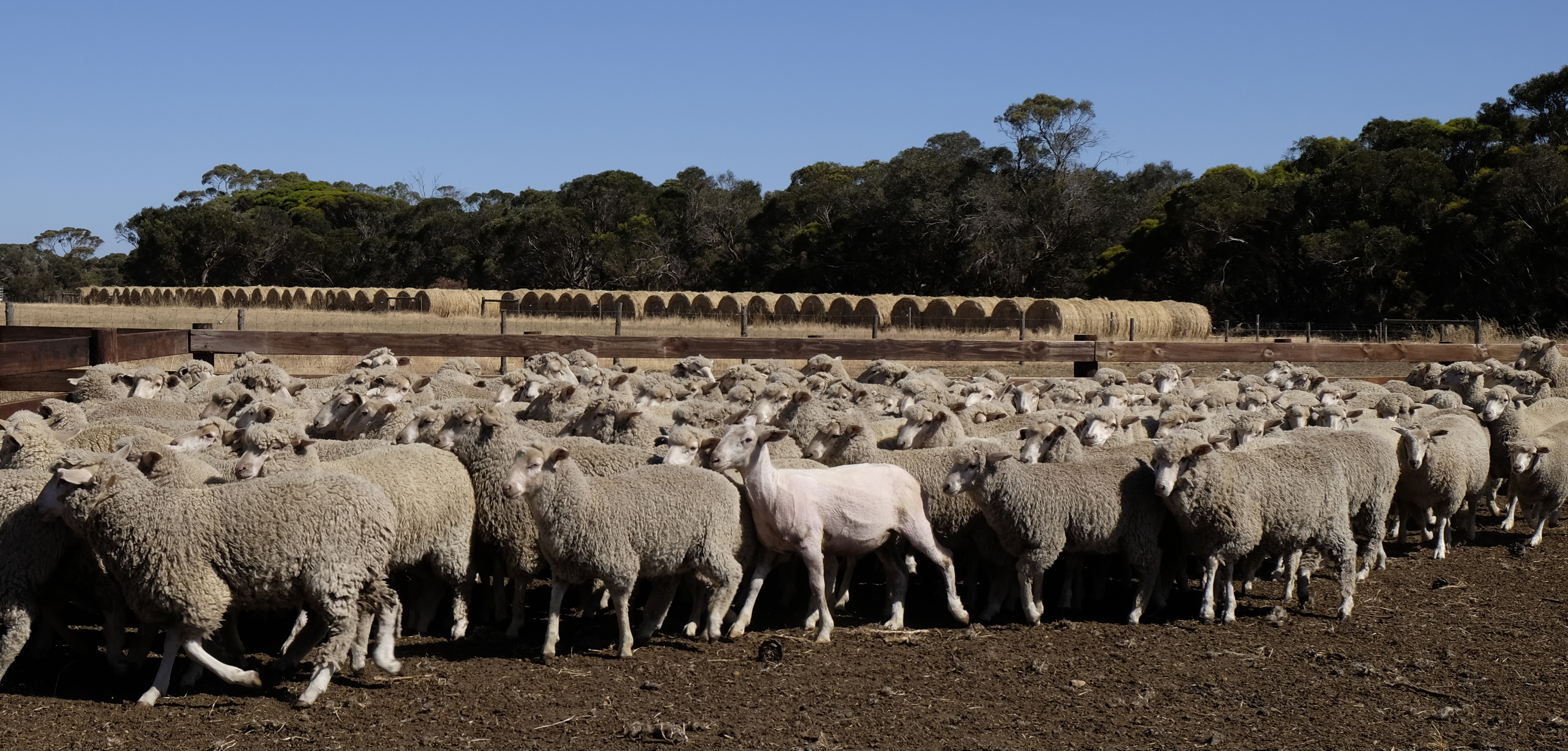
Once we had our fill of the koalas, we stopped to watch the sheep-shearing process. The sheep are sheared once a year and the wool is often exported as a major part of the island’s revenue. It does not hurt the sheep but it sure makes them look like they’re naked. It’s always done in the summer, allowing the fur to grow back in time to keep them warm in the winter.
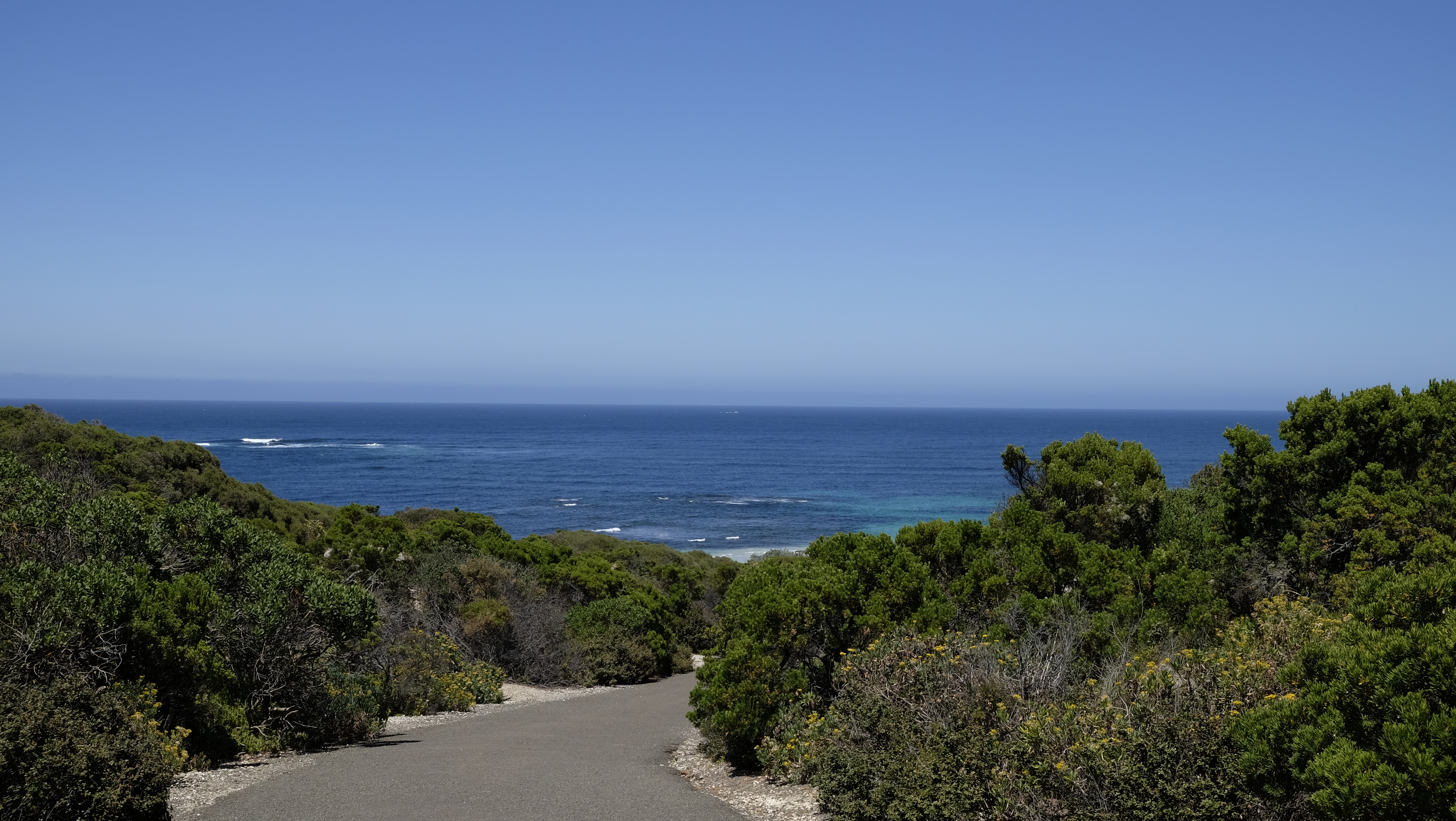
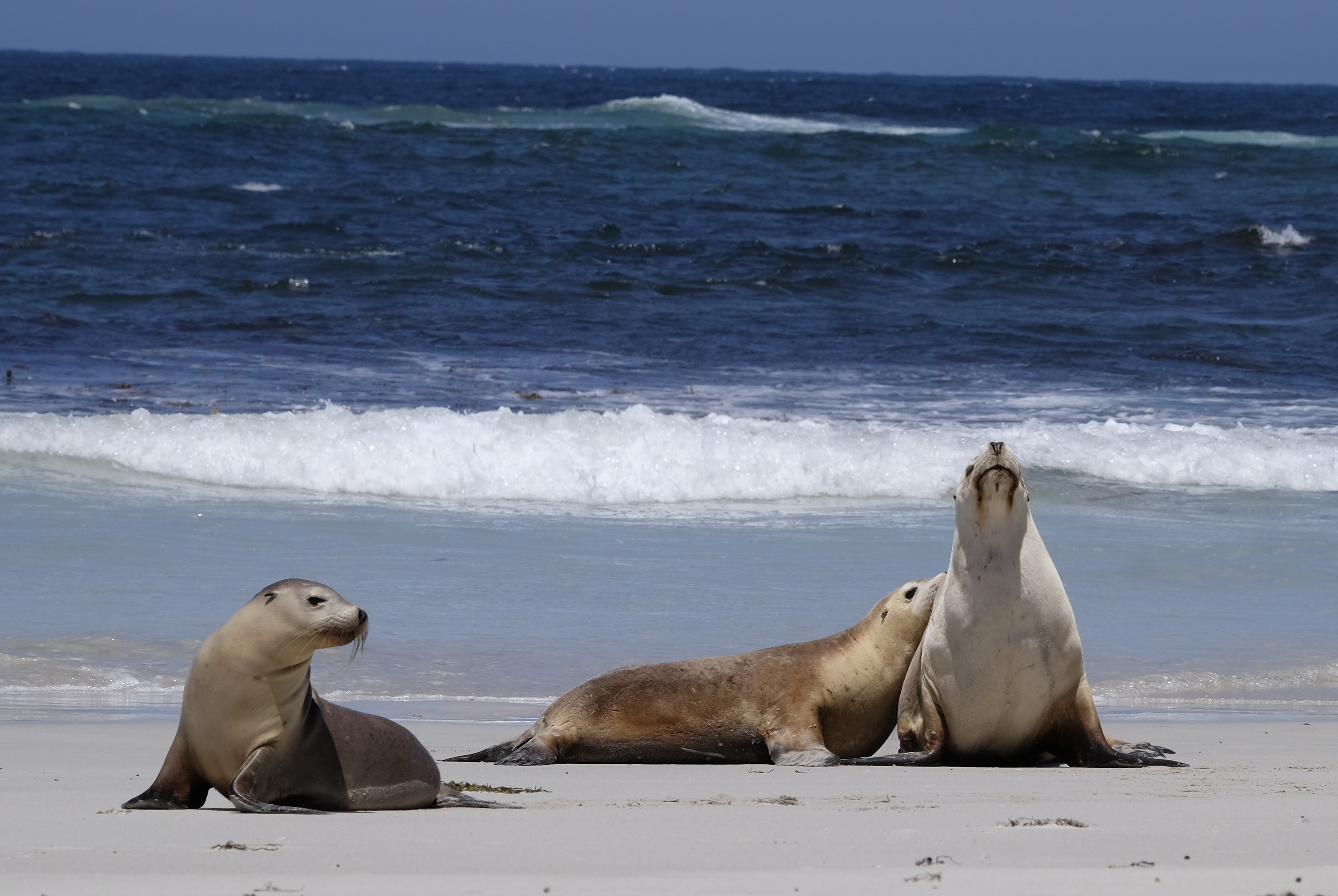
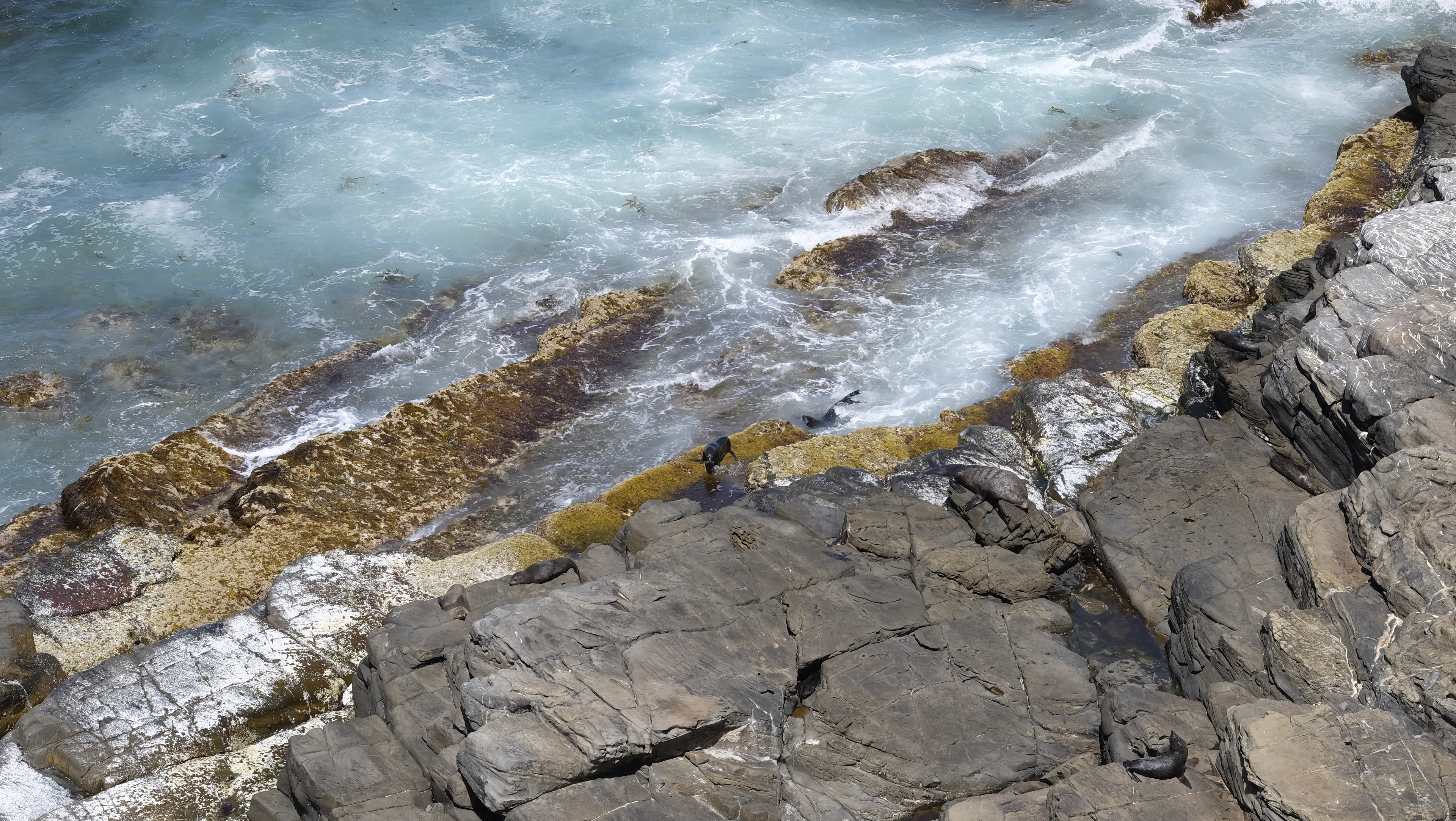
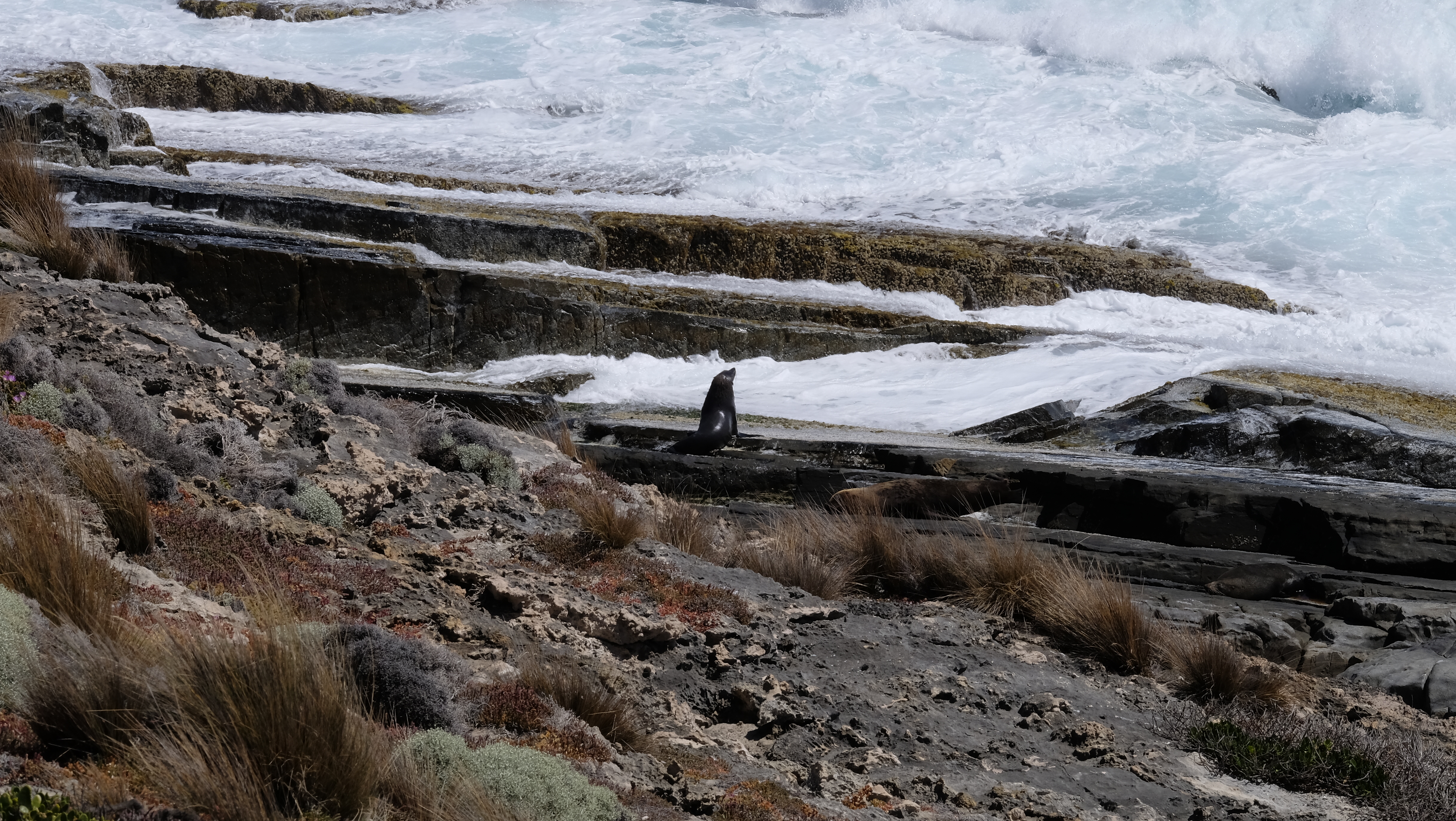
Next stop, Seal Bay Conservation Park, a wild colony of sea lions on the beach. We took a winding wooden boardwalk to the beach with white sand and blue skies. The weather could not have been better.
Life has not changed here for the sea lions for thousands of years, albeit with more people taking photos and smiling at their antics. There are sleeping sea lions everywhere crashed out on the beach. They look utterly exhausted.
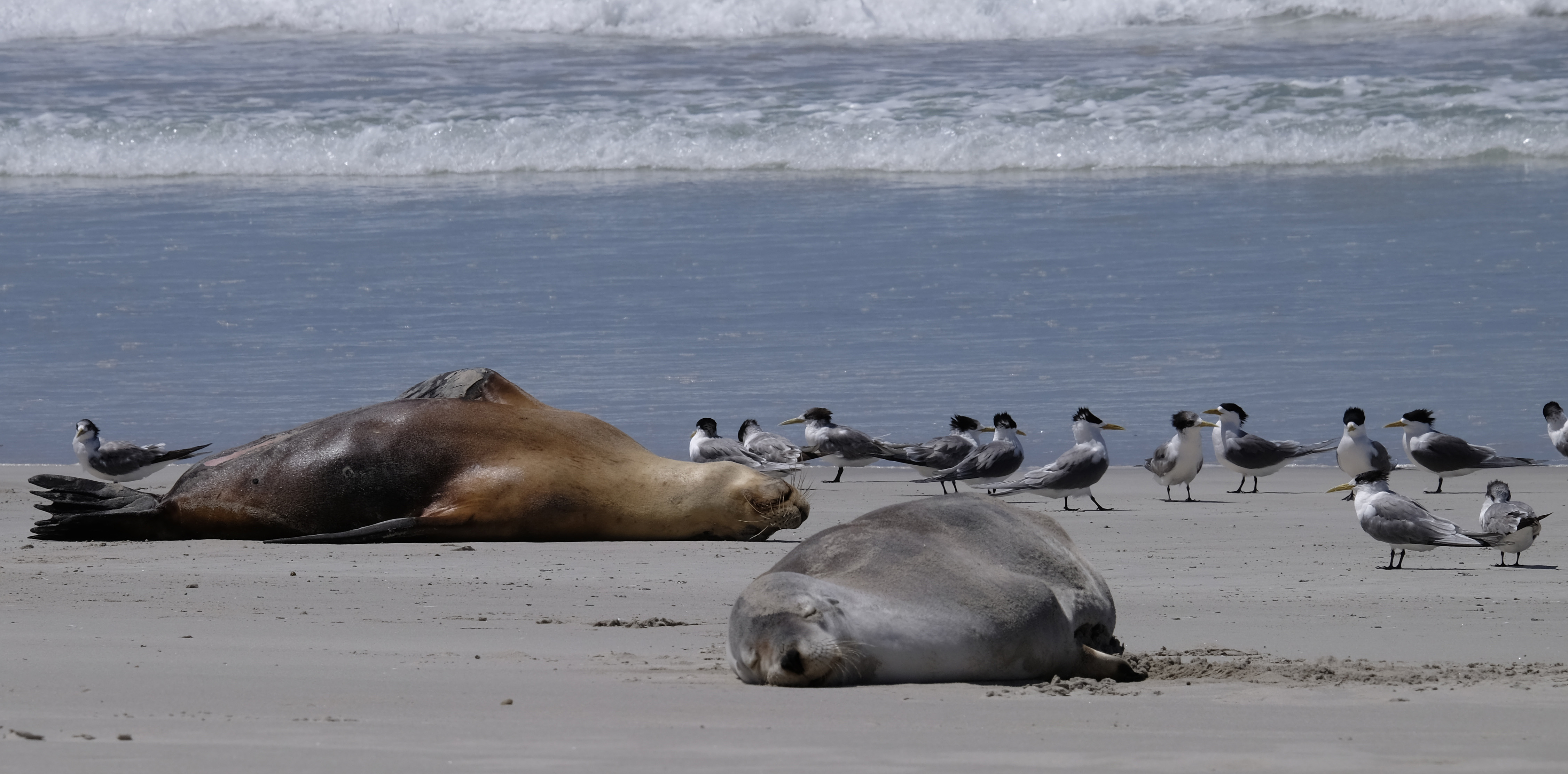
Have you ever wondered how to tell a sea lion from a seal? Well now I know. It is thought that all seals evolved from a land-based carnivorous mammal. Over millions of years, this animal adapted to the marine environment and evolved into two distinct groups … the “true” seals and sea lions (or “eared” seals). Seals spend most of their time at sea while sea lions spend an equal amount of time on land and sea.
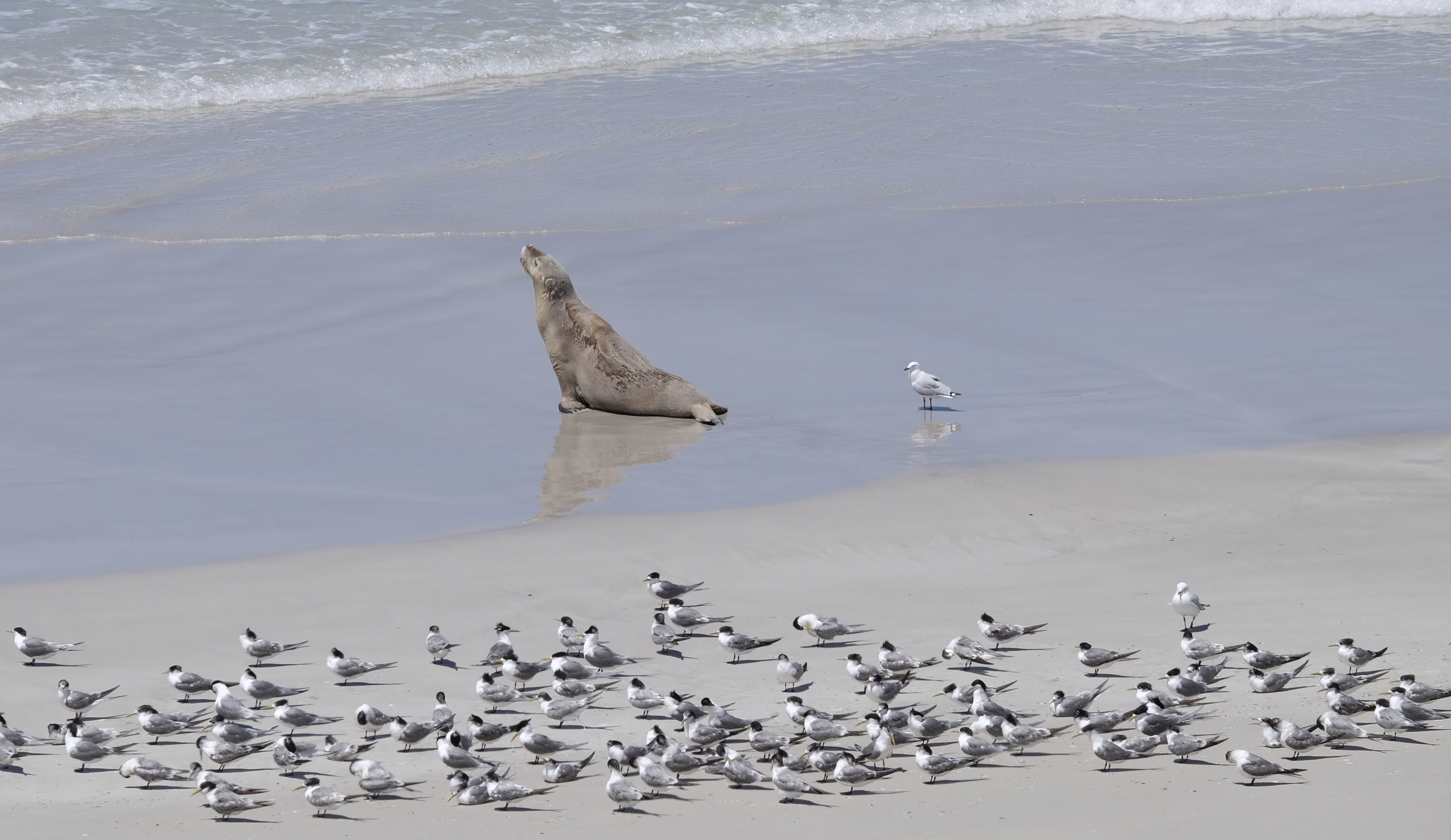
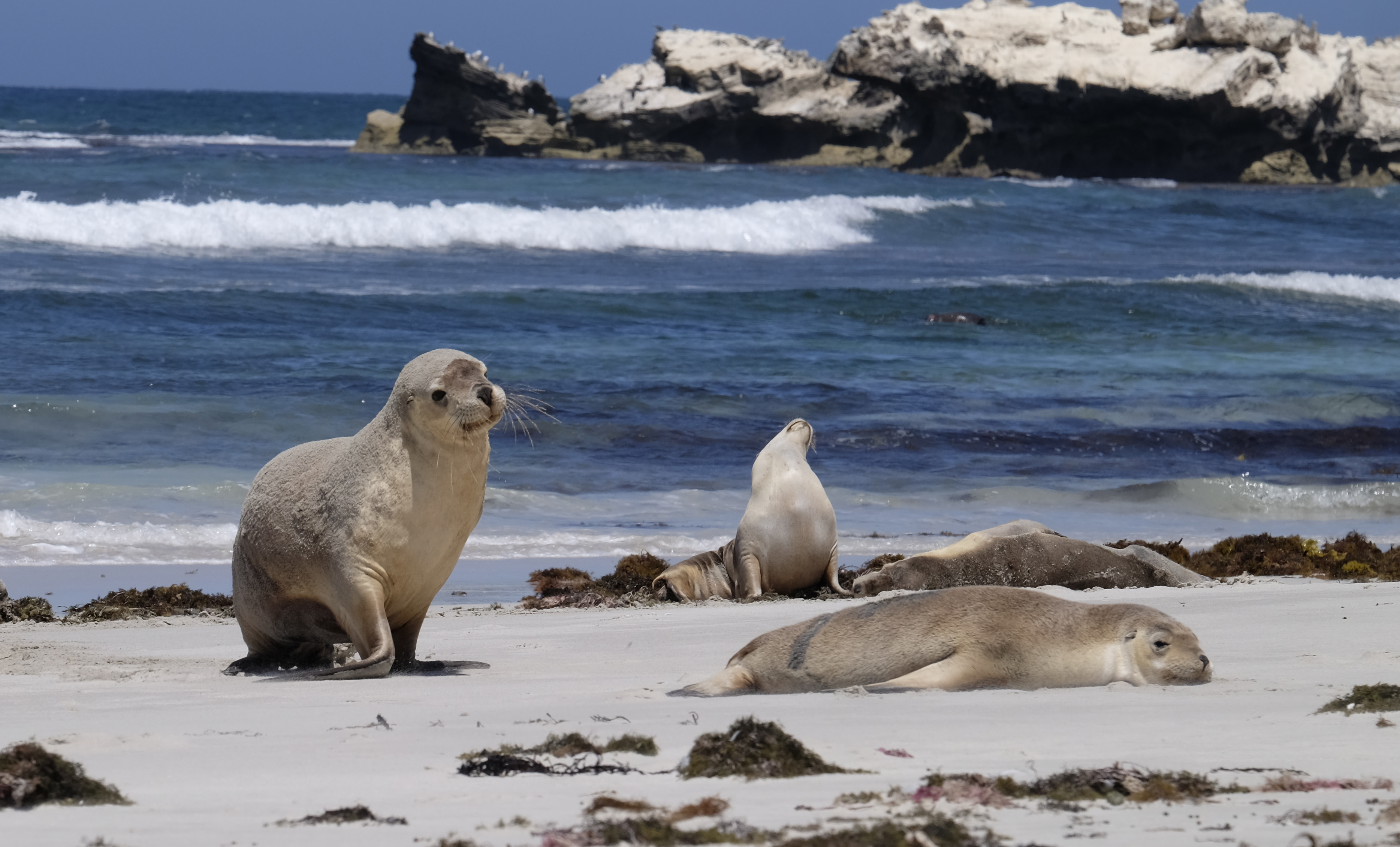
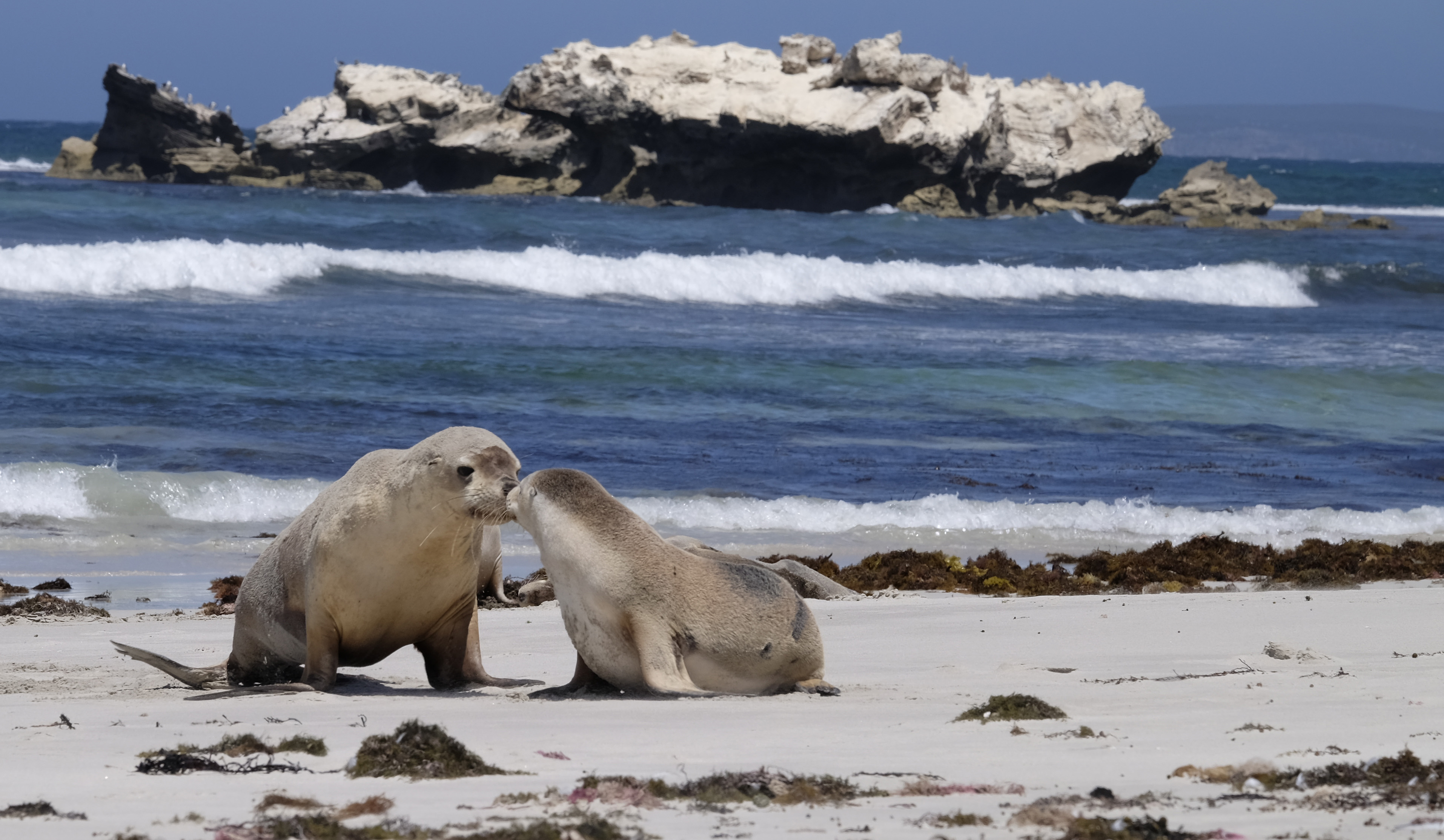
A sea lion is built for movement both on land and in water. Its skeleton anchors strong shoulder muscles and strong front flippers that it uses to power itself through water. On land it uses both sets of flippers to walk on all fours.
In contrast, a seal is built mainly for swimming. Its skeleton anchors strong muscles in the lower part of its body and when swimming, it works its body from side to side, powered by its back flippers. On land it pulls itself along.
Today we saw both sea lions and seals. They were adorable when upright and hysterical as they tried to roar before collapsing solidly on the sand.
We continue to Flinders Chase National Park. Now it is time for a real Aussie lunch – steaks on the barbie. This is not Outback Steakhouse in Owings Mills, this is the real thing.
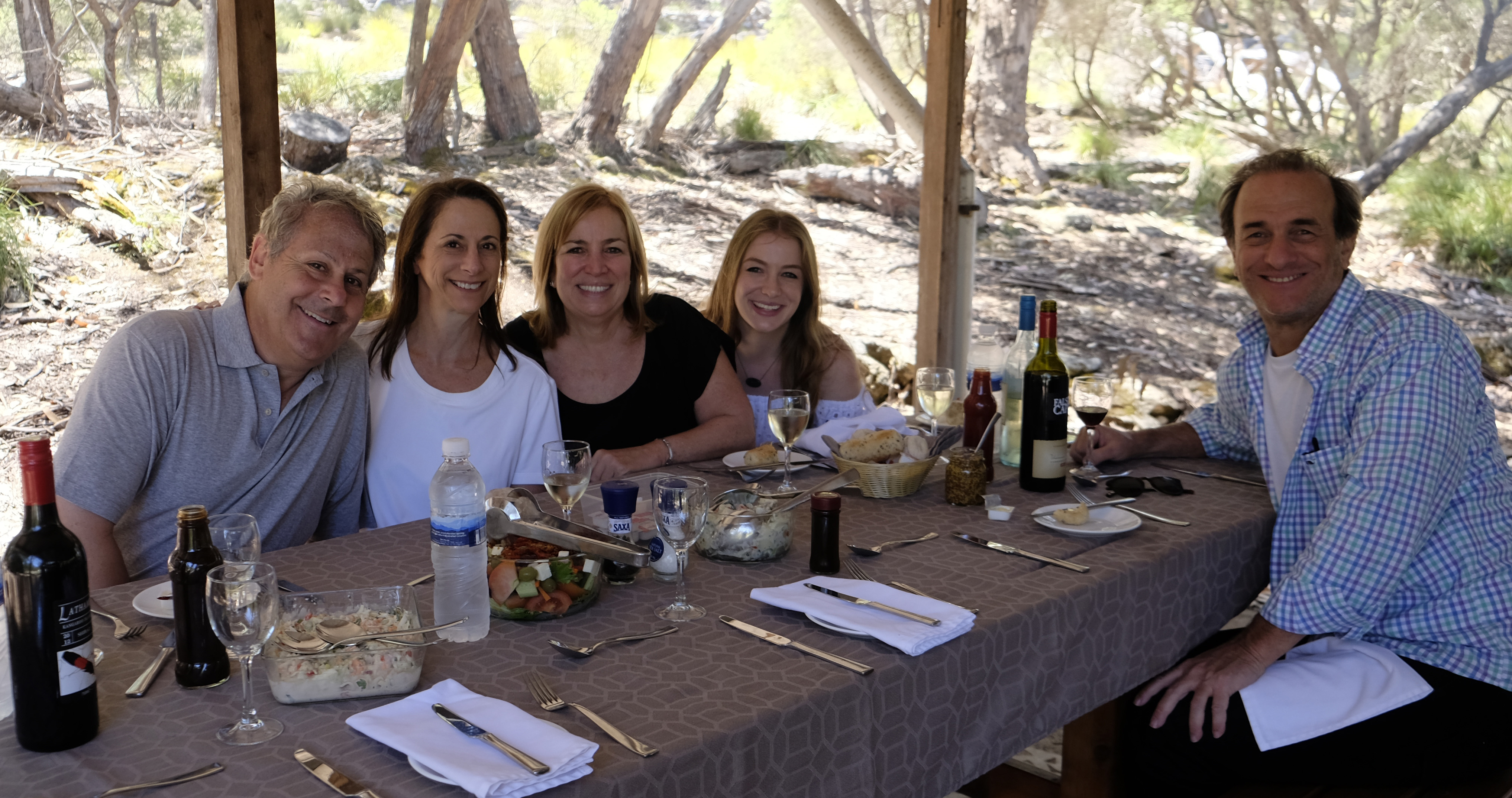
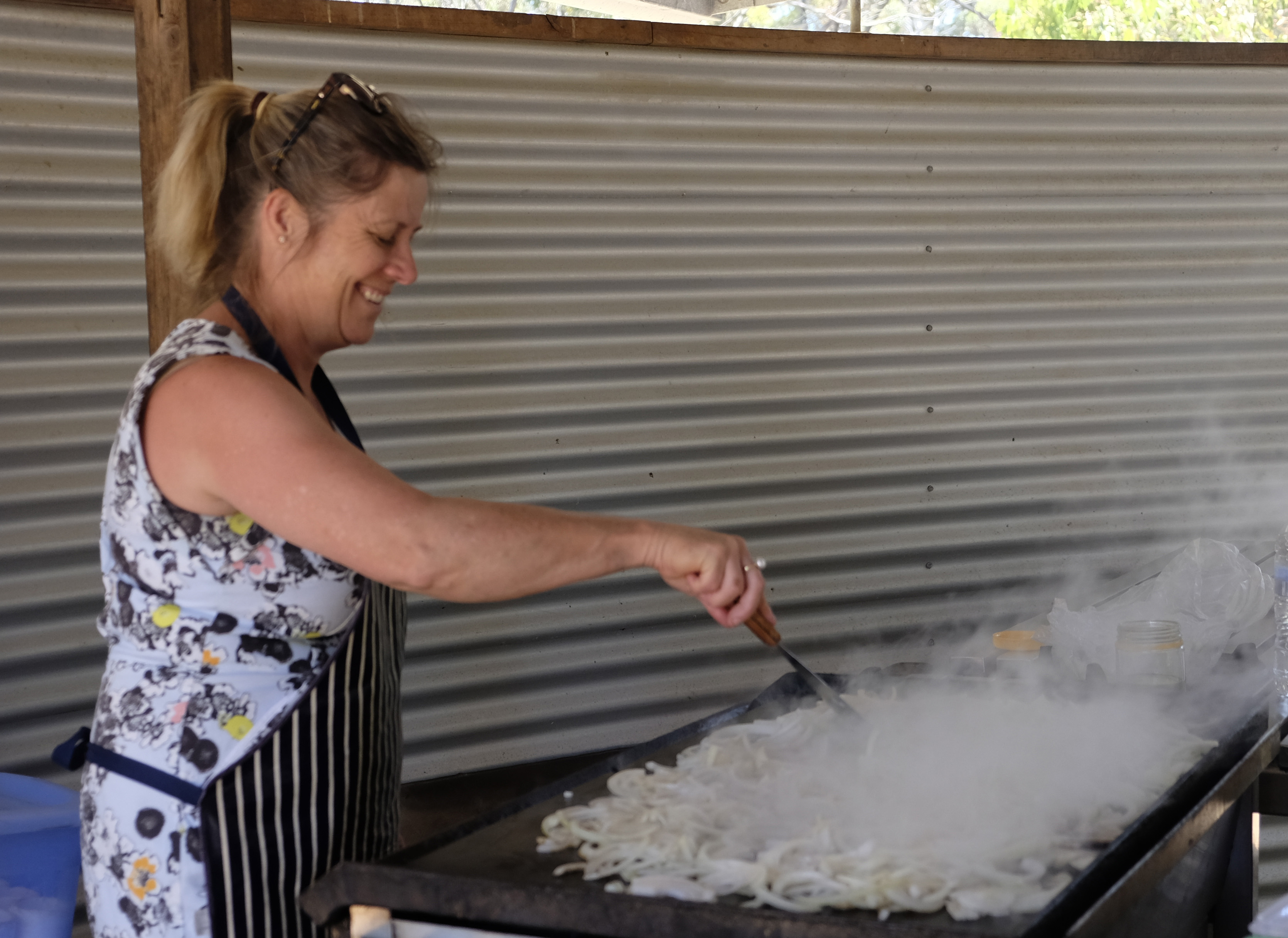
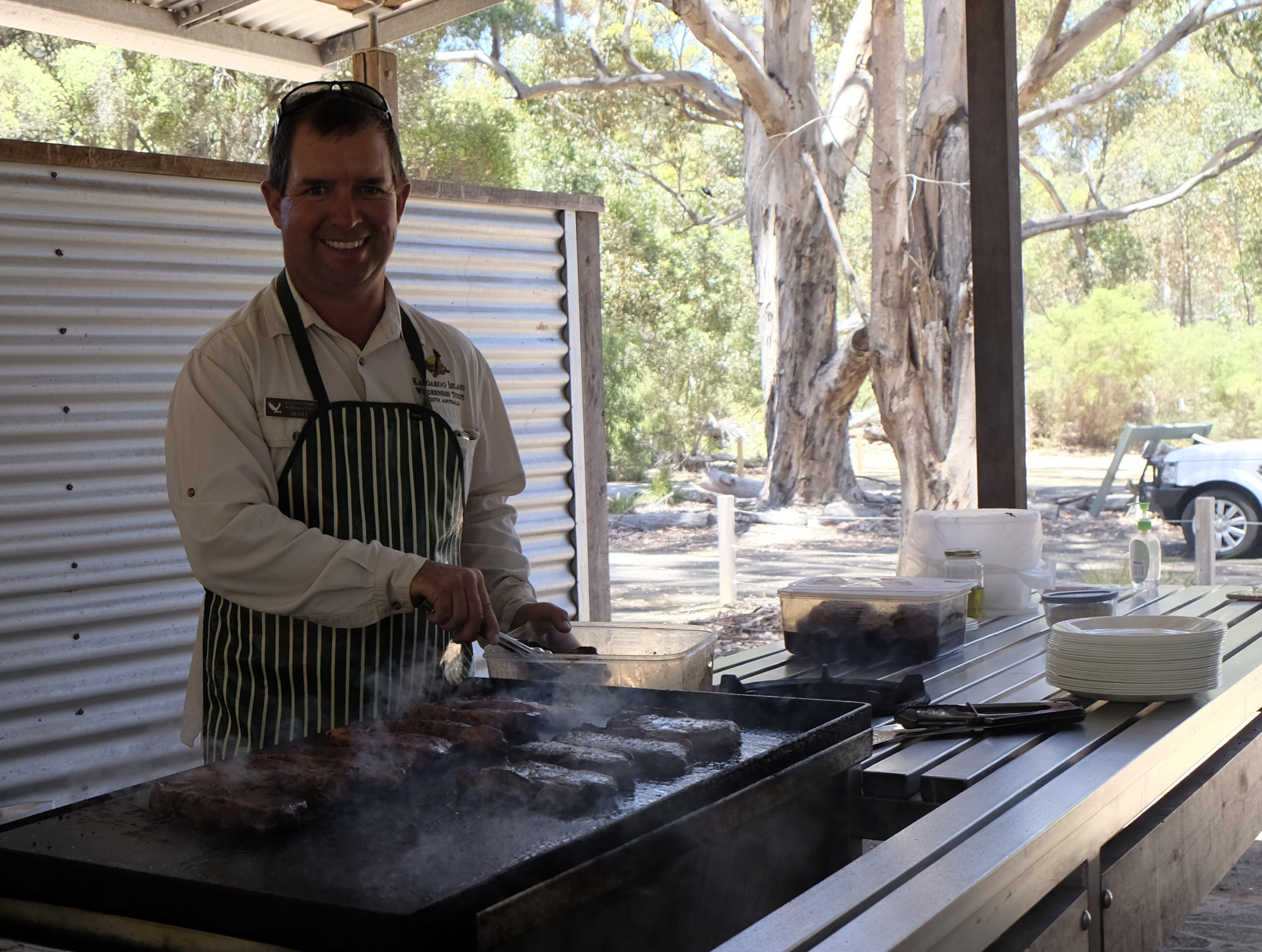
There was local KI fine wine, good laughs and delightful storytelling.
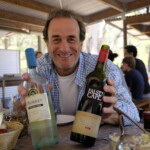
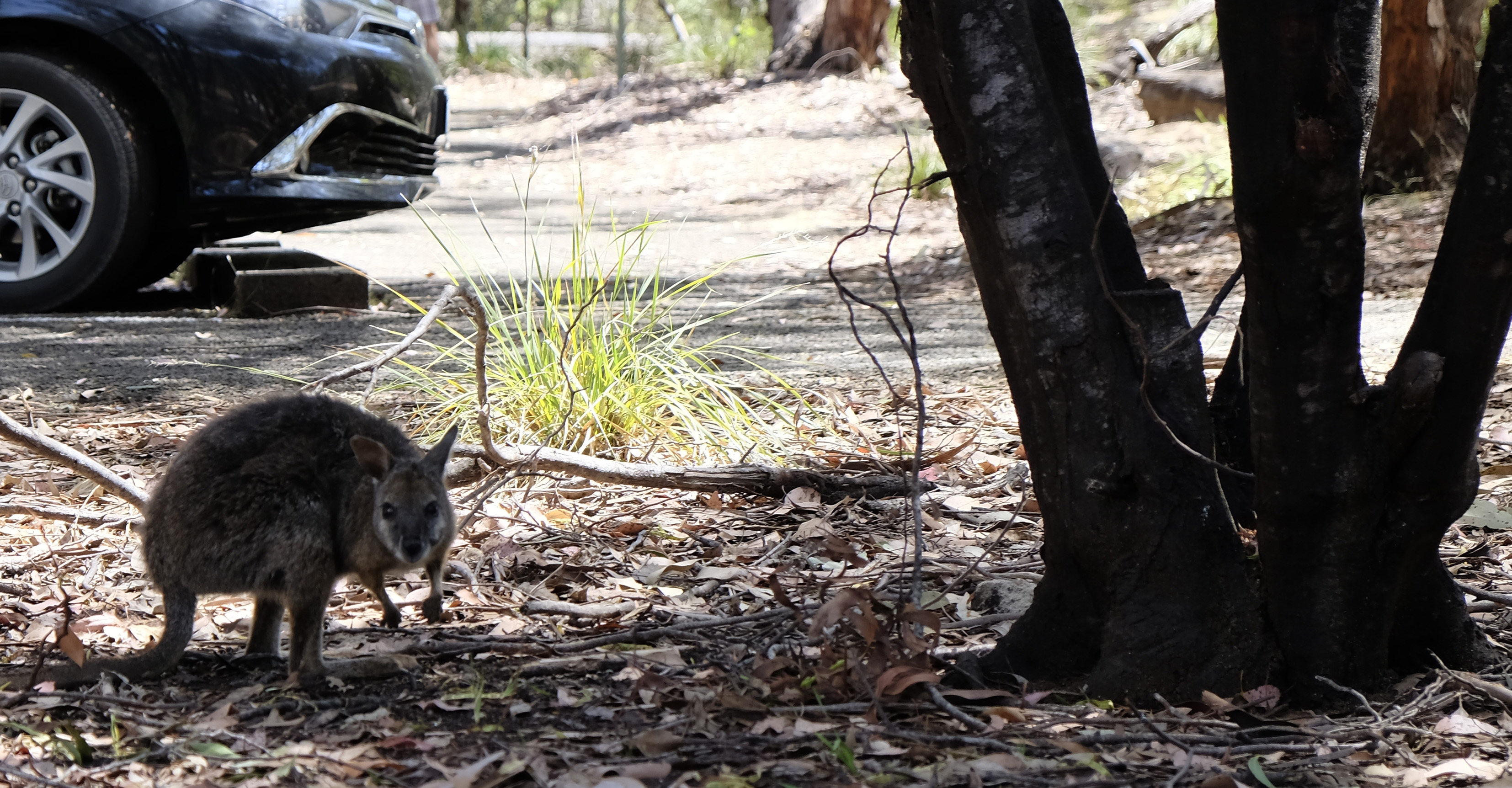
On the way out after lunch, in the parking lot, we have an unexpected sighting of a wallaby, basically a smaller cousin to the kangaroo.
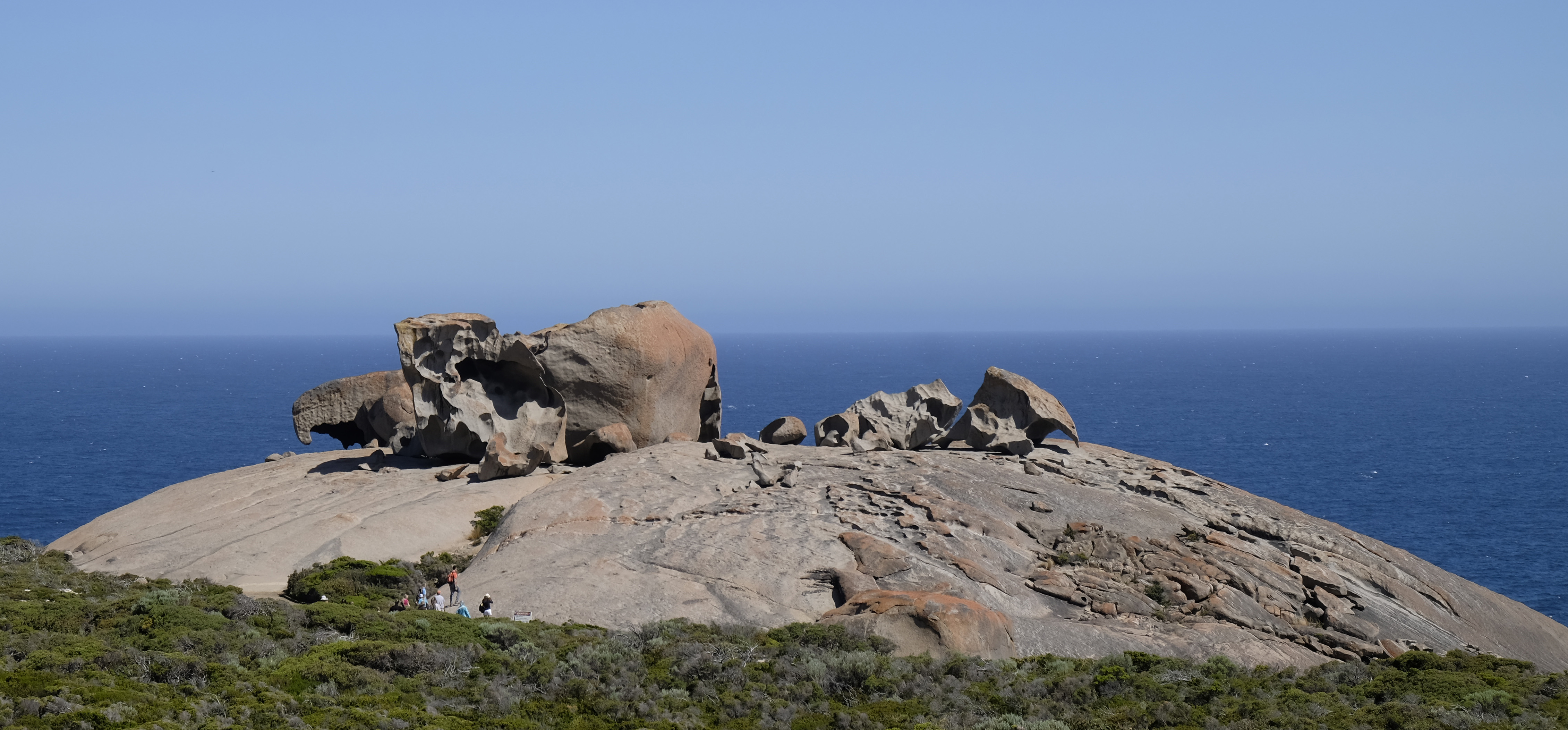
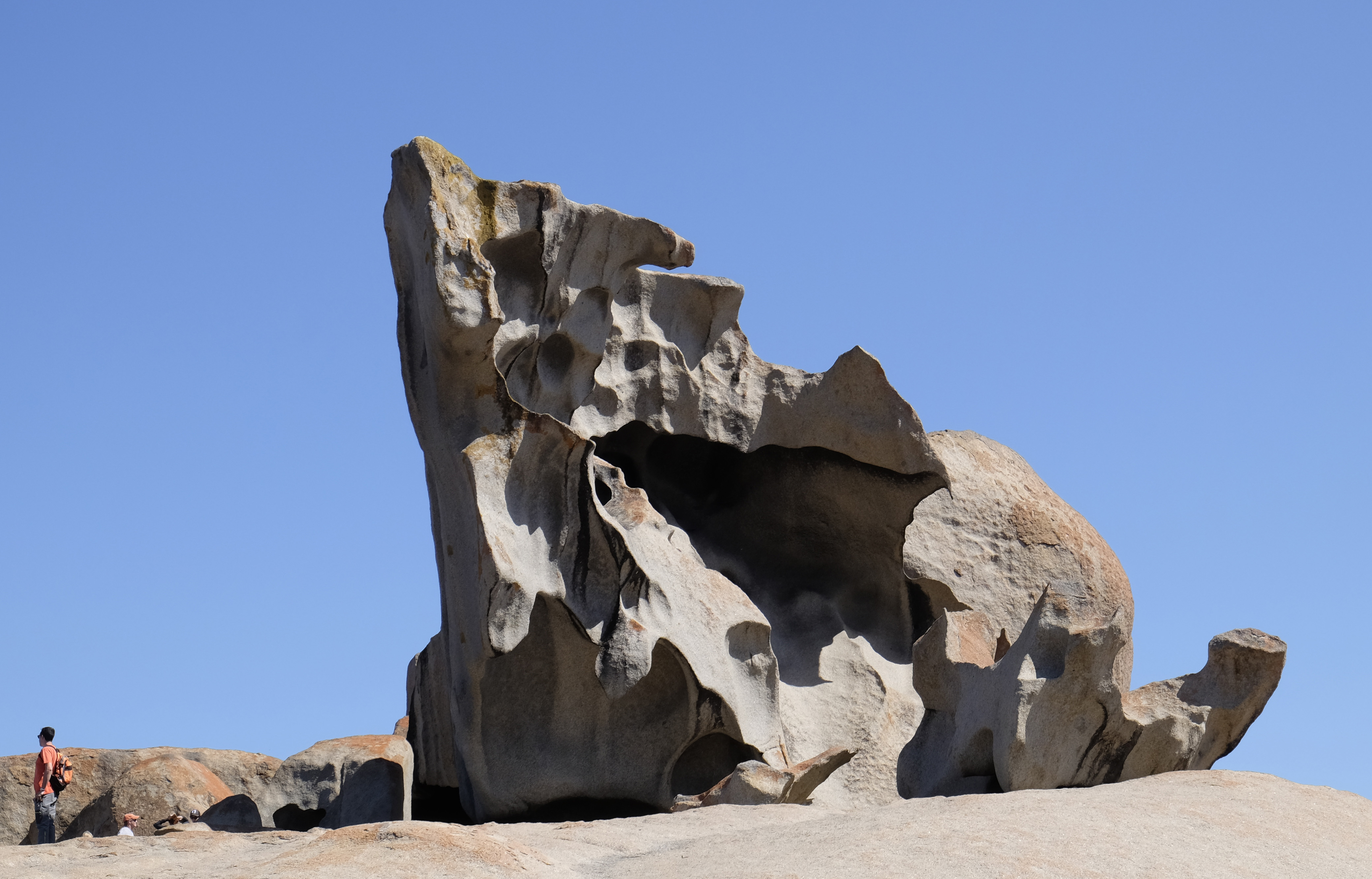
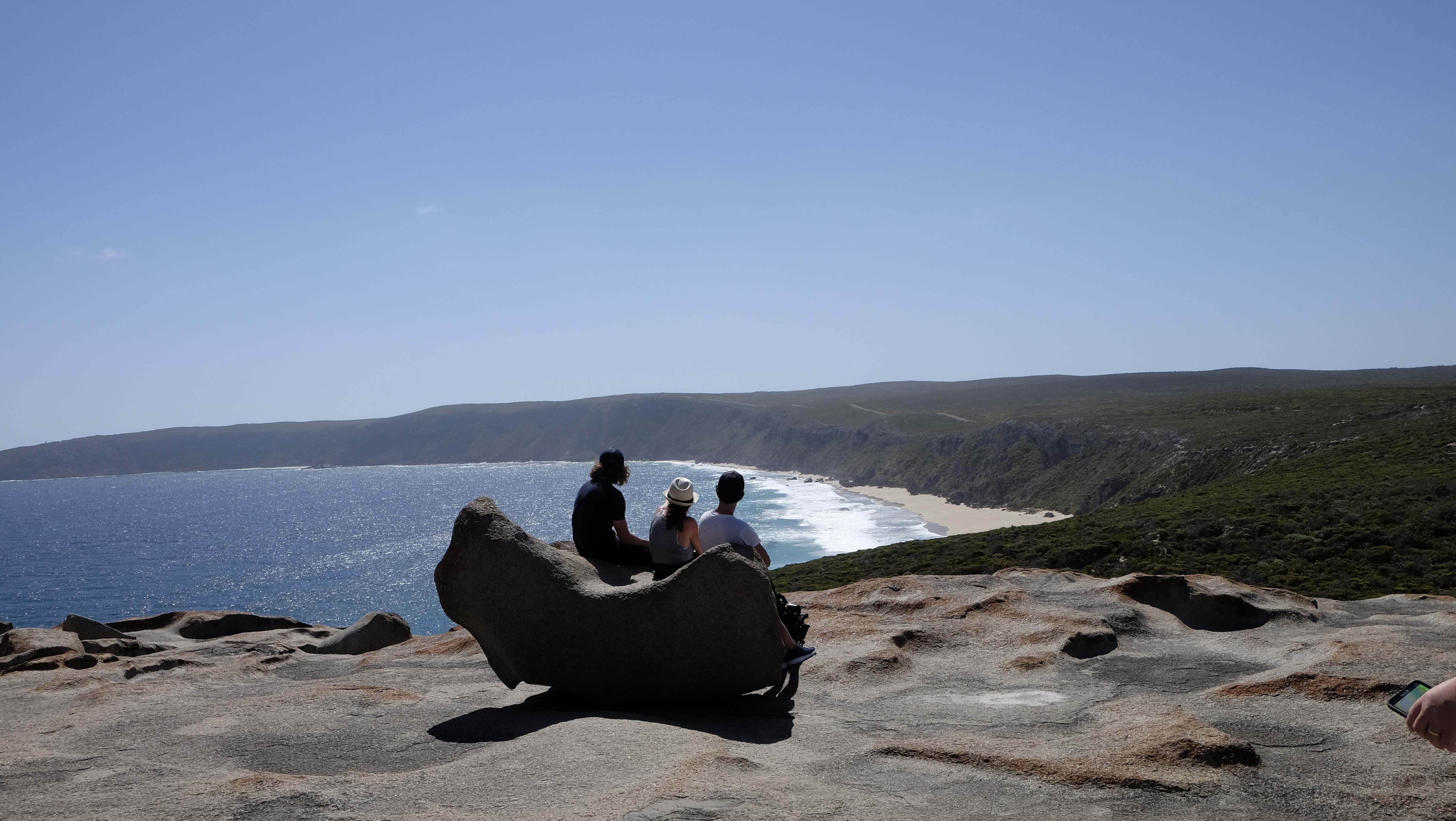
We continue to visit two of the island’s most beautiful landmarks, the Remarkable Rocks and Admiral’s Arch in Flinders Chase National Park.
Formed over 500 million years ago, the granite boulders atop a granite dome look more like a modern art than a geological natural wonder formed over 500 million years ago. The unusually beautiful shapes and coloring were caused by rain, wind and waves penetrating the upper level of the rock, decomposing it into separate boulders. The Remarkable Rocks are one of the most photographed things in South Australia.
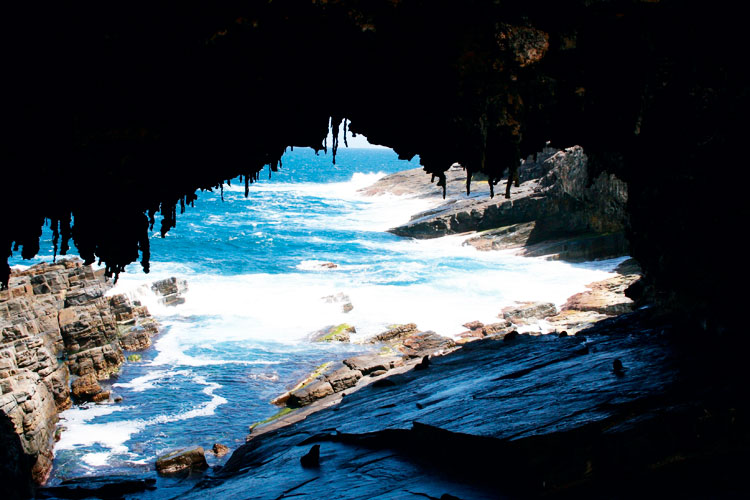
We continued around the bend and down many, many steps to Admirals Arch. It’s a partly-underground world of caves where the wind, rain and waves have transformed the caves into a natural bridge with stalactites dripping from the top of the arch.
Next stop Kelly Hill Conservation Park to find the kangaroos.
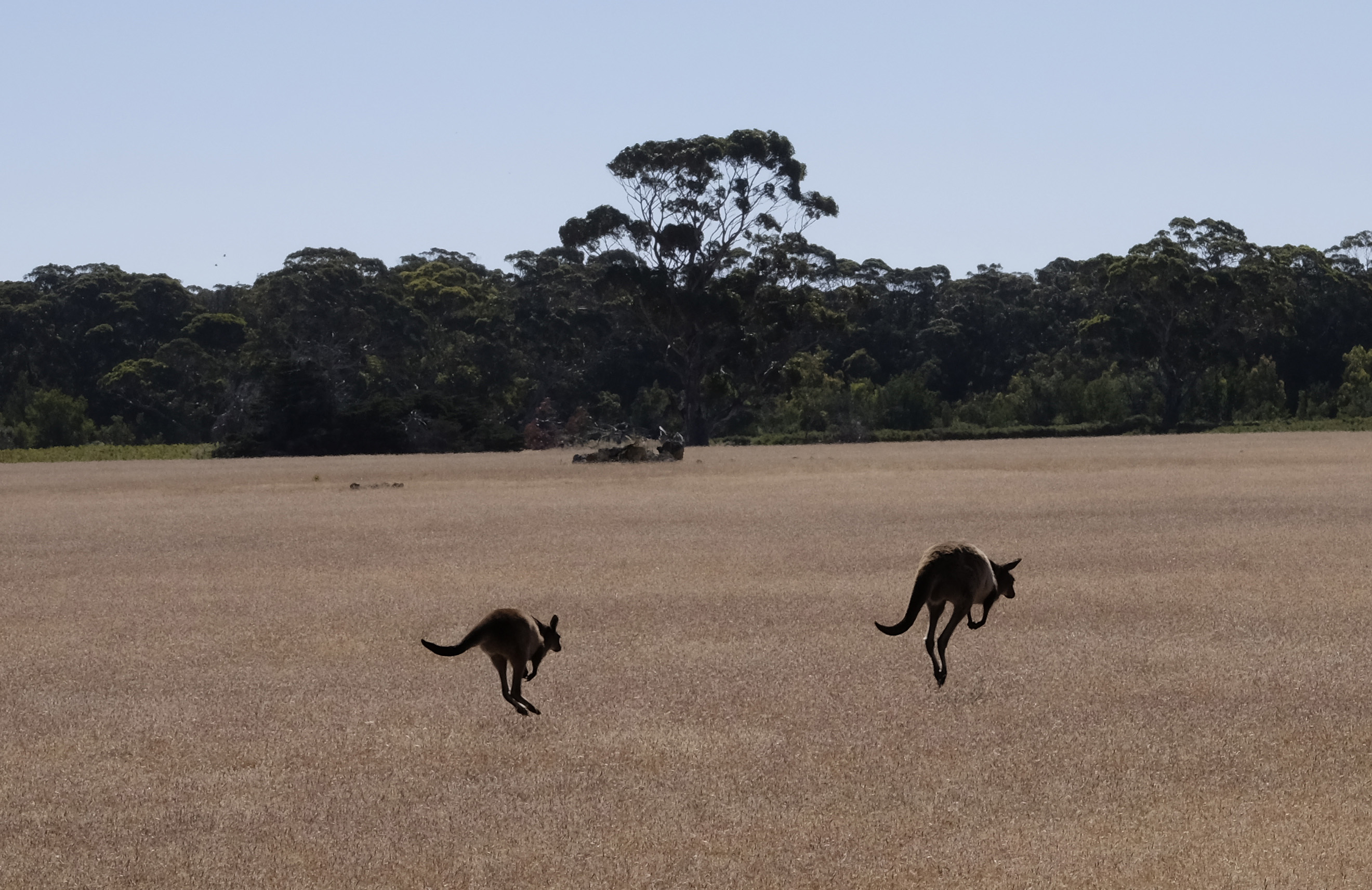
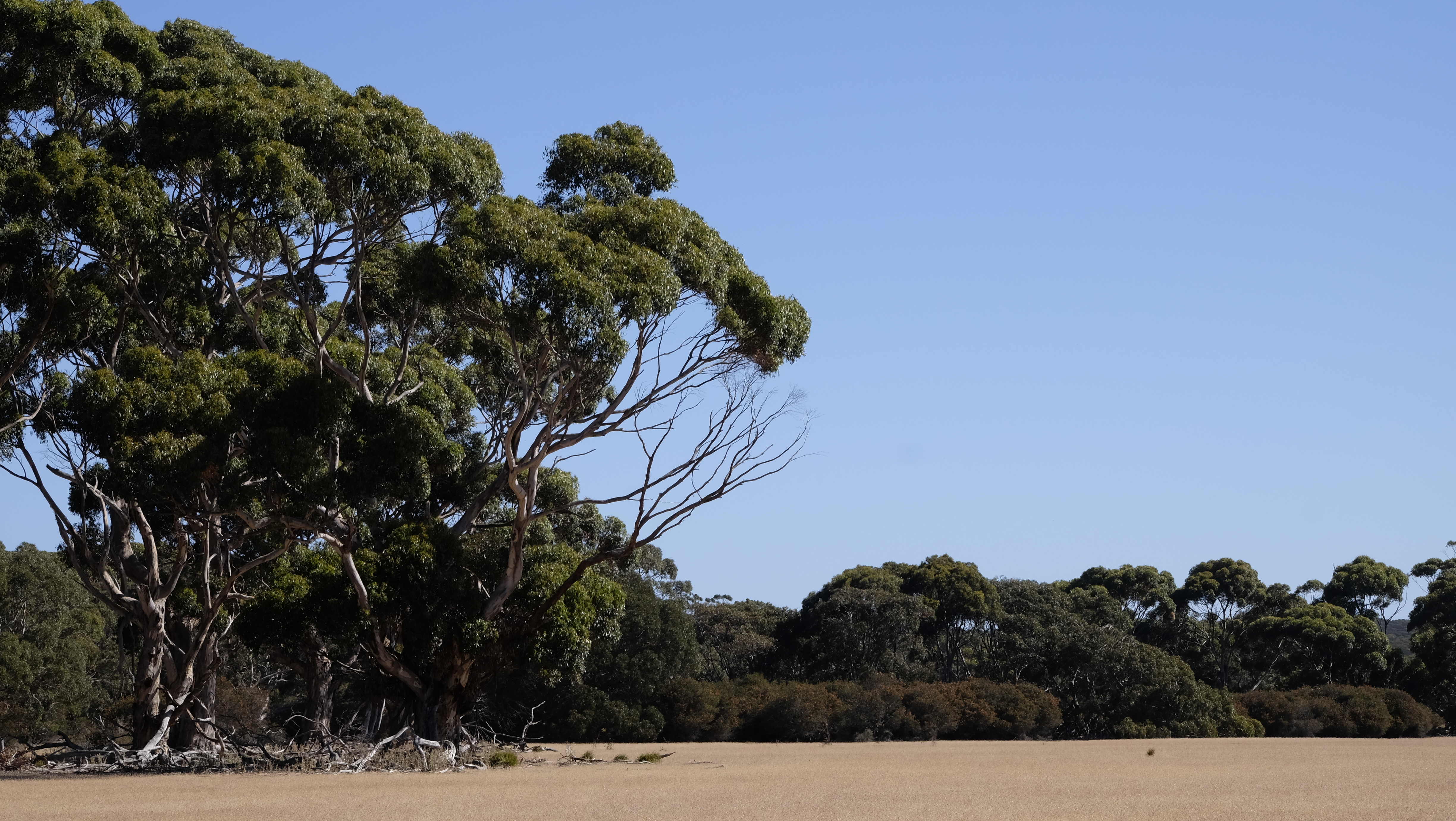 There are more kangaroos than humans in Australia and they are the national symbol. As a nocturnal animal, it was hard to spot many during our trip, but we did see these cuties.
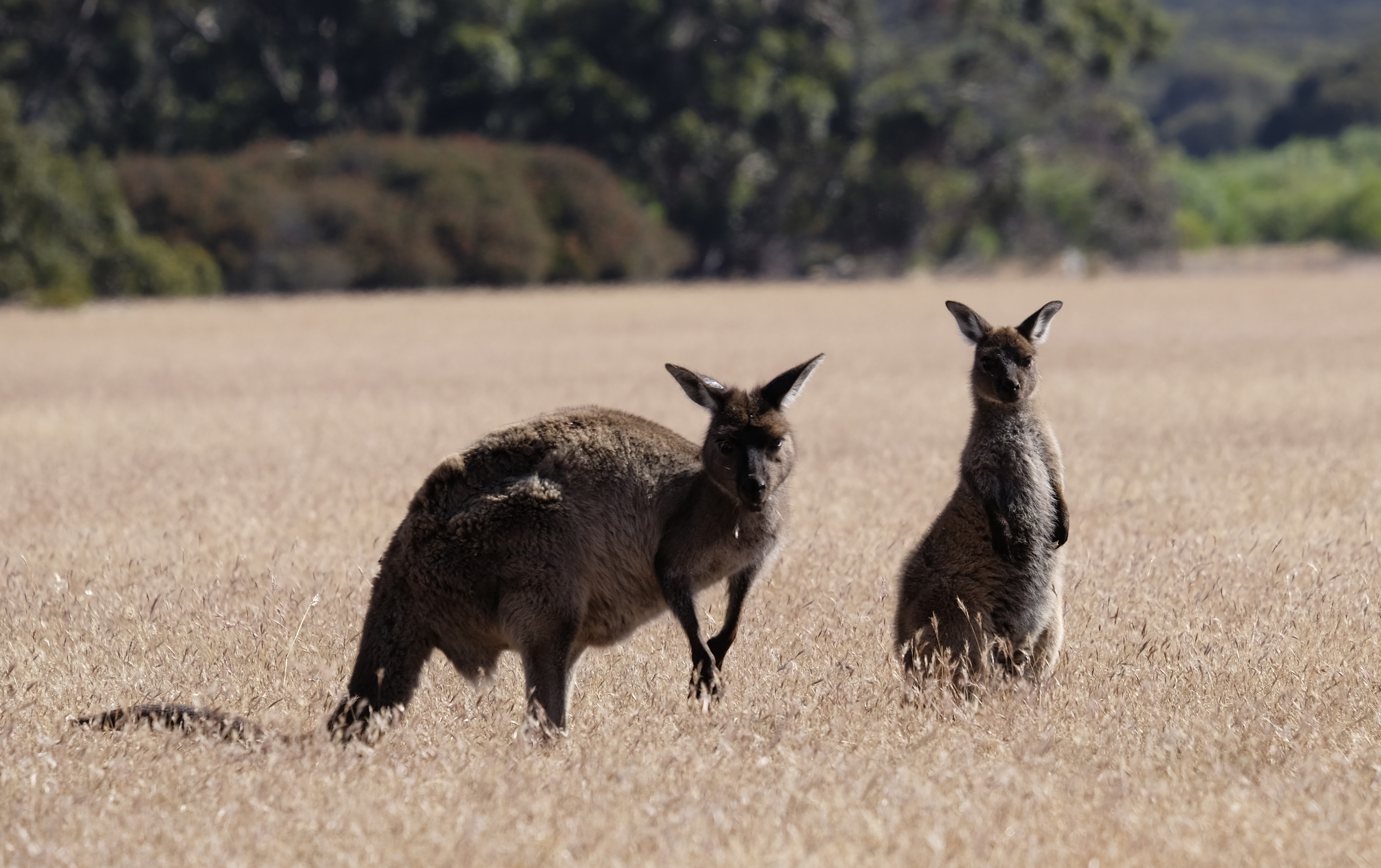
Joeys are young kangaroos and a group is called a mob. Kangaroos in a mob will groom and protect each other from danger. If a kangaroo suspects there is danger, it will stomp its foot on the ground to alert others. If it comes to blows, a kangaroo will box and kick its opponent. If you pit a human boxer against a ‘roo, the ‘roo will win every time.
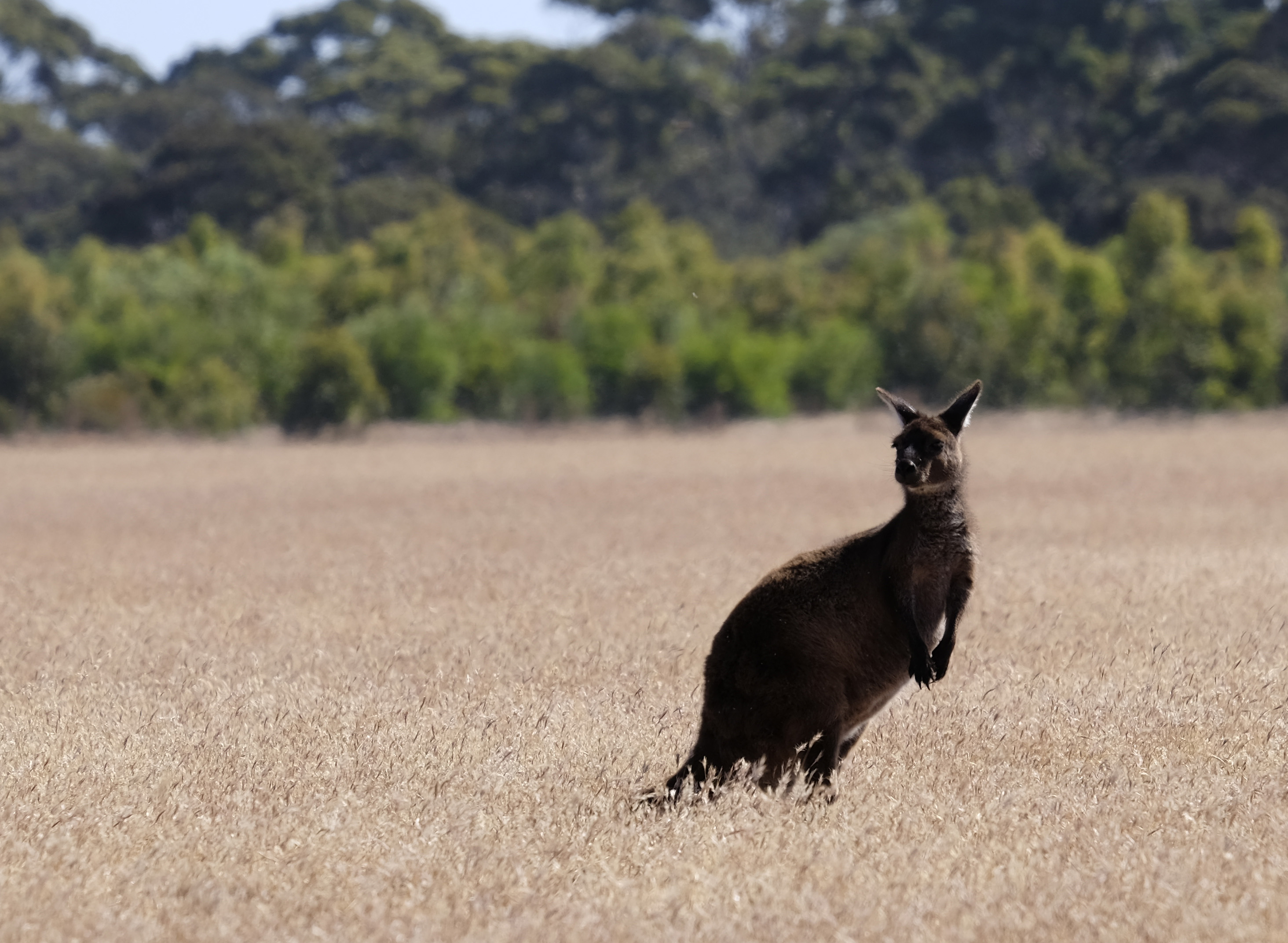
Curious about the baby in the pouch we all picture, I learned about the mothers and their babies. Female kangaroos are pregnant for 30 days. Newborns are little more than an embryo, about the size of a jellybean. After birth, joeys travel unassisted through the mother’s thick fur to the pouch. The mother will lick a path in her fur but that is the only assist a mother can give as her arms are too short to reach. Once in the pouch, the baby attaches to a nipple and spends several months developing before finally leaving to explore the world. Or as our guide Scott put it, “After eight to nine months their limbs start hanging out and it gets a little unwieldly. So out the joey goes.”
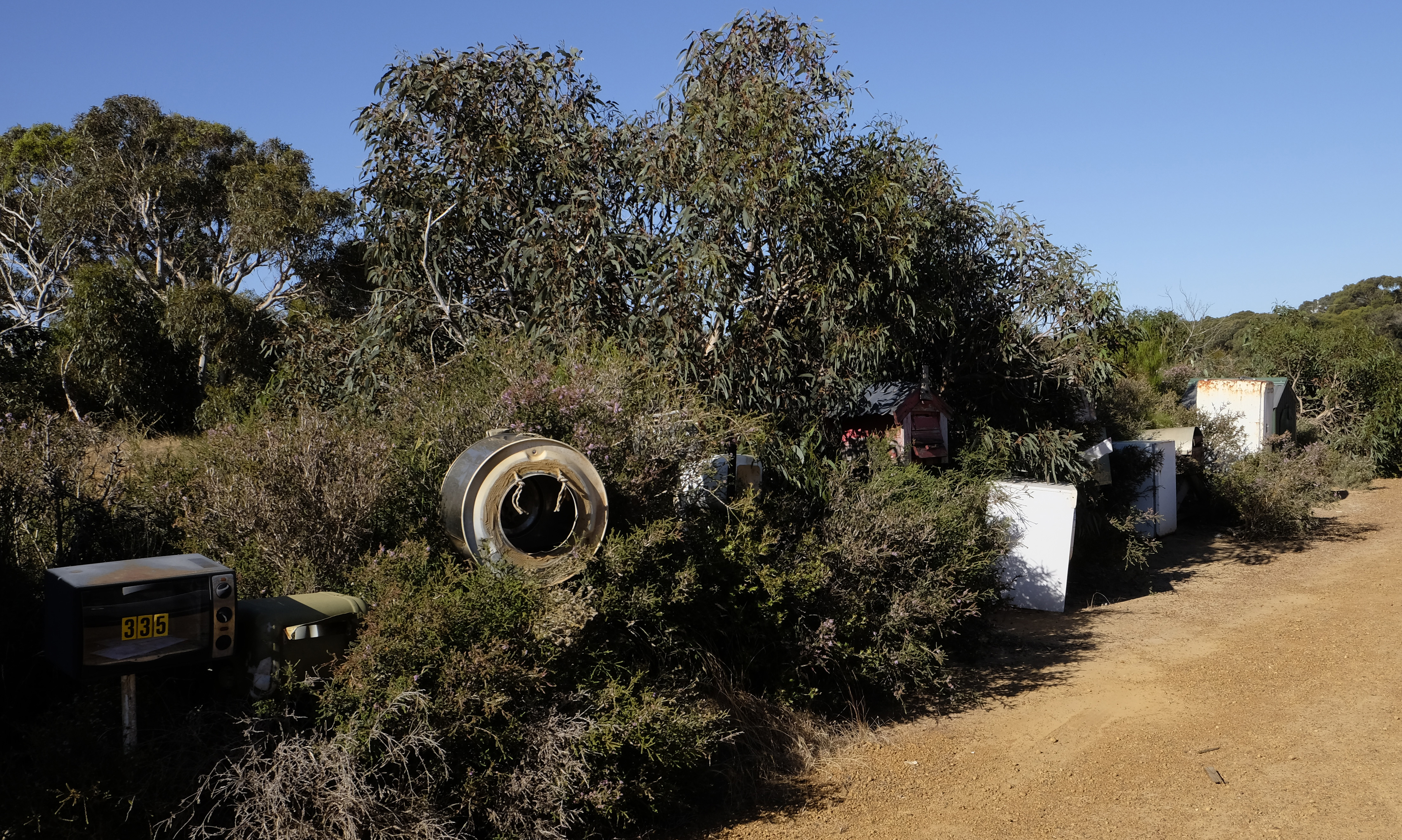
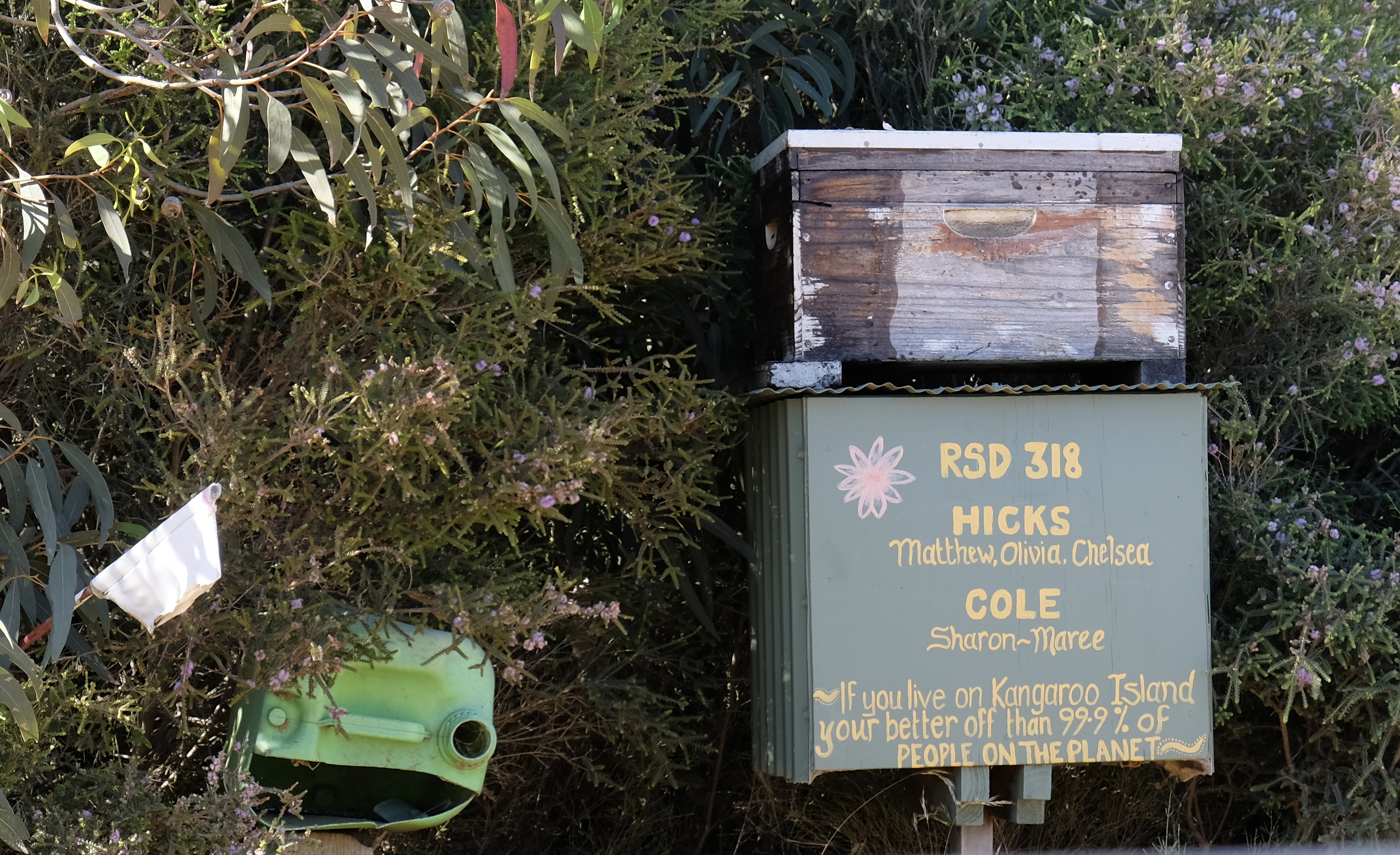
But no trip to KI is complete without a final stop to see the mailboxes, one of the island’s more eccentric landmarks. Mail is delivered twice a week and the locals have erected their mailboxes made out of all sorts of things — bar fridges, oil drums, an 80s microwave oven and little sheds on stilts among many other things.
 This one sums up the pride that the locals have for their home.


Leave a Reply