Tuesday evening, December 27, 2016 | Language: English | Currency: Australian Dollar | Population = 7,071
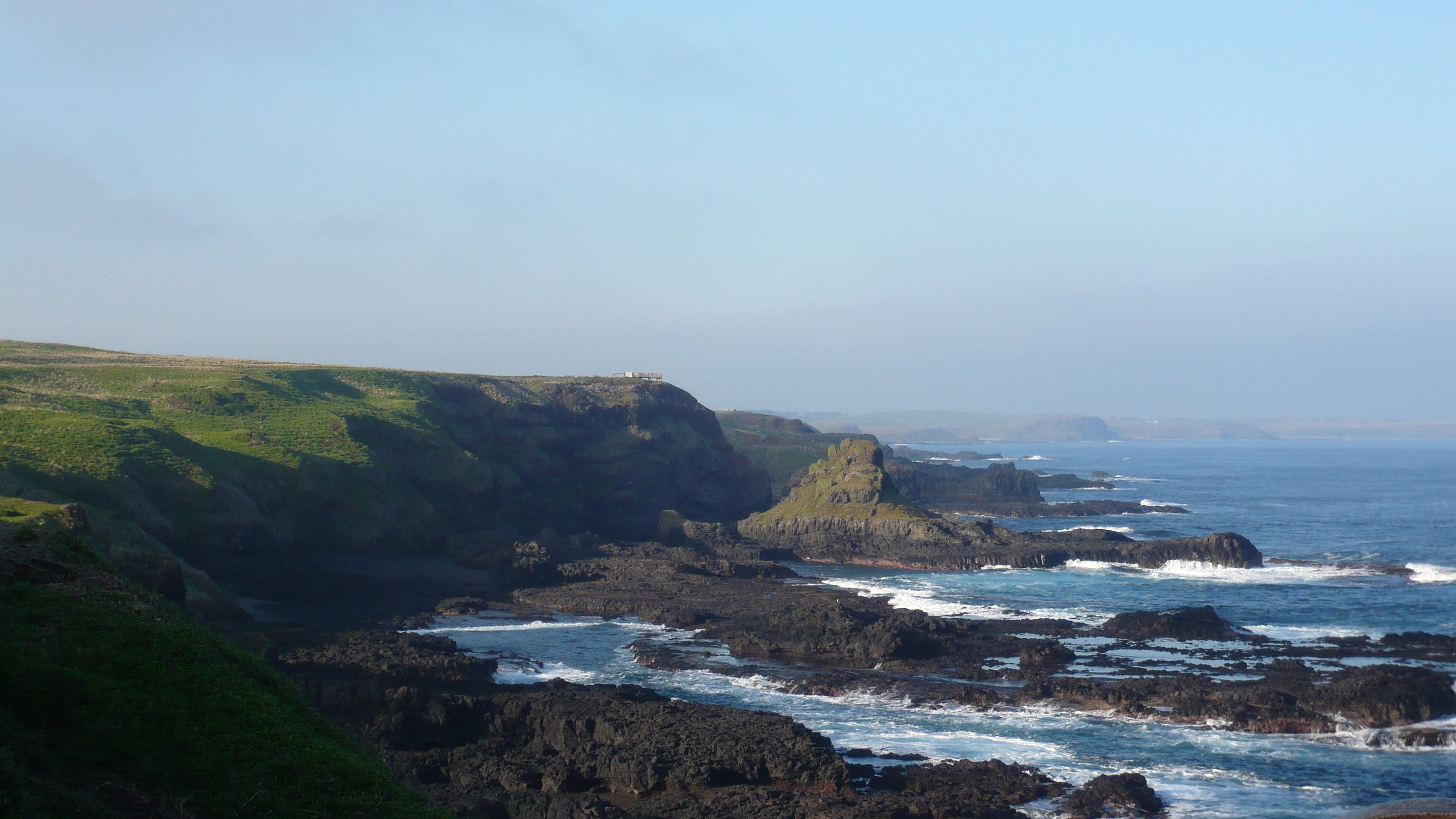
About two hours south of Melbourne, Phillip Island Nature Park is home to the largest colony of little penguins in the world, called Fairy Penguins. There are 32,000 living on Phillip Island, surrounded by the Southern Ocean. Over 4,000 little penguins live around Summerland Beach where we went to view the Penguin Parade.
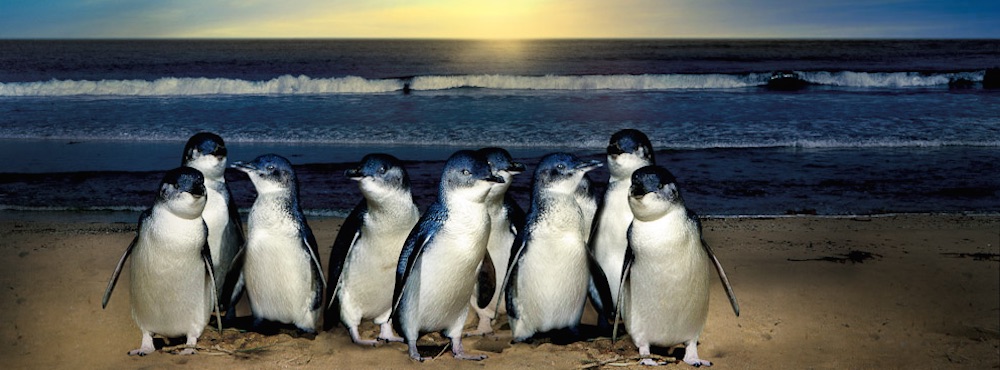
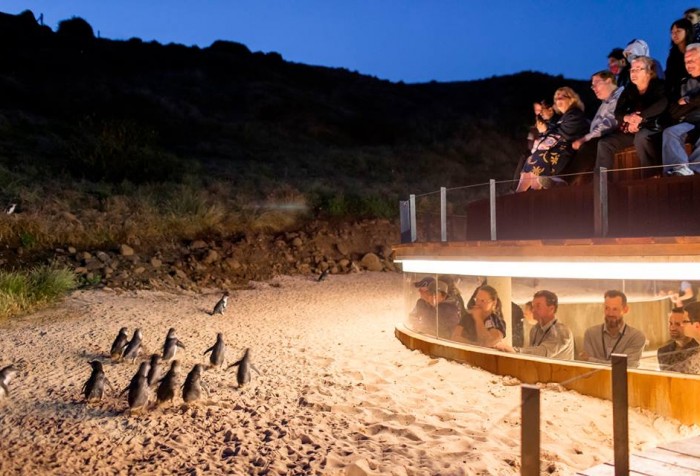
Native to and found only in Australia and New Zealand, these delightful creatures are the smallest of all penguins weighing about three pounds and are only a foot high. The little penguins leave their burrows about an hour before sunrise and swim all day in search of food before returning at dusk. Once they are under the cloak of darkness, waves of penguins tumble ashore, walking (or rather waddling) up the beach to return to their burrows.
Fairy penguins are the only penguins in the world with blue and white feathers instead of black and white. Their blue backs blend in with the blue water to camouflage them against predators that might be flying overhead. Their light stomachs blend in with the sky to camouflage against any predator swimming underneath. (Penguins with black feathers swim in colder, and therefore darker water.) They only leave the water while it is dark because they cannot camouflage themselves on land. While at sea, they swim in large, compact groups known as rafts, which also helps protect them from predatory sharks and seals.
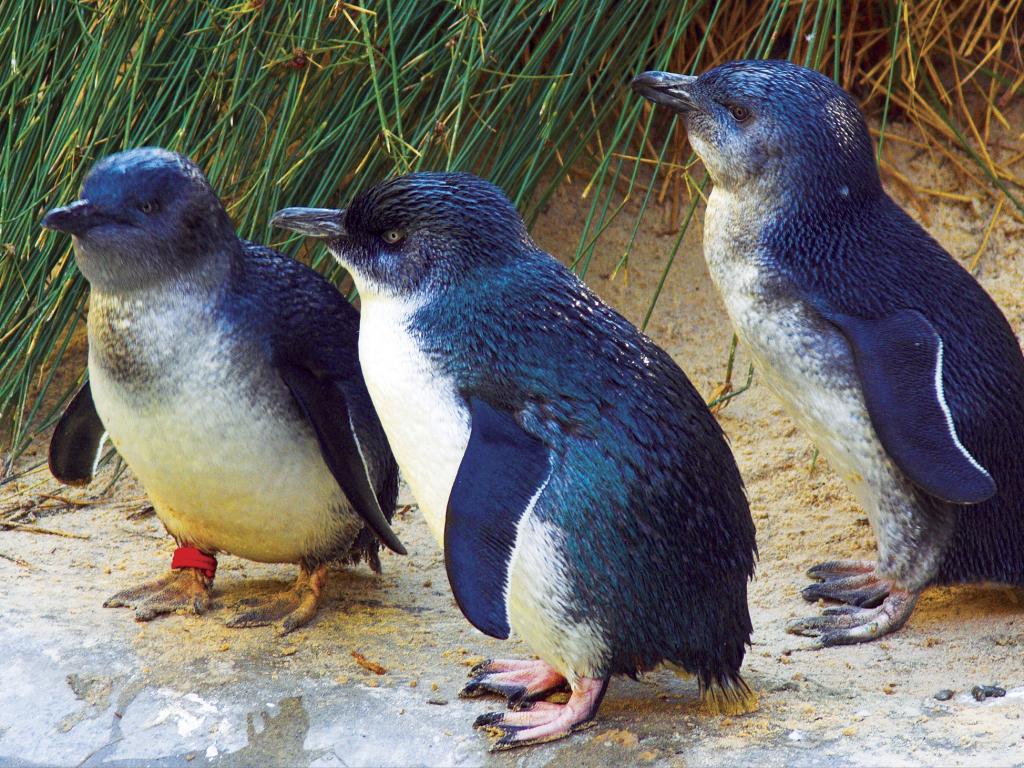
At about three years of age, the fairy penguin is ready to mate. They will choose one mate and remain with them for the rest of their lives. Generally, the female will lay two eggs that are incubated for five weeks before they hatch. Whichever parent is not sitting on and protecting the eggs, goes out to find food. Once the babies are hatched the parents still take turns going out to sea, now bringing back food for the babies. Penguins regurgitate their food in order to feed their young.
A word about global warming. There does not seem to be a consensus among wildlife conservationists about the cause but everyone is in agreement that it is happening. This area started getting warmer around ten years ago. This caused the penguins to go further out to sea to find food. Once they returned it was too late, their babies had died. The following year the birds changed their breeding time to coincide with the change in water temperature. And the following year, they changed again. Now, ten years later they have adapted their breeding time to match the temperature fluctuation and the colonies are doubling in size. Our park ranger believes that animals know how to adapt to the changes occurring in our world. He is a little worried about people though. I think I agree. Our park ranger also trained Liam Helmsworth to be a ranger as the Helmsworths were born on Phillip Island. Said he was a real troublemaker, that mate.
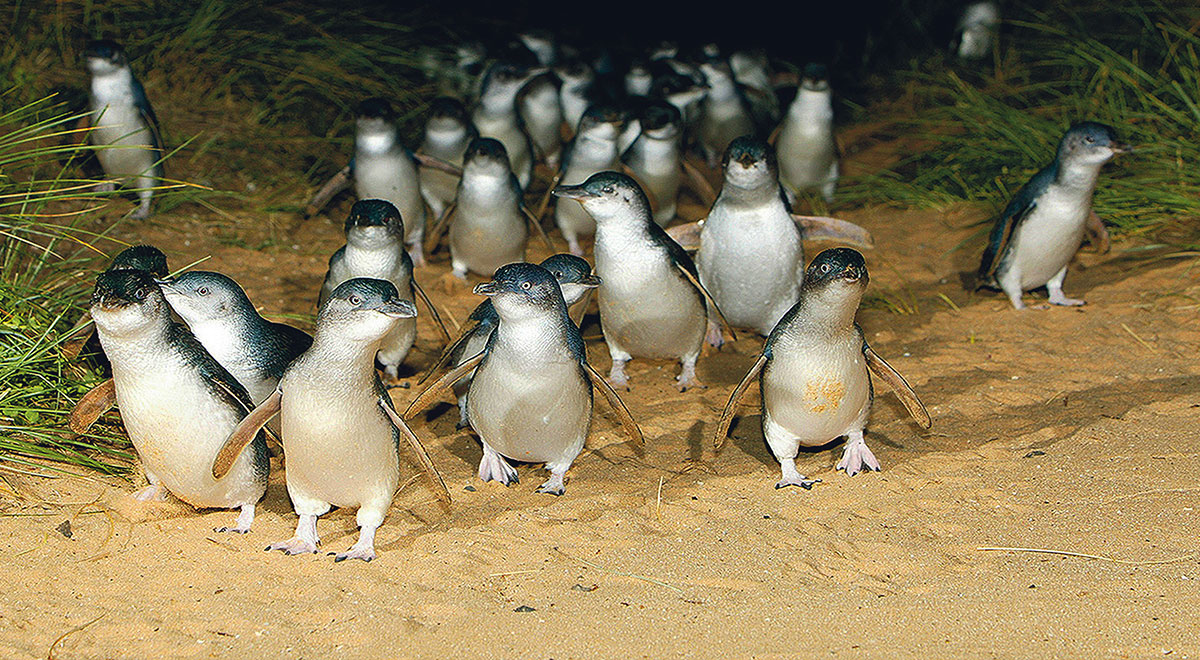
To protect the penguins, no photography of any kind is allow. Therefore the all of the photos are of what we witnessed but they were taken from the world wide web. Except, we did not see a sunset. It was rainy and misty the night we went.

Leave a Reply